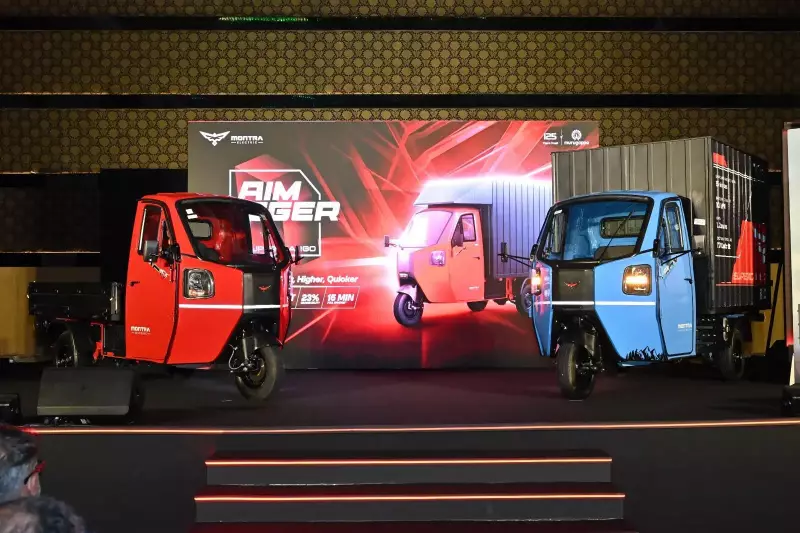
The central government has announced a significant policy shift, deciding to terminate the subsidy for electric three-wheelers under the PM e-Drive initiative. This decision comes after the scheme successfully met its ambitious target for this vehicle segment, prompting a handover of responsibility to state governments for future encouragement.
Target Achieved, Subsidy Withdrawn
Officials confirmed that the subsidy support for electric three-wheelers concluded on Friday. The program had set a target of 2.9 lakh vehicles, which has now been met. The penetration of electric vehicles in the three-wheeler category is estimated to have reached approximately 32%, aligning perfectly with the government's initial goal of taking the share to 20-30%.
"The idea was to take the number to 20-30% and that has been achieved. Even the industry is okay with it," a government official stated. With this milestone reached, the Centre is now stepping back, leaving it to individual states to design and implement their own incentives and schemes to further boost adoption.

Two-Wheeler Support to Continue, Buses and Trucks Await Demand
The scenario is different for electric two-wheelers, where penetration currently lags at 7.5%. Recognizing the need for continued support, the government is likely to extend subsidies for this segment into the next financial year. A final decision on further support will be taken at the start of the new calendar year.
Currently, against a target of nearly 25 lakh units, about 18.3 lakh electric two-wheelers have been sold. Sales are projected to reach around 23 lakh by the end of the current fiscal year, leading to a spillover of the scheme's targets into the new financial year.
For larger vehicles, the picture is still developing. The PM e-Drive scheme has provisions to support 14,000 electric buses and 5,643 electric trucks. However, significant demand has not yet materialized as these vehicles are still undergoing testing phases.
States Step Up, Infrastructure Remains a Focus
With the Centre passing the baton, several states are already contemplating their own packages. Delhi, which grapples with severe smog and poor air quality annually, is among the states expected to announce a new incentive package as early as next month. Several other states already offer benefits like waived registration fees, especially in segments like four-wheelers where EV penetration remains low.
Industry executives highlight that beyond purchase subsidies, charging infrastructure is a critical area requiring urgent attention. They emphasize that a robust network of service providers must step in to build this essential backbone for sustained EV growth across all vehicle categories.
This move marks a new chapter in India's EV journey, transitioning from central-led financial incentives to a more decentralized model driven by state-level initiatives and market maturity.