

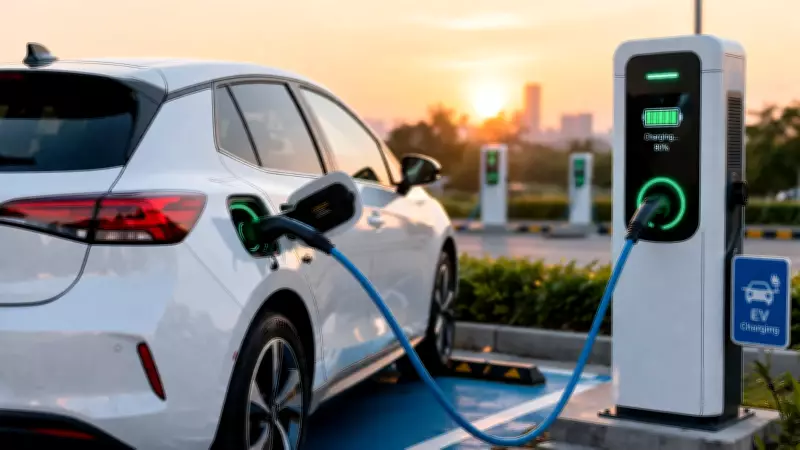
Delhi Government Introduces Draft EV Policy 2026-2030 to Tackle Air Pollution
The Delhi government has officially unveiled the draft Electric Vehicle (EV) Policy for the period 2026 to 2030, presenting a comprehensive roadmap designed to curb air pollution and promote clean mobility across the national capital. This initiative comes as vehicular emissions contribute approximately 23% of the city's pollution, highlighting an urgent need for sustainable transport solutions.
Building on Previous Efforts
This new draft policy builds upon the earlier EV framework introduced in August 2020, which had a three-year term ending in August 2023 and was subsequently extended. Officials emphasize that the updated version seeks to expand previous efforts to reduce vehicular pollution and accelerate the transition to cleaner transportation modes.
Key Incentives and Benefits
The draft policy outlines a range of incentives aimed at encouraging the adoption of electric vehicles. For electric cars priced up to Rs 30 lakh, there will be a 100% exemption on road tax and registration fees until March 31, 2030. However, vehicles exceeding this price threshold will not be eligible for such benefits. Additionally, the policy proposes a 50% exemption for strong hybrid vehicles.

For two-wheelers, incentives are structured based on the year of registration. In the first year from the date of notification, buyers will receive Rs 10,000 per kWh, capped at Rs 30,000, provided the ex-factory price does not exceed Rs 2.25 lakh. This incentive reduces to Rs 6,600 per kWh (up to Rs 20,000) in the second year and further to Rs 3,300 per kWh (up to Rs 10,000) in the third year.
Push for Electric Three-Wheelers and Fleet Electrification
Starting from January 1, 2027, only electric three-wheelers will be permitted for new registrations in Delhi. The Government of National Capital Territory of Delhi (GNCTD) will also provide incentives for electric-rickshaws, with Rs 50,000 in the first year, Rs 40,000 in the second, and Rs 30,000 in the third year from the date of notification.
The draft proposes a phased electrification of school bus fleets, requiring 10% electric within two years, 20% within three years, and 30% by March 31, 2030. Furthermore, all hired or leased vehicles under the Delhi government will be exclusively electric from the date of notification, with exceptions for certain categories. New buses inducted by the Transport Department and DTC will also be electric, and all new N1 category trucks procured by government bodies and civic agencies must be electric.
Restrictions and Infrastructure Development
Fleet aggregators and delivery service providers will face restrictions, as they will not be allowed to induct new petrol or diesel vehicles after notified timelines, with limited exceptions until December 2026. To support the EV ecosystem, the policy mandates the expansion of charging and swapping infrastructure. Land-owning agencies will identify sites for public charging stations, all new buildings must be EV charging-ready, and Delhi Transco Limited will oversee the planning and deployment of charging networks.
Battery Management and Funding
The policy emphasizes strict compliance with Battery Waste Management Rules and Extended Producer Responsibility (EPR), with plans to establish battery collection centres across Delhi through partnerships. A dedicated EV Fund will be set up under the Transport Department, financed by budget allocations, grants, cess, and other sources. A committee led by the Transport Minister will oversee policy implementation and fund management, with various departments assigned specific roles, such as the Environment Department tracking emission reductions and the Education Department running awareness campaigns.
Digital Implementation and Public Feedback
All processes, including approvals, applications, disbursements, and grievance redressal, will be conducted in a fully digital, paperless format. The government has invited public feedback on the draft policy, with submissions accepted via email or post within 30 days from publication. It has requested that stakeholders avoid visiting office premises to prevent unnecessary crowding.

Recent Developments and Context
Earlier this year, on March 20, Chief Minister Rekha Gupta flagged off 300 new electric buses and announced interstate bus services connecting Delhi with Ghaziabad. A foundation stone was also laid for a new Delhi Transport Corporation office. Health Minister Pankaj Kumar Singh noted the pace of EV adoption, stating that over 1 lakh EV vehicles have been registered since the government came to power, with subsidies now being provided to encourage further uptake.





