

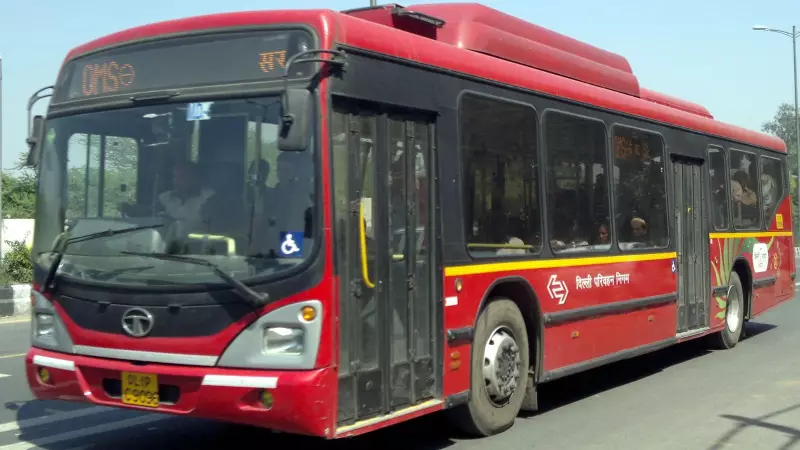
The Delhi government has taken a major step towards transforming the capital's public transportation system into a greener and more efficient network. In a significant move, the administration has formally written to the Centre, seeking the immediate procurement of 3,300 new low-floor, air-conditioned electric buses.
Boosting the Fleet Under PM E-DRIVE Scheme
This proposal was discussed in a high-level meeting recently chaired by Chief Minister Rekha Gupta with officials from Convergence Energy Services Limited (CESL). The meeting resulted in a decision to increase Delhi's bus allocation under the PM E-DRIVE Scheme (Phase-2). CESL, established in 2020, plays a key role in supporting India's ambition of achieving net-zero carbon emissions by 2070.
The PM E-DRIVE Scheme, an initiative of the Union Ministry of Heavy Industries, aims to accelerate electric vehicle adoption through financial incentives to improve air quality. It also assists states in strengthening EV charging infrastructure, including the installation of fast chargers.

Detailed Plan for Comprehensive Connectivity
After a thorough reassessment of the city's transportation needs, the Delhi government has placed a demand for buses of three different sizes to ensure seamless connectivity. The detailed proposal includes:
- 500 buses of 7 metres: Intended to navigate narrow streets and provide crucial last-mile connectivity to residents.
- 2,330 buses of 9 metres: To operate on smaller roads as feeder services, connecting neighborhoods to major transit points.
- 500 buses of 12 metres: For deployment on main routes and heavily congested corridors to move large numbers of passengers efficiently.
Officials emphasized that the new fleet of low-floor buses will make travel significantly safer and more comfortable for women passengers and senior citizens.
Aiming for a Global Benchmark in Green Transport
The Chief Minister's Office stated that the government's goal is to ensure that Delhi can soon boast one of the largest and cleanest electric bus networks in the world. The new buses are expected to curb public dependence on private vehicles, leading to a significant reduction in harmful emissions.
In a strong commitment to the project, the CMO clarified that if any technical hurdles arise regarding subsidies, the Delhi government is fully prepared to bear the cost itself to prevent delays in procurement. "Keeping the interests of Delhi’s citizens paramount, the CM has made it clear... the Delhi government is fully prepared to bear the cost itself," the statement underlined.
Currently, Delhi operates a total of 5,335 buses, out of which 3,535 are electric. This includes 1,162 nine-metre DEVI buses, 2,273 twelve-metre buses, and 100 feeder buses. The induction of 2,800 buses under PM E-DRIVE (Phase-1) will first take the total fleet to 10,430. Subsequently, the addition of the requested 3,300 buses in Phase-2 will expand it to approximately 13,760 buses.
Chief Minister Rekha Gupta has set ambitious targets, stating that more electric buses will be operating by March 2026. "Our target is to raise the number of buses to 7,500 by the end of this year and further to 11,000 in the next two years," she said. The government has requested the Centre and the Ministry of Heavy Industries to include this additional requirement under the subsidy model, over and above the already allotted quota of 2,800 buses.






