Union Budget 2026 Prioritizes Development of Temple Towns in Maharashtra
In a significant move aimed at balanced regional growth, the Union Budget 2026-27 has placed a strong emphasis on developing tier II and III cities, with a special focus on temple towns that require modern infrastructure and basic amenities. This initiative is poised to benefit several pilgrimage centers across Maharashtra, which attract thousands of devotees annually.
Strategic Focus on Urban Growth Engines
During her budget speech, Union Finance Minister Nirmala Sitharaman highlighted that cities are India's engines of growth, innovation, and opportunities. "We shall now focus on tier II and III cities, and even temple-towns, which need modern infrastructure and basic amenities," she stated, specifically targeting cities with populations exceeding five lakh.
Maharashtra Chief Minister Devendra Fadnavis welcomed the budget's direction, noting its potential to address the challenges of growing urbanization in the state. "This Budget has direction, speed and funds for different sectors, especially to tackle growing urbanisation. This is a major challenge for Maharashtra. For the first time, planned unified development of cities with more than 5 lakh population has been proposed," he remarked.

Kolhapur: Enhancing Facilities for Mahalaxmi Temple Devotees
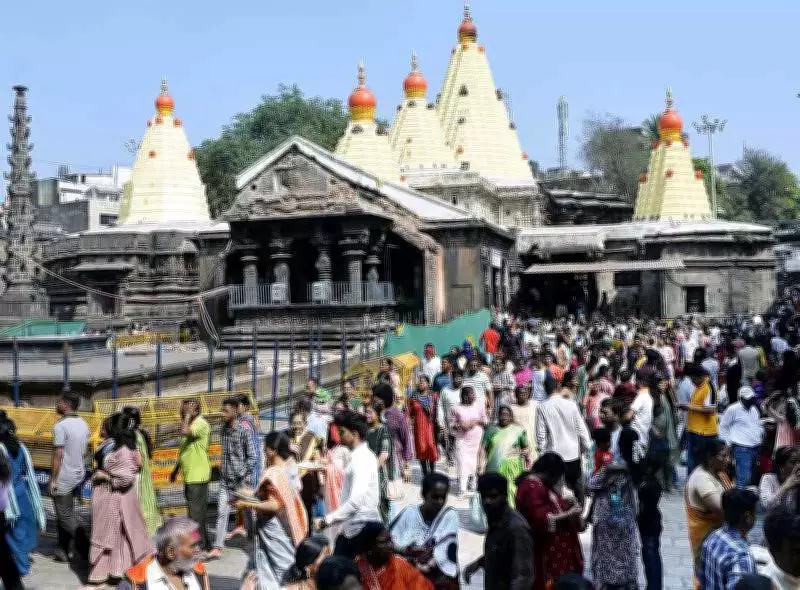
In Kolhapur, home to the revered Mahalaxmi Temple, existing development plans are expected to receive a significant boost. Experts point out that current limitations, such as inadequate parking and a shortage of lodging facilities, often force devotees to leave the city immediately after their temple visit.
Sanjay Shete, President of the Kolhapur Chamber of Commerce and Industries, emphasized the need for substantial improvements. "There is a need for big multilevel parking facilities. Also, the vacant space near Shahu Mill can be utilised to develop tourist lodges," he suggested, highlighting how budget allocations could address these gaps.
Nashik: A Hub for Pilgrimage Development
Nashik, with its numerous pilgrimage sites including the Trimbakeshwar Temple, Shirdi, and Saptashrungi Gad, stands to gain considerably from the budget's focus. The district collector, Ayush Prasad, outlined a vision for developing these areas on a hub-spoke model to spur economic growth.
"There are vast opportunities for the development of these places. They can be developed as religious or pilgrimage spots on a hub-spoke model for economic growth. The Budget could help in measures like setting up corridors for transportation between these places," Prasad explained.
Key projects awaiting clearance include proposed ropeways at Trimbakeshwar and Saptashrungi Gad, which would not only provide convenient transportation but also serve as tourist attractions in their own right.
Addressing Infrastructure Challenges
A senior official involved in the planning process noted that while local bodies can manage issues like toilets and parking, connectivity improvements require substantial government funding and support. "Central govt spending here could create ample opportunities for economic growth," the official affirmed.
In Nashik, ongoing projects such as Phase 1 of Ram Kaal Path, funded with Rs 99.1 crore from central government sources, are already underway. Municipal Commissioner Manisha Khatri revealed plans for a Phase 2 project worth Rs 350 crore, aimed at developing the ghat from Holkar Bridge to Talkuteshwar bank.
"We are proposing a phase 2 project worth Rs 350 crore that will cater to the development of the ghat from Holkar Bridge to Talkuteshwar bank, creating a vending zone and parking facility. Amusement area and plantation will create a serene atmosphere here, attracting tourists," Khatri detailed, illustrating the comprehensive approach to urban beautification and functionality.
Broader Implications for Maharashtra's Pilgrimage Economy
The budget's focus extends beyond individual cities to encompass a statewide strategy for enhancing pilgrimage infrastructure. At Pandharpur, where the Vitthal Rukhmini Temple is located, the state government plans to develop a temple corridor inspired by the model in Ujjain, Madhya Pradesh, further integrating religious tourism with urban development.

This initiative is expected to not only improve the experience for devotees but also stimulate local economies by creating jobs, boosting tourism, and fostering sustainable urban growth in Maharashtra's smaller cities.