Finance Minister Nirmala Sitharaman, while presenting the Union Budget 2026-27 in Parliament on Sunday, unveiled a comprehensive strategy to propel India's creative industries, often referred to as the "orange economy." The budgetary announcements are strategically designed to generate future-ready employment opportunities and enhance skill development across vital sectors like animation, design, and emerging technologies.
Major Push for AVGC Sector with Nationwide Labs
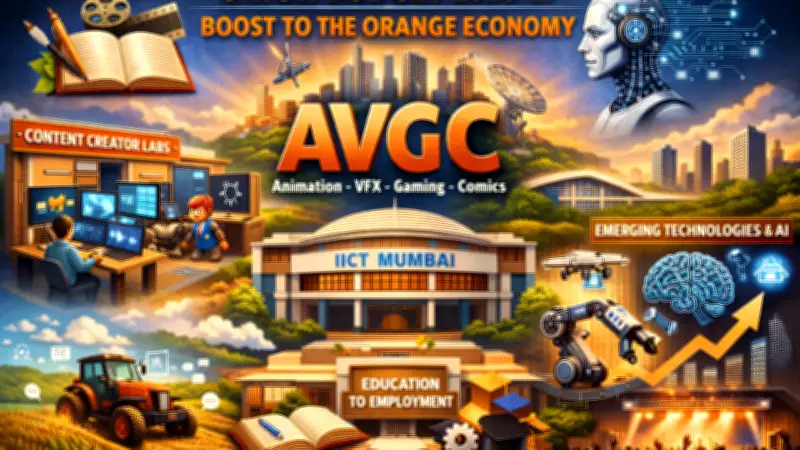
In her budget speech, Sitharaman emphasized the rapid expansion of India's Animation, Visual Effects, Gaming, and Comics (AVGC) industry. She highlighted projections indicating a demand for approximately two million professionals by the year 2030. To address this growing need and cultivate a robust talent pipeline, the government has proposed a significant initiative.
"I propose to support the Indian Institute of Creative Technologies (IICT), Mumbai, in setting up AVGC Content Creator Labs in 15,000 secondary schools and 500 colleges across the nation," Sitharaman declared. This ambitious program aims to democratize access to creative technologies and empower students from an early age.

The government envisions that this initiative will fortify India's next-generation creator workforce, simultaneously fostering job creation, encouraging startup ecosystems, and driving innovation within the broader creative economy. This focus aligns seamlessly with the observations made in the Economic Survey 2025-26.
Economic Survey Validates Orange Economy Potential
The pre-budget Economic Survey had identified creativity-led sectors—including culture, media, entertainment, and intellectual property—as potential significant drivers for employment, urban services, and tourism. It defined the "orange economy" as economic activities that derive their primary value from ideas, artistic expression, and cultural capital.
The Survey also pointed to the promising "concert economy" as a catalyst for boosting tourism and urban services, while candidly acknowledging existing challenges. These hurdles, such as a shortage of adequate venues and various regulatory obstacles, must be addressed to enable the sector to scale up effectively and realize its full potential.
Strengthening Design Education and Regional Development
Beyond the AVGC sector, Sitharaman's budget also cast a spotlight on India's rapidly growing design industry, which currently faces a shortage of trained professionals. To bridge this skill gap and promote balanced regional development, the Finance Minister announced a key proposal.
The government plans to establish a new National Institute of Design (NID) in eastern India. This institution is expected to significantly strengthen design education infrastructure, nurture local talent, and contribute to the socio-economic development of the region.
Emerging Technologies as a Central Pillar
The Budget 2026-27 underscored that emerging technologies, particularly Artificial Intelligence (AI), are central to the government's mission of building citizen capacity and enabling inclusive, broad-based growth. It recognized several flagship initiatives as key pillars supporting this technological advancement.
- The National AI Mission
- The National Quantum Mission
- The Anusandhan National Research Fund
- The Research, Development and Innovation Fund
The budget document acknowledged the transformative role of technology in benefiting diverse groups, including farmers, women in STEM fields, youth seeking upskilling opportunities, and persons with disabilities. It firmly stated that these emerging technologies will play a pivotal role in expanding the scope and impact of India's orange economy.
Key Proposals: Bharat-VISTAAR and Skills Committee
Among other notable proposals aimed at leveraging technology for tangible benefits, the budget announced 'Bharat-VISTAAR' (Virtually Integrated System to Access Agricultural Resources). This is envisioned as a multilingual, AI-based platform that will integrate existing AgriStack portals with agricultural practices recommended by the Indian Council of Agricultural Research (ICAR). The goal is to enhance farm productivity and support better decision-making for farmers.

Furthermore, recognizing the profound impact of AI on the future of work, the government proposed setting up a high-powered 'Education to Employment and Enterprise' Standing Committee. This committee will be tasked with assessing the effects of AI and other emerging technologies on jobs and skills, ensuring that India's workforce development strategies remain agile and responsive to technological change.
Collectively, these measures presented by Finance Minister Nirmala Sitharaman represent a holistic and forward-looking approach to nurturing India's creative and technological prowess, positioning the orange economy as a vital engine for future growth and employment.