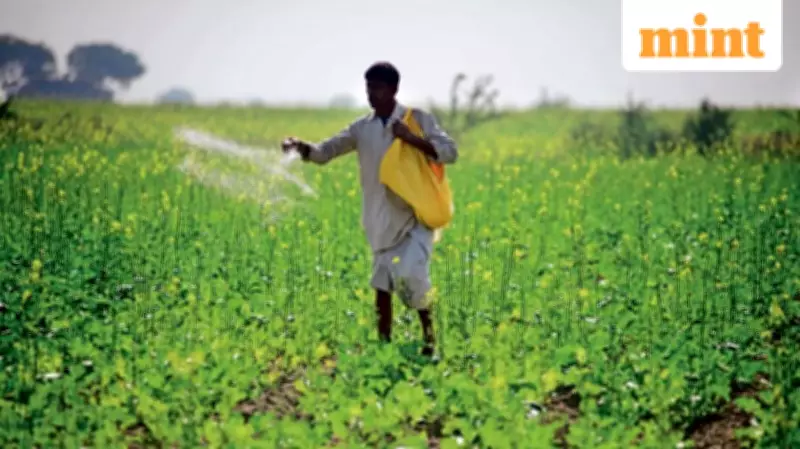
Budget 2026: What Indian Agriculture Needs for a Sustainable Future
With the Union Budget scheduled for February 1, 2026, all eyes are on how the government plans to address the pressing challenges facing India's agricultural sector. Despite employing approximately 46% of the workforce and showing resilience against climate risks, the sector is grappling with declining crop prices and productivity gaps. This analysis outlines five critical areas where budgetary interventions could reinvigorate rural India.
Addressing the Farm Price Crisis
Indian agriculture presents a paradox of rising production alongside falling prices. The 2025-26 kharif season saw food production increase by 2.3% to 173 million tonnes, thanks to favorable monsoon conditions. However, this abundance has triggered a deflationary trend in food prices, with retail prices declining by 2.7% year-on-year by December. While beneficial for consumers controlling inflation, this price slump has severely impacted farmers.
Most crop prices have fallen below the government's minimum support prices (MSP), including non-food crops like cotton. Even for non-MSP crops such as potatoes and onions, prices have plummeted by 22-28% compared to the previous year. This situation underscores the urgent need for enhanced budgetary allocation toward price support schemes to stabilize farm incomes and stimulate rural demand.

Revitalizing India's Deteriorating Soil Health
India ranks among the world's top producers of rice, wheat, fruits, and vegetables, yet its crop yields significantly lag behind global averages. This productivity gap is particularly evident in cotton and oilseeds. A fundamental solution lies in improving soil health, which has been deteriorating despite initiatives like the Soil Health Card Scheme launched in 2015.
Currently, Indian soils contain organic carbon levels between just 0.3% and 0.6%, far below the optimal range of 1-1.5%. The upcoming budget presents an opportunity to strengthen programs focused on soil health and natural farming missions. Such investments would not only boost agricultural productivity but also enhance food quality and sustainability.
Boosting Agricultural Research Funding
Agricultural research remains critically underfunded in India. Last year's budget allocated ₹10,466 crore for this purpose, representing less than 0.5% of the farm sector's GDP. This is particularly concerning given that a 2024 study by the National Institute of Agriculture Economics and Policy Research found that every rupee invested in agricultural research yields a 14-fold return.
With India facing significant crop-yield gaps and increasing climate vulnerabilities, substantial increases in research funding are essential. Strategic investments in agricultural innovation could help bridge productivity gaps and build climate resilience across the sector.
Rationalizing Subsidy Structures
India's subsidy expenditure presents both a financial burden and an opportunity for reform. In 2025-26, the country is projected to spend approximately ₹3.7 trillion on fertilizer and food subsidies. Current policies have created unintended consequences: cheap urea encourages overuse, leading to soil nutrient imbalances, while MSP assurances for rice and wheat promote water-intensive cereals over pulses and oilseeds where India remains import-dependent.
A thoughtful revamp of these subsidies could make Indian agriculture more productive, profitable, and sustainable. Additionally, experts suggest reevaluating the direct cash transfer scheme for farmers (₹63,500 crore), proposing that these funds could be more effectively deployed in irrigation infrastructure, research initiatives, and crop insurance programs.
Expanding Non-Farm Rural Opportunities
Agricultural households increasingly rely on non-farm income sources, with wage earnings contributing over 40% of their monthly income. This dependence is even higher for landless families. Therefore, budgetary allocations for rural housing, road connectivity, drinking water, and sanitation—which totaled ₹1.5 trillion in 2025-26—are crucial for boosting rural wages and livelihoods.

The transition from the Mahatma Gandhi National Rural Employment Guarantee Programme (with an estimated ₹86,000 crore allocation in 2025-26) to a new rural employment scheme adds another dimension to watch. The funding quantum for this replacement program will significantly influence rural economic prospects.
As Finance Minister prepares to present the budget, these five areas represent the most pressing needs for India's agricultural sector. Strategic investments in price support, soil health, research, subsidy reform, and rural infrastructure could transform the rural economy while ensuring food security and environmental sustainability.