Union Budget 2026-27 Presents Ambitious Blueprint for India's Tech and Electronics Sector Growth
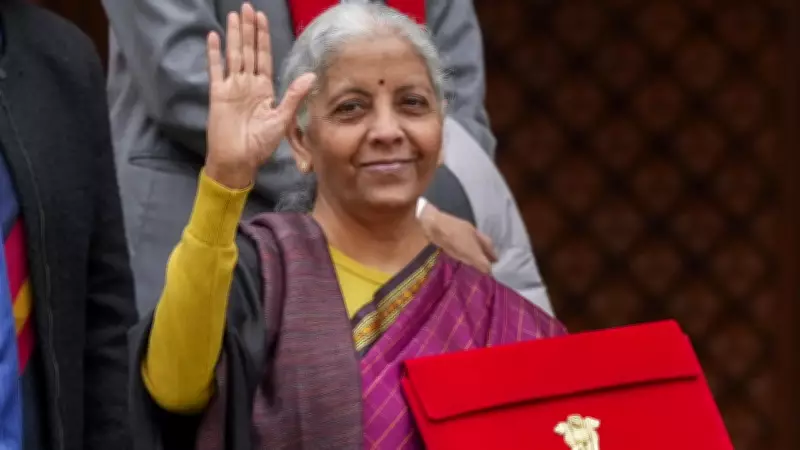
Union Finance Minister Nirmala Sitharaman presented the Union Budget for the Financial Year 2026-27 today, outlining a comprehensive strategy to accelerate the growth of India's Electronics and Information Technology sector. The budget includes significant announcements aimed at bolstering infrastructure, attracting global investments, and fostering innovation across various technological domains.
Key Technology-Focused Announcements in Budget 2026-27
The budget speech highlighted several pivotal measures designed to strengthen India's position as a global technology hub. Here are the eight most significant announcements related to the technology sector:

- Launch of India Semiconductor Mission (ISM) 2.0: Building on the success of ISM 1.0, the government has announced ISM 2.0 with a focus on producing equipment and materials, designing full-stack Indian intellectual property, and fortifying supply chains. The initiative will emphasize industry-led research and training centers to develop cutting-edge technology and a skilled workforce. A provision of Rs. 1,000 crores has been allocated for this mission in FY 2026-27.
- Increased Outlay for Electronics Components Manufacturing Scheme (ECMS): The budget proposes to enhance the outlay of the ECMS, which was launched in April 2025 with an initial allocation of Rs. 722,919 crore. The new proposed outlay is Rs. 40,000 crore, aimed at capitalizing on the existing momentum in electronics manufacturing.
- Unified Category for IT Services: Recognizing India's leadership in software development services, Budget 2026 proposes to club all companies offering IT services, including IT-enabled services, Knowledge Process Outsourcing (KPO), and contract R&D services related to software development, under a single category termed 'Information Technology Services'. A common safe harbour margin of 15.5 percent will be applicable across this unified category.
- New Safe Harbour Provisions for IT Companies: To support the IT sector as a key growth engine and provide tax certainty, the budget introduces new safe harbour provisions for IT/ITeS companies. The threshold for availing safe harbour is proposed to be substantially increased from Rs. 300 crore to Rs. 2,000 crore. Additionally, the approval process will be automated and rule-driven, eliminating the need for tax officer examination. Companies can opt to continue the safe harbour for a period of five years consecutively.
- Fast-Track Advance Pricing Agreement (APA) Process: For IT services companies seeking to conclude APAs, the budget proposes to expedite the Unilateral APA process, aiming for completion within two years, with a possible six-month extension upon taxpayer request. The facility of modified returns will also be extended to associated entities of the company entering into an APA.
- 20-Year Tax Holiday for Foreign Cloud Service Providers: In a major push to attract global data centre investments, the government has proposed a tax holiday until 2047 for foreign companies providing cloud services from data centres in India. These companies must serve Indian customers through an Indian reseller entity. A safe harbour of 15 percent on cost is also proposed for related entities providing data centre services from India, offering tax certainty and operational efficiency.
- Content Creator Labs in Educational Institutions: Acknowledging the growth potential of India's Animation, Visual Effects, Gaming, and Comics (AVGC) sector, which is projected to require 2 million professionals by 2030, the budget proposes to support the Indian Institute of Creative Technologies, Mumbai, in establishing AVGC Content Creator Labs across 15,000 secondary schools and 500 colleges. This initiative aims to foster creativity and skill development in line with India's Orange economy.
- Introduction of Bharat-VISTAAR AI Tool: The budget announces 'Bharat-VISTAAR' (Virtually Integrated System to Access Agricultural Resources), a multilingual AI tool designed to integrate AgriStack portals and the ICAR package on agricultural practices with AI systems. This tool is expected to enhance farm productivity, improve farmer decision-making, and reduce risks through customized advisory support.
Broader Economic Context and Implications
The Union Budget 2026-27 sets a capital expenditure target of Rs. 12.2 lakh crore for FY27, reflecting the government's commitment to infrastructure development. The budget also includes revisions to income tax slabs and rates under both new and old tax regimes, alongside changes in the prices of various goods and services, impacting the broader economy.

These technology-focused measures are poised to drive innovation, attract foreign investment, and create employment opportunities, aligning with India's vision of becoming a self-reliant and technologically advanced nation. The emphasis on semiconductors, cloud services, and AI underscores the strategic importance of these sectors in the country's economic growth trajectory.