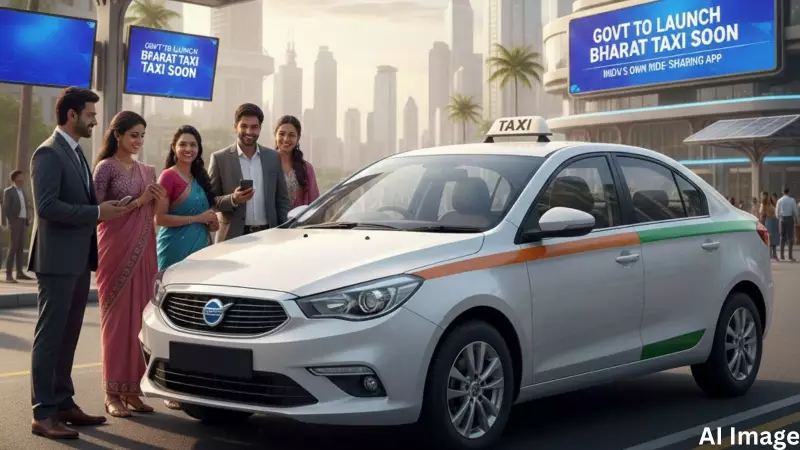
The Indian government is set to roll out a new ride-hailing application named 'Bharat Taxi', designed to challenge the dominance of private players like Ola and Uber. Announced by Union Minister of Cooperation Amit Shah, this initiative aims to create a more equitable mobility ecosystem for drivers and passengers across the country.
Official Announcement and Launch Framework
In a written reply to Lok Sabha on December 2, 2025, Amit Shah confirmed the government's proposal to launch a cooperative-led digital mobility platform. The move directly responds to a question raised by Lok Sabha MP Rajpalsinh Mahendrasinh Jadav, who inquired about plans to reduce drivers' dependency on private companies.
The application will be operated by the Sahakar Taxi Cooperative Limited, a multistate cooperative society registered under the MSCS Act 2002 (Registration: MSCS/CRCS/1629/2025 dated June 6, 2025). This structure is central to the government's vision of placing ownership and control back into the hands of driver communities.

Salient Features of the Bharat Taxi Platform
According to the details shared by Minister Shah, the Bharat Taxi app will come packed with user-centric features designed to enhance trust and accessibility. The key highlights include:
- User-friendly mobile ride booking with a transparent fare structure.
- Real-time vehicle tracking and support for multi-lingual interfaces.
- 24/7 customer service to ensure constant support for users.
- Secure and verified driver onboarding to prioritize passenger safety.
- Tech-enabled support systems and inclusive mobility solutions.
Economic Benefits and Zero-Commission Model
The most significant advantage promoted by the Bharat Taxi model is its economic proposition for drivers. The platform will operate on a zero-commission model, ensuring that drivers receive the full earnings from each ride without any deductions by the aggregator.
Furthermore, any profits generated by the Sahakar Taxi Cooperative Limited will be distributed directly to the driver-members. This cooperative approach, coupled with a transparent pricing model, is expected to benefit both the service providers (drivers) and the end-users (passengers) by creating a fairer marketplace.
The launch of Bharat Taxi marks a pivotal shift in India's digital mobility landscape, introducing a citizen-first alternative rooted in cooperative principles. It represents a direct effort to rebalance the power dynamics in the gig economy and provide sustainable livelihoods for commercial vehicle drivers.