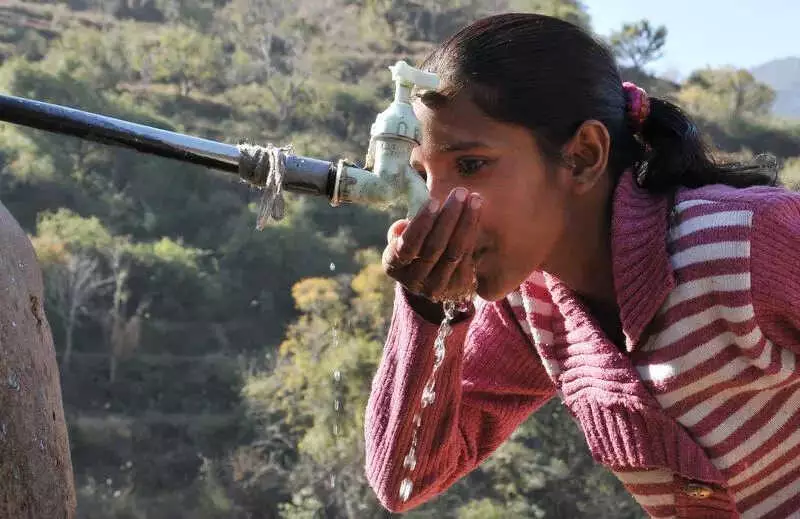
Uttarkashi's Persistent Water Crisis: 51 Villages Still Await Tap Water
More than five years have passed since the Central Government launched the ambitious Jal Jeevan Mission. Yet, in Uttarkashi district, a stark reality persists. Fifty-one villages remain completely without access to tap water. This failure to meet the 2024 implementation deadline has created an acute and ongoing water crisis for thousands of residents.
The Daily Struggle for Water
In these remote, hilly villages, fetching water is not a simple chore. It is a grueling daily struggle. Residents must walk long distances to reach natural water sources like springs and streams. This physically demanding task falls disproportionately on women and the elderly.
The problem intensifies with the changing seasons. During the harsh summer months, many of these natural sources simply dry up. In winter, the water freezes solid, severely limiting what little is available. The cycle of scarcity continues year-round.

"The delays are adding to the immense hardship of our residents," said Congress district president Pradeep Rawat, highlighting the human cost of the stalled projects.
Stalled Projects and Forest Hurdles
Under the Jal Jeevan Mission, a significant sum of Rs 121 crore has been officially sanctioned for water supply schemes in these 51 villages. Despite the allocated funds, progress has been minimal. Officials confirm that most projects have either not started at all or were halted midway.
The primary reason for this standstill? Delays in obtaining mandatory forest clearances.
"Forest-related objections remain the biggest hurdle in completing the mission's work in the district," explained Madhu Kant Kotiyal, Executive Engineer of the Uttarkashi water corporation. "The proposals have already been sent."
In a particularly frustrating scenario, work in several villages is nearly 90% complete. However, the final phase involves forest land, and without the necessary approvals, everything remains stuck. Kotiyal estimates that work is incomplete in approximately 26 villages due to this single issue.
"Once the clearances are received from the forest department, work will start," he stated, pointing to a bureaucratic bottleneck that leaves villagers waiting indefinitely.
The promise of Har Ghar Jal (tap water to every home) remains unfulfilled for these communities. They continue their long walks for water, their hope for a basic necessity deferred by procedural delays.