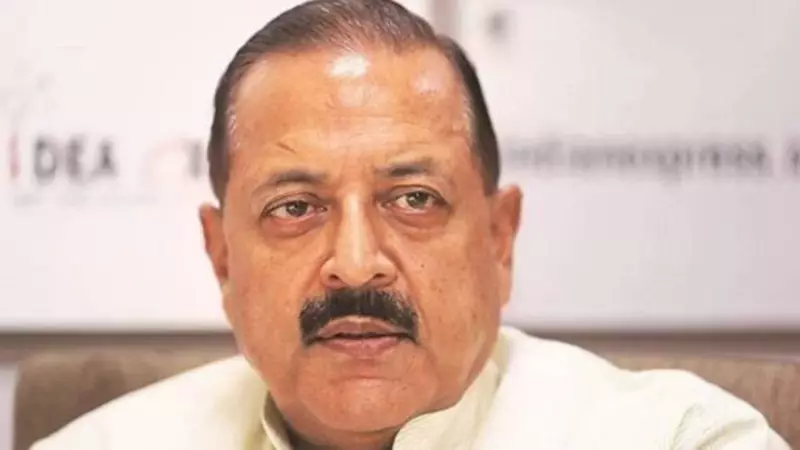
Union Minister Jitendra Singh commemorated the Union Public Service Commission's (UPSC) 100-year journey, lauding it as the steadfast guardian of India's governance structure. Addressing the inaugural session of the 'Shatabdi Sammelan' in New Delhi on Wednesday, November 27, 2024, the minister underscored the commission's unwavering commitment to integrity, fairness, and transparency throughout India's pre- and post-independence history.
A Century of Upholding Constitutional Values
Speaking at the Bharat Mandapam, Singh invoked Sardar Vallabhbhai Patel's famous description of the civil services as the "steel frame of India." He affirmed that the UPSC has lived up to the monumental responsibility of being the protector of this foundational framework. The two-day centenary conclave, held on November 26-27, marks a significant milestone, bringing together former and current chairpersons, members of UPSC and State PSCs, senior government officials, and governance experts.
Jitendra Singh, the Minister of State for Personnel, expressed his satisfaction that despite evolving challenges and debates surrounding constitutional bodies, the UPSC continues to uphold the highest traditions of India's constitutional values, meritocracy, and fairness. He emphasized that the architects of the "Viksit Bharat @ 2047" vision will emerge from this very institution, which has nurtured generations of the nation's finest civil servants.
Beyond Recruitment: UPSC's Expansive Role
The minister highlighted the commission's broader mandate, which extends far beyond conducting recruitment examinations. He detailed its critical functions in framing and updating service rules, reviewing administrative practices, and setting the ethical standards for public service in India. This multifaceted role ensures the continued robustness and integrity of the country's administrative machinery.
A key innovation that received special commendation was the UPSC's 'Pratibha Setu' portal. Singh described this initiative as an innovative bridge connecting talent with opportunity. The portal is designed to create new pathways for candidates who have successfully cleared preliminary stages of the civil services examination but were not in the final selection list, by linking them with potential openings in the private sector and other institutions.
Leaders Hail UPSC's Legacy and Future
In his welcome address, UPSC Chairman Ajay Kumar reaffirmed the commission's dedication to the ideals of fairness, meritocracy, and equity in all its recruitment, examination, and promotion systems. He acknowledged the contributions of former members, calling them luminaries who set high standards, and stressed the strong institutional bond between the UPSC and State Public Service Commissions across India. Kumar concluded by stating that the UPSC will always remain the sacred temple of trust and integrity envisioned by the framers of the Indian Constitution.
Lok Sabha Speaker Om Birla, delivering the keynote address, extended greetings on the dual occasion of UPSC's centenary and Constitution Day. He hailed the commission as one of the most vital institutions in India's democratic and administrative framework. Birla noted that over its 100-year journey, the UPSC has embodied the core principles of transparency, impartiality, confidentiality, and accountability, setting benchmarks for governance systems globally.
Birla also pointed to the inclusive nature of the UPSC process, where candidates from every region, language, and socio-economic background participate with complete faith in its fairness. He urged the commission to continue evolving to meet future challenges, including those posed by artificial intelligence, climate change, cybersecurity, and national security, ensuring it continues to define the future of Indian governance in its second century.