

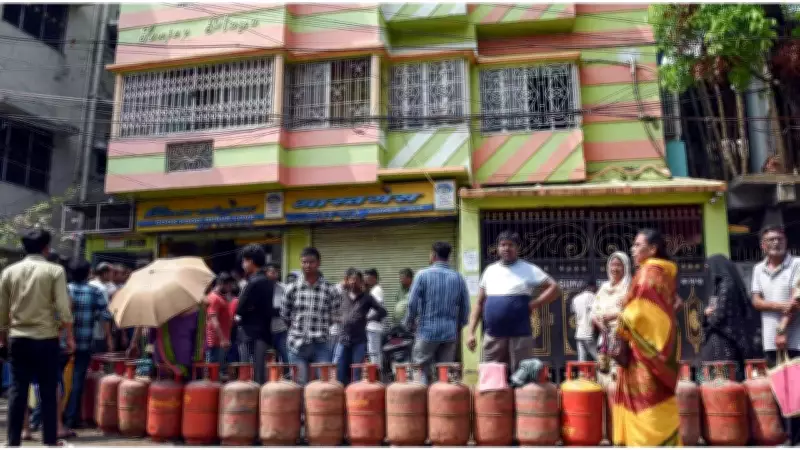
LPG Cylinder Supply Disruption Triggers Widespread Panic Across Uttar Pradesh
A significant disruption in the supply chain and booking system for domestic LPG cylinders has created a crisis situation across multiple districts in Uttar Pradesh, leading to panic buying, long queues, and reports of black marketing. The mandatory implementation of the delivery authentication code (DAC) system appears to have intensified the rush, with technical failures compounding the logistical challenges.
Consumers Forced to Revert to Traditional Cooking Methods
Across the state, consumers have been forced to queue outside gas agencies for hours, with many ultimately returning empty-handed after encountering "stock finished" notices. The situation has become so dire that numerous households have reverted to using traditional wood-fired stoves for cooking, highlighting the severity of the disruption to daily life.
In Ambedkar Nagar district, officials claimed that approximately 14,000 cylinders were available across agencies serving nearly 5.1 lakh consumers. However, this official stock count contrasted sharply with ground reality, where consumers struggled to obtain refills despite the apparent availability.

Technical Failures and System Breakdowns
The crisis has been exacerbated by multiple technical failures. In Bahraich, consumers reported that LPG booking helpline numbers stopped responding, while OTPs required for delivery authentication failed to arrive. Network and server issues caused repeated booking failures across several districts.
Balrampur experienced complete network failures that halted online booking systems entirely, forcing consumers to visit agencies for manual booking. Even then, they were given delivery dates 4-5 days later, creating further inconvenience and uncertainty.
Human Stories of Hardship and Inconvenience
Residents across affected districts have shared harrowing accounts of their struggles. Seema from Shehzadpur in Ambedkar Nagar district booked a cylinder on February 23 but still had not received it weeks later, forcing her to cook on a traditional stove.
Suresh Kumar of Mirpur Sheikhpur visited agencies repeatedly since March 5 only to be told that stock had run out. In Madhavpur, consumers arrived at a gas service agency to find it locked, adding to their frustration.
In Basti, Aarti Devi waited in line for three hours despite severe body pain, while Meena Kumari reported that people were first given tokens and then asked to travel several kilometers to villages to collect cylinders.
Black Marketing Allegations and Official Response
Serious allegations of irregularities have emerged, with consumers in Basti claiming that LPG cylinders were being sold in the black market for Rs 1,500-2,000, significantly above official prices. In Hardoi, authorities seized 45 LPG cylinders allegedly being transported illegally for black marketing near the Sandila block office.
District Magistrate Anunay Jha of Hardoi warned that action would be taken against anyone found involved in illegal storage or black marketing. This sentiment was echoed in Balrampur, where District Magistrate Vipin Kumar Jain chaired a review meeting with oil company officials and distributors.
Jain stated that there was no actual shortage of LPG supply but warned that negligence in distribution or illegal practices would not be tolerated. However, these official assurances have done little to alleviate the immediate suffering of consumers.
Institutional Impact and Verification Challenges
The shortage has extended beyond individual households to affect welfare schemes and institutions. Officials reported difficulty arranging LPG cylinders for preparing mid-day meals, potentially impacting nutrition programs for children.
In Rae Bareli, hundreds of consumers stood in long queues for KYC verification and booking. Officials reported distributing 8,954 cylinders with 7,936 remaining in stock across 56 agencies, but repeated server failures disrupted the booking and KYC process, leading to heated arguments and crowding outside outlets.

The crisis highlights the vulnerabilities in India's LPG distribution system when faced with technical failures and increased demand. As consumers continue to struggle with basic cooking needs, questions remain about how quickly the system can be stabilized and whether similar disruptions might occur in other states.





