Thiruvananthapuram's Bus Shelter Crisis: Daily Danger for Commuters
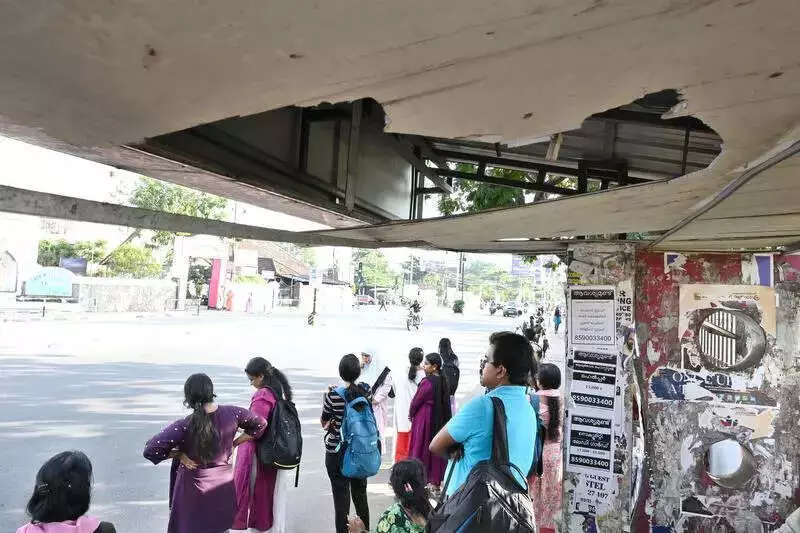
In the bustling neighborhood of Peroorkada, a familiar and hazardous scene unfolds daily. Crowds of commuters cluster by the roadside, their eyes intently scanning the incoming traffic. The moment a KSRTC bus comes into view, they surge forward onto the carriageway, forcing drivers to swerve and brake abruptly to avoid collisions. This dangerous dance is not isolated; it repeats across numerous bus stops throughout Thiruvananthapuram, highlighting a critical urban infrastructure failure.
The Absence of Basic Amenities
Thiruvananthapuram boasts a comprehensive public transport network, with KSRTC and private buses covering approximately 70% of the core city area. However, this network is severely compromised by the lack of a fundamental facility: proper bus shelters. Neither the city corporation, KSRTC, nor government agencies focused on urban development have prioritized this essential need. As a result, many bus stops offer no shelter at all, leaving passengers exposed to harsh weather and pushing them dangerously close to moving traffic.
Where shelters do exist, they are frequently in a state of disrepair. Many have not been updated for over 25 years, suffering from poor design, damage, and inadequate maintenance. The city corporation, tasked with maintaining these structures, lacks a uniform policy for their design or funding. Often, shelters are constructed using funds from elected representatives, resulting in crude sheds that neglect commuter comfort and aesthetic appeal.

Key Locations Left Vulnerable
The problem is widespread, affecting even prominent areas. Notable bus stops without shelters include:
- In front of the public sector bank at Statue Junction
- Near the Government Secretariat
- At Bakery Junction towards Palayam
- In front of the forest headquarters
- At Kalabhavan
- Near Cotton Hill LP School
For visitors to the city, locating a bus stop becomes a guessing game, with clusters of people standing roadside serving as the only reliable indicator. This not only inconveniences commuters but also poses significant safety risks.
Unusable Shelters and Resident Frustrations
Even when shelters are present, many are unfit for use. For instance, the ceiling at the bus shelter opposite Palayam church hangs precariously loose, while at Kowdiar, roof tiles have fallen off the shelter serving buses toward Vellayambalam. Resident associations have repeatedly petitioned for improvements, but progress remains elusive.
Paraniyam Devakumar, patron of the Fraternity of Residents Association (FRAT), which coordinates around 1,000 associations, expressed deep concern. "We are pushing the corporation to maintain the bus shelters and formulate a uniform policy for the entire city. The shelters are not designed for the convenience of commuters. People suffer when there is rain and during summer," he said. He added that the corporation's promises of action have become a routine without tangible results.
Root Causes and Systemic Issues
The poor condition of bus shelters stems partly from fragmented funding mechanisms. Shelters are built using money from people's representatives, the Smart City Mission, and various agency sponsorships. However, maintenance responsibility falls solely on the urban body, leading to neglect.
Sumesh Krishnan, a central committee member of the Federation of Residents Associations, highlighted another critical issue: space for bus shelters is often overlooked during road or pavement design. For example, the recently re-developed Vellayambalam-Vazhuthacaud stretch, which features cycle tracks and well-designed pavements, did not include plans for bus shelters.
S N Raghuchandran Nair of the Trivandrum Chamber of Commerce and Industry emphasized the need for a scientific approach. "The government should conduct a scientific study to allot bus stops and build modern shelters. These shelters should provide information and commuter conveniences, designed aesthetically in Kerala style to enhance the city's character," he stated.

Unique Challenges and Future Plans
A KSRTC official pointed out a peculiar challenge: bus stops in Thiruvananthapuram are shared by government and private buses, making it difficult for the corporation alone to assume responsibility. This differs from many metro cities where private buses do not operate, complicating coordination.
In response, the government is now planning to construct modern smart bus shelters at around 30 locations, covering most core areas. These shelters, to be built by Smart City, KSRTC, or private agencies, aim to integrate multimodal mobility and intelligent transport systems, potentially offering a long-overdue solution to the crisis.
As Thiruvananthapuram continues to grow, addressing this basic yet critical infrastructure gap is essential for ensuring commuter safety and enhancing the city's public transport experience. The daily risks faced by passengers underscore the urgent need for coordinated action and sustainable policies.