

Telangana's Digital Bus Ticketing Initiative Faces Operational Hurdles
The Telangana State Road Transport Corporation (TGSRTC) has embarked on a significant modernization drive by introducing electronic ticketing machines, but the transition is encountering substantial operational challenges. Conductors and passengers alike are reporting persistent delays and technical difficulties in issuing digital tickets, highlighting the complexities of digitizing public transport systems.
Network Connectivity Issues Cause Significant Delays
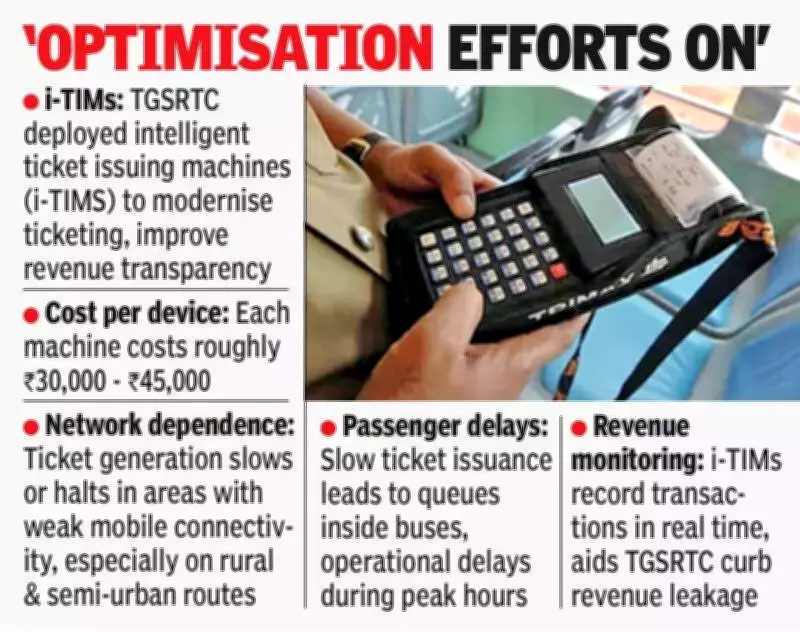
At the heart of the problem lies the heavy dependence of the intelligent ticket issue machines (i-TIMs) on network connectivity. In areas with weak signal strength, particularly on rural and semi-urban routes, ticket generation can take between 30 to 45 seconds per passenger. This slowdown often results in long queues inside buses, disrupting operations and causing considerable inconvenience to commuters during peak hours.
A bus conductor from the Kushaiguda bus depot shared insights with TOI, noting that the delays create immense pressure when buses are crowded. With tight schedules to maintain and passengers growing impatient, the slow processing speed complicates routine ticketing tasks and can lead to disputes over delays in ticket issuance.

Technical Glitches and Revenue Transparency Goals
The i-TIMs, which cost approximately Rs 30,000 to Rs 45,000 each, are designed to generate QR-coded digital tickets aimed at improving transparency and reducing manual errors. However, frequent interruptions due to mobile data network drops cause the devices to either slow down significantly or temporarily halt ticket issuance, forcing conductors to wait for network stabilization.
Officials from TGSRTC have acknowledged these initial challenges but emphasize that the system is part of a broader effort to digitize operations and curb revenue leakage. The machines record transactions in real-time and transmit data directly to a central server, enabling the organization to monitor ticket sales and operational performance more effectively.
Official Response and Future Optimizations
Sudha Parimala, Regional Manager in Hyderabad, stated to TOI, "The electronic ticketing machines are part of TGSRTC's broader effort to modernise operations and improve transparency in revenue collection. We are aware that conductors are facing delays in some areas due to network connectivity issues, particularly on rural routes. Technical teams are working to optimise the system and improve connectivity so that ticket issuance becomes faster and more seamless for both staff and passengers."
Field staff are actively urging authorities to enhance network support and refine the device software to reduce processing times. With around 6,500 i-TIMs deployed across depots, the success of this initiative hinges on addressing these connectivity and technical hurdles to ensure a smoother transition to digital ticketing in Telangana's bus transport system.






