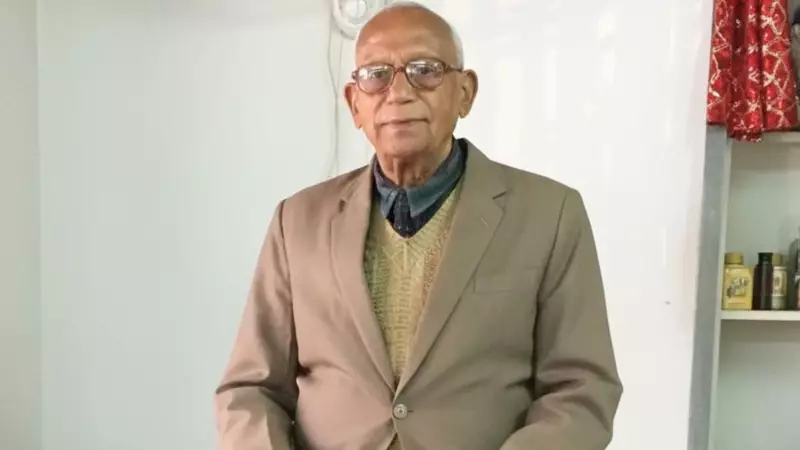
In the landscape of urban development, some cities are built by governments, while others are forged by the unwavering determination of their citizens. The story of Panchkula's remarkable evolution from a barren outpost to a key component of the Chandigarh Tricity is inextricably linked to one man: S.K. Nayyar, a 79-year-old retired assistant director. His decades of disciplined advocacy and smart strategy have earned him the title of the city's quiet architect.
From Dusty Kasba to a Vision for More
The year was 1987 when S.K. Nayyar first moved into his new home in Panchkula. The contrast with neighboring Chandigarh could not have been starker. Far from the polished satellite city it is today, Panchkula was then a dusty kasba (small town), isolated and underdeveloped. It lacked the most basic amenities: smooth roads were absent, nights were plunged into darkness without streetlights, and essentials like schools and even a gas agency were nowhere to be found. While many residents chose to grumble or simply relocate to Chandigarh, Nayyar, then an official with the Bhakra Beas Management Board, saw not a lost cause, but a blank canvas ripe for transformation.
This vision prompted immediate action. By the late 1980s, Nayyar was instrumental in sparking the Panchkula Residents Welfare Federation. His approach was never confrontational or loud. Instead, he championed a style of disciplined, persistent presence that often spoke louder than any protest chant. This methodology was perfectly demonstrated during a severe gas crisis. Under his guidance, residents organized a powerful silent procession comprising 200 cars, 250 two-wheelers, and 3,500 people on foot, marching from 11-15 Chowk to the SDM's residence. The sheer, silent scale of the demonstration was enough to break the deadlock, and gas deliveries commenced the very same day.

Strategic Advocacy and Landmark Victories
Nayyar's ambitions for Panchkula extended far beyond solving immediate crises. He refused to accept its status as a mere sub-division. In 1991, his relentless advocacy paid off as Panchkula was officially granted that status. Not content to stop there, he then led a delegation of 45 citizens to meet then Chief Minister Bhajan Lal, demanding full districthood for the area. This campaign too was successful, marking a pivotal administrative upgrade for the growing city.
The victories continued to accumulate, each building the foundation of a modern urban center:
- Successfully petitioning the high court for the establishment of local courts.
- Securing land for four post offices, including a major one in Sector 8.
- Intervening to extend metro plans to Sectors 21 and 25 when Chandigarh proposed cutting the line at the IT Park.
- In 2015, cornering then Chief Minister Manohar Lal Khattar at an open darbar to secure a firm commitment for land to build a medical college in Sector 32.
His contributions have been formally recognized with three awards from the Panchkula administration in 1992, 2007, and 2013. Yet, even bureaucratic hurdles and stalled projects never dimmed his drive. Nayyar attributes his motivation to an "inner consciousness", nurtured by a middle-class upbringing and a father who lived a life dedicated to serving others.
A Legacy of Civic Duty and a Call to the Future
Today, S.K. Nayyar's focus has turned toward inspiring the next generation. He firmly believes that the future of Panchkula rests in the hands of its youth. His message is clear: "Every youth in Panchkula should pitch in. A few hours a week can transform a neighborhood." He envisions a continued culture of citizen participation to address new challenges and sustain the city's growth.

S.K. Nayyar's journey is a powerful testament to the fact that cities are more than just concrete, steel, and official plans. They are living entities shaped by the people who choose to step up, stay the course, and fight for the community they believe in. He didn't just reside in Panchkula; through sheer grit and smart advocacy, he played an indispensable role in building its very soul, ensuring it rightfully earned its place alongside Chandigarh and Mohali in the esteemed Tricity.