In a quiet corner of Bihar, the Sasaram divisional jail is scripting an extraordinary story of rehabilitation and hope. Over the last year and a half, this prison has emerged as a beacon of progressive reform, distinguishing itself among the state's 60 correctional facilities through a series of transformative initiatives launched under Mission Vihaan.
Beyond Bars: Education and Recreation Take Center Stage
The scene inside Sasaram jail defies conventional expectations. Here, two convicts under the Protection of Children from Sexual Offences (POCSO) Act are diligently preparing for competitive examinations. A dozen inmates accused of murder are filling out forms for board exams, while many others are enrolled in skill development courses, aided by online lectures from popular educators like Khan Sir and Dr. Vikas Divyakirti.
The jail, with a sanctioned capacity of 1,278 on a 32-acre campus, currently houses 937 inmates, including 46 women. Of these, 653 are undertrials or convicts in murder cases, 291 are in liquor law cases, and 86 face POCSO charges. The administration has made education a cornerstone of its reform agenda. Currently, 34 inmates are registered for Class 10, with 15 having already written exams twice a year via distance learning. Four are enrolled for Class 12, and two have completed their exams.

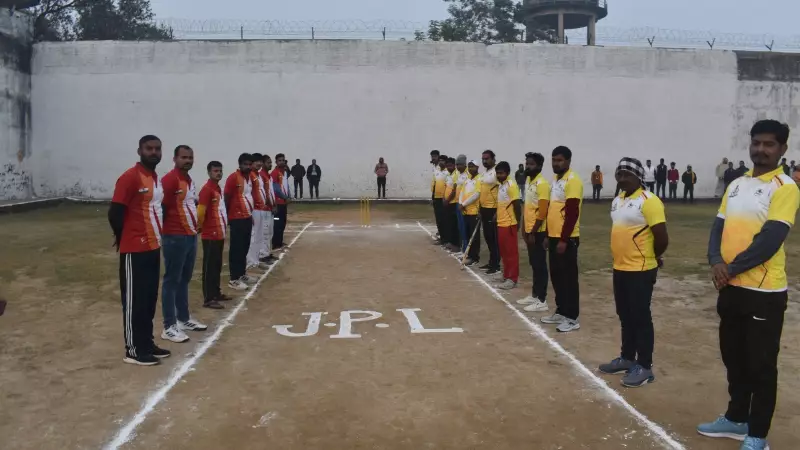
Recreation is equally prioritized. The facility boasts a volleyball court and a cricket ground that hosts its own Jail Premier League tournament. Golu Singh, captain of the Kaveri Khand team who is serving a life sentence, says he uses sports to "neutralise his negativity."
Architecture of Hope: Designing Spaces for Reform
The physical environment of Sasaram jail has been consciously redesigned to foster positivity. A pond with neat steps, used for Chhath Puja celebrations, and a resplendent Buddha fountain greet visitors. Jail Superintendent Sujeet Kumar Roy, appointed in 2024, explains the philosophy: "Water's upward movement symbolises positive energy. Our attempt is to neutralise the negativity imprisonment brings."
Perhaps the most striking feature is the Ram Janki Kutir, a space designed by an inmate serving a life sentence in a POCSO case, upheld by the Patna High Court on December 12, 2025. Resembling a resort with a small bridge and hut-like structure, it symbolizes Sita's captivity in Lanka. The designer, a Class 12 pass-out, reflects, "I had many aspirations... Still, I want to do something good if I ever go out."
The reforms extend to the women's ward, announced by a large outer wall painting of Goddess Saraswati titled 'Mahilakhand'. Inside, a salon run by two convicts and an undertrial serves about 25 inmates daily.
Skill Development and Preparing for Life After Prison
The jail's focus is firmly on preparing inmates for a productive life after release. A significant 124 inmates are enrolled in the Certificate in Food and Nutrition (CFN) course from IGNOU. Another 125 have undergone fisheries training, and 45 are being trained under the Bihar Small Entrepreneurship scheme.
The computer centre-cum-library runs Radio Dosti, broadcast at least twice daily with motivational lectures, poems, songs, and educational content. Warder Sikesh Singh coordinates these activities, identifying and encouraging inmates to join.
Individual stories highlight the impact. Manoranjan Kumar, 23, arrested during his final MSc semester in Mathematics, now prepares for Staff Selection Commission exams from inside jail, aiming to "get his sisters married." The jail also features a modern kitchen preparing 226 kg of chicken weekly and tandoori rotis.
IGP (Prisons) Pranav Kumar praised the reforms, stating the next steps include refurbishing old buildings, installing CCTVs, and providing video calling for court cases. However, the reality of incarceration remains. Sarita Devi, a 35-year-old sanitation worker, tearfully notes, "Here, time does not pass."
Superintendent Roy credits his late father, a former district magistrate, for shaping his outlook on humane prison management. His mission, and that of Mission Vihaan since its launch on August 2, 2023, is clear: to humanize the jail system and return reformed citizens to society.