

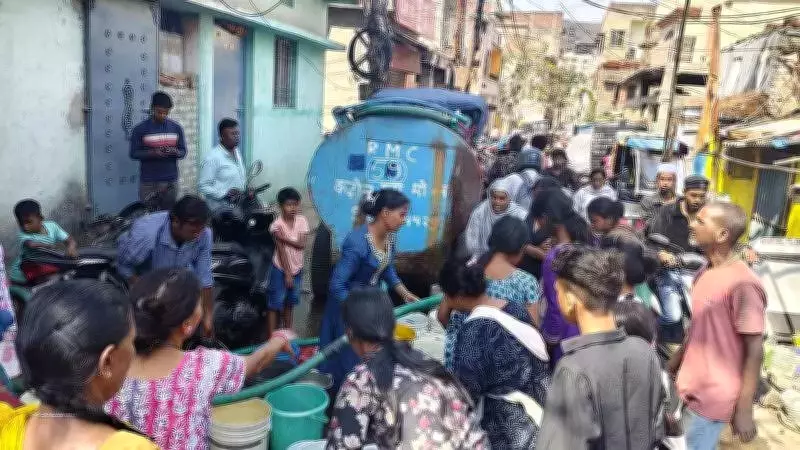
Ranchi Municipal Corporation Activates Comprehensive Summer Water Plan
With the summer season rapidly approaching, the Ranchi Municipal Corporation (RMC) has initiated extensive preparations to combat potential water scarcity in the city. The civic body has officially rolled out a detailed summer action plan aimed at ensuring a clean and uninterrupted drinking water supply across all 53 municipal wards.
Coordinated Efforts and Dry Zone Identification
Civic officials have announced that the corporation will work in close coordination with the Public Health Engineering Department (PHED) and the Drinking Water and Sanitation Department. This collaboration is designed to meticulously monitor supply conditions and proactively address potential shortages in various localities during the peak summer months.
Based on 2025 data, authorities have identified a total of 361 dry zones scattered across Ranchi. These include specific small pockets within urban localities such as Morabadi, Hindpiri, Ashoknagar, Bariatu, and Lalpur, areas that historically face acute water shortages during the summer season.

Strategic Deployment of Water Tankers
The RMC currently maintains a fleet of 70 water tankers that provide free water supply to these identified dry zones throughout the summer. These tankers, available in 4,000-litre and 6,000-litre capacities, are deployed based on real-time demand assessments.
For residents in non-dry zones, tanker supply can be requested at a cost of Rs 800 for a 4,000-litre tanker. In a strategic move to enhance efficiency, officials have decided to station tankers at designated locations. This allows tractors carrying them to quickly refill and cover more areas without unnecessary delays, maximizing coverage and response times.
Infrastructure Monitoring and Maintenance
According to an official statement, the civic body has intensified monitoring of critical water infrastructure. This includes 1,611 mini Hydrant Tanker Distribution (HYDT) points, 181 HYDTs, and approximately 2,507 handpumps within the municipal area.
A systematic repair initiative is underway, with defunct handpumps being repaired ahead of the summer season. Officials have been directed to paint damaged pumps red and functional ones blue for easy identification and maintenance prioritization.
Authorities have also received instructions to repair all public drinking water kiosks and remove those that are no longer functional. Joint inspections will be conducted in areas where water supply disruptions occur to ensure services are restored quickly and efficiently.
Grievance Redressal and Control Room Activation
To ensure swift grievance redressal, the RMC has activated a dedicated control room helpline (18005701235). This helpline is operational for registering complaints related to pipeline leakages, contaminated water supply, illegal water connections, and unauthorized groundwater extraction.
Water Source Status and Official Assurance
Meanwhile, officials have reported that the city's primary water source, the Getalsud Dam, currently holds comfortable reserves. Chandra Shekhar, Executive Engineer of the Drinking Water and Sanitation Department, Swarnrekha Head Works Division, stated that the city is unlikely to face a major supply crisis.
"Nearly 80% of Ranchi's water supply comes from Getalsud, covering areas such as Ratu Road, parts of Morabadi and Kanke. Due to good rainfall last year, there should not be any immediate concern about the dam drying up. However, we are coordinating with RMC and sharing helpline numbers to address any local shortages," Shekhar explained.
Resident Concerns and Monitoring Protocols
Despite these assurances, some residents remain concerned about recurring summer shortages. Amit Kumar, a resident near Tagore Hill in Kanke, expressed his apprehension: "Every year we face severe water shortage in peak summer and often depend on tankers. We hope authorities ensure regular supply this time."
To address such concerns proactively, monitoring teams have been tasked with preparing ward-wise reports and conducting gap assessments. This data-driven approach aims to ensure that issues faced in previous years can be effectively addressed through targeted and informed action.






