

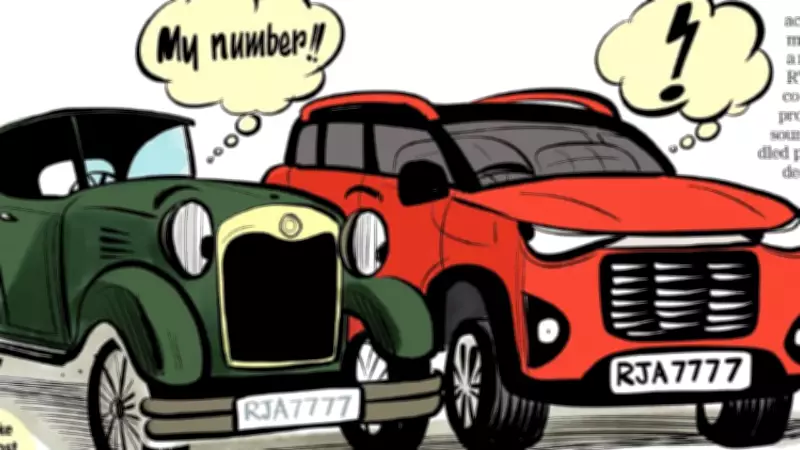
Rajasthan RTO Scam Exposes Digitization Vulnerabilities
In a shocking revelation from Rajasthan's transport department, a systemic loophole in the digitization process has enabled officials and agents to fraudulently revive and transfer coveted vintage vehicle numbers to new cars, sparking a statewide fraud investigation. The elaborate scheme, which exploited the migration of old records to the national Vahan portal, has potentially caused a revenue loss of approximately Rs 500 crore according to preliminary estimates.
The Personal Story That Revealed the Scam
The fraud first came to light through the experience of Shankar Sisodia (name changed), a car owner from Jaipur who discovered his vehicle's registration certificate had been renewed and transferred without his consent. Like thousands of others, Sisodia had hired an agent to renew his RC, which bore a prized seven-digit number from Rajasthan's pre-1990 series. To his shock, the updated certificate showed the number had been transferred to an official at the Regional Transport Office in Jaipur.
"I realised something very fishy was going on," Sisodia recounts, highlighting how what should have been a routine administrative process became a vehicle for number theft.

Statewide Pattern of Fraudulent Transfers
Sisodia's case was not isolated. Across multiple districts including Jaipur, Sawai Madhopur, Jhunjhunu, Dausa, Rajsamand, and Jodhpur, vehicle owners discovered their old registrations had been manipulated in government databases. What appeared to be routine digitization of pre-1990 records had transformed into a pipeline for laundering registration numbers.
The scam capitalized on a fundamental aspect of Indian automotive culture: the premium value attached to "fancy" numbers. In Rajasthan, the older seven-digit series carries particular cachet, signaling classic style and seniority while being increasingly scarce. This scarcity created a lucrative market that middlemen exploited through the digitization process.
How the Fraud Was Discovered
The irregularities surfaced in March 2025 when officials at RTO Jaipur (I) noticed suspicious patterns in backlog entries. While reviewing daily transactions, they observed an unusually high volume of backlog work being recorded on specific dates.
"Usually, two to three backlog transactions are done in March, but in each of the three days, over 80 backlog transactions were recorded, which raised suspicion," explains Rajendra Singh Shekhawat, Regional Transport Officer for RTO Jaipur (I).
The office investigated further, uncovering irregularities tied to vintage numbers and suspending two officials. This prompted the transport department to form a four-member investigative committee in April 2025, which discovered the fraud method was replicable anywhere old records were being migrated to the Vahan portal.
The Mechanics of the Number Theft Scheme
The opportunity emerged from Rajasthan's digitization drive, which involved uploading over five lakh old vehicle numbers onto the national database. Investigators identified how clerks and their collaborators targeted "idle" numbers—registrations that existed on paper but hadn't been used for years, where owners were unlikely to notice changes.
"An idle number was of key interest to those involved in the fraud," states Renu Khandelwal, Additional Transport Commissioner and committee member.
The fraudulent process followed three distinct steps:

- The coveted seven-character registration was "revived" in the system by attaching it to a virtual vehicle that existed only on paper, creating a clean digital footprint.
- The number was transferred from the virtual vehicle to a real buyer with a new car willing to pay for premium registration, often paying government fees without knowing the number's backstory.
- The books were "balanced" by assigning the new vehicle's regular 10-digit series number to the vintage vehicle's record, making the database appear consistent while detaching the original owner from their registration.
Scale and Financial Impact
The investigative committee reported that such numbers were being priced between Rs 2 lakh and Rs 10 lakh in the underground market. Those profiting included clerks within RTO/DTO offices who could move files and approve entries, agents who sourced customers and handled paperwork, and vehicle dealers who bundled "special numbers" into sales.
A November 2025 committee report warned that 30,000 to 40,000 numbers might have been compromised, based on the scale of digitization involving over five lakh old numbers. The fraud was so brazen that registration numbers from 40-year-old mopeds were ending up on luxury cars.
"Some cases did come to light where numbers of old two-wheelers were allotted to new cars... or registration numbers of a tractor were allotted to a four-wheeler," reveals a senior official on the committee.
Administrative Response and Legal Action
On November 25, 2025, Additional Transport Commissioner O P Bunkar issued an order framing the conduct as fraud and criminal conspiracy, stating that employees, vehicle owners, and private individuals had used forged documents to register seven-digit numbers of old vehicles for personal gain and state treasury loss.
The first FIR was filed on January 4, 2026, when RTO Jaipur (I) registered a police case against unnamed personnel, brokers, and private owners. This followed a departmental probe into 2,128 old vehicles registered under the seven-digit series before 1989, resulting in registration certificates being suspended for 1,160 vehicles and 496 RCs cancelled.
Other districts including Sawai Madhopur, Jhunjhunu, and Chittorgarh followed with their own FIRs, while Jodhpur and Sriganganagar were in process at the time of reporting. A statewide inspection later revised the scale downward to 1,000-1,500 numbers involved, with "almost 100 personnel" across roles identified.
Unresolved Questions and Systemic Vulnerabilities
The dramatic reduction from tens of thousands to a few thousand compromised numbers highlights significant unresolved questions about the scam's true scale. The department has not published district-wise breakdowns of suspected versus verified cases or explained the methodology behind either figure, leaving the Rs 400-500 crore loss estimate uncertain.
Critical questions remain about internal controls that failed to prevent the fraud. What permissions allowed 80-plus backlog entries on single days? Were user IDs shared or approvals bypassed? Did the system lack alerts for unusual volume, cross-district transfers, or vehicle class mismatches?
Transport Commissioner Purusottam Sharma acknowledges systemic vulnerabilities, stating the department plans to write to the Ministry of Road Transport and Highways about portal loopholes. "These gaps need to be addressed. Along with online work, a provision for physical verification of documents or some kind of audit must be there so that such incidents can be stopped," he emphasizes.
Current responses include filing FIRs, suspending and cancelling RCs, and urging vintage vehicle owners to update records through authorized dealers. Officials have called for specialized agency involvement, with the ED, Anti-Corruption Bureau, and Special Operations Group reportedly taking cognizance of the case.





