Punjab Government Attributes Contaminated Water Supply to Ageing Infrastructure in Zirakpur-Banur-Rajpura Belt
The Punjab government has informed the National Green Tribunal (NGT) that ageing infrastructure is the primary cause behind the supply of contaminated drinking water in the Zirakpur–Banur–Rajpura belt. Accountability measures have been initiated in response to this critical public health issue.
Show-Cause Notices Issued to Officials for Dereliction of Duty
During a recent tribunal hearing, the chief secretary revealed that show-cause notices were issued to concerned officers and officials for their failure to ensure a safe and potable water supply. The NGT bench, comprising Justice Prakash Shrivastava and Dr A Senthil Vel, was hearing an appeal seeking compliance with the tribunal's July 18, 2023, order.
In November 2025, the tribunal had directed the chief secretary to personally investigate the matter, fix responsibility on erring authorities, and take appropriate action against those whose negligence resulted in inconvenience and health risks for numerous residents.

Root Cause of Contamination in Rajpura
In its submission, the state government clarified that municipal councils are responsible for maintaining water supply, sewerage, and solid waste management services. These councils engage the Punjab Water Supply and Sewerage Board (PWSSB) to operate and maintain water supply and sewerage services in certain towns.
Specifically, in the Zirakpur–Banur–Rajpura belt:
- The board handles water supply, sewerage, and user charge collection in Rajpura town.
- Municipal councils of Zirakpur and Banur manage these services independently.
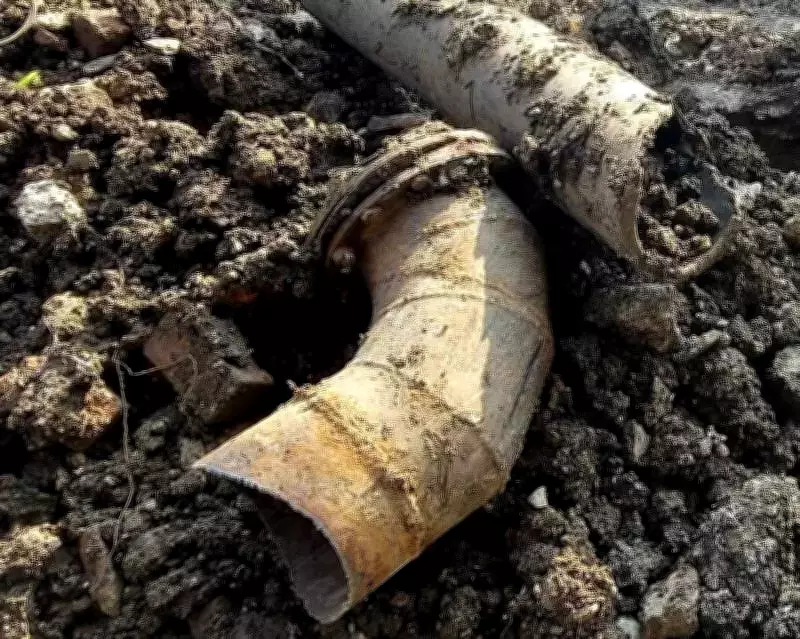
Explaining the contamination issue in Rajpura, the state identified the root cause as a nearly 40-year-old water supply network laid at the same depth as sewerage lines and road gullies. The absence of a separate stormwater disposal system meant that during heavy rainfall, wastewater mixed with drinking water through the ageing pipelines.
Comprehensive AMRUT 2.0 Project for Permanent Solution
To address this problem permanently, the government has sanctioned a comprehensive project under AMRUT 2.0. The total estimated project cost is Rs 178 crore, with Rs 33.65 crore approved for the first phase.
This initial phase involves:
- Replacement of approximately 57 km of old distribution pipelines.
- Upgrading 9,883 household connections in vulnerable areas such as Old Rajpura, Dalima Vihar, Mohinderganj, Sham Nagar, Mirch Mandi, Sheetal Colony, and Preet Colony.
Work is currently underway, with about 21 km of pipelines already laid and around 1,800 household connections replaced. The project is targeted for completion by December 2026.
Previous Remedial Measures and Immediate Relief
Even before the AMRUT 2.0 project launch, the board replaced 14.49 km of critically damaged water supply lines and 1,454 household connections in areas including Vikas Nagar, parts of Navyug Colony, Dharampura Colony, Gujranwala Mohalla, Chajjumajri, and Deha Basti in Rajpura.
As an immediate relief measure, and in compliance with the NGT's November 18, 2025, order, the state is ensuring regular supply of potable water through tankers in all affected areas of Rajpura where pipeline work is ongoing or where complaints are received.
Accountability and Stabilization in Other Areas
Regarding accountability, the government submitted that while the core issue stemmed from infrastructural decay rather than individual lapses, show-cause notices were nevertheless issued to officers and officials for negligence in providing potable water.
The state also informed the tribunal that the situation in Banur and Zirakpur has stabilized:

- In Banur, replacement of 1.766 km of old water supply lines was completed on December 30, 2024, and the system was handed over to the municipal council for operation and maintenance, with no further complaints reported.
- In Zirakpur, replacement of 3.53 km of water supply lines in Nabha village and Sadashiv Enclave was completed on January 15, 2026. The system has been commissioned, and no pending complaints remain, according to the municipal council.