In a glaring example of poor urban planning, Panchkula's first and much-needed Material Recovery Facility (MRF), constructed at a cost of Rs 3 crore, stands completely non-operational. The state-of-the-art waste management hub, built in Alipur village, is gathering dust instead of processing garbage, all because of one critical omission: an approach road.
A Facility in Waiting: The Missing Link
Spread over 3.5 acres, the solid waste management facility was designed to be a cornerstone of scientific waste handling for Panchkula, a city that generates over 200 metric tonnes of waste daily. The complex is fully equipped with sheds, compost pits, drainage systems, segregation platforms, and a leachate treatment unit. Despite the completion of major civil works, the project has hit a fundamental roadblock—literally.
Municipal sources have admitted that no proper access road was built to the site. This oversight makes it impossible for garbage collection vehicles to reach the facility. Consequently, the plant, which missed several deadlines, remains a deserted monument to administrative failure.

Fallout: Mounting Garbage and Public Anger
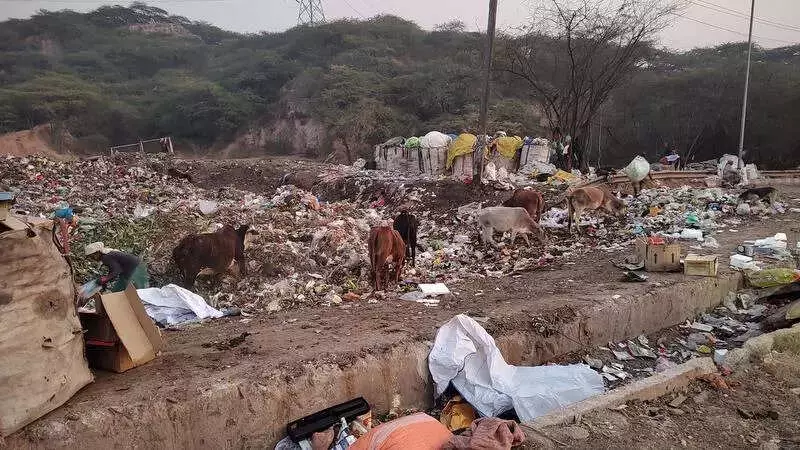
The operational paralysis of the Alipur MRF has direct and severe consequences. All the waste collected from across Panchkula's sectors is now being diverted and dumped at the Jhuriwala site and other open locations. This practice has drawn fierce complaints from residents, raising serious environmental and health concerns in the area.
Ironically, the Panchkula Municipal Corporation (MC) had informed the National Green Tribunal (NGT) that the Jhuriwala site is non-operational and that waste was cleared daily. However, local residents contradict this claim, stating that garbage is not being lifted regularly, leading to persistent piles of refuse.
Official Admissions and New Hurdles
Mayor Kulbhushan Goyal acknowledged the delay, stating that work on building the road to the MRF has finally begun and should be completed soon. However, he revealed a new complication: some local residents have now raised objections to the project itself.
"We are working out a solution for the betterment of Panchkula," Goyal said, indicating that the civic body is now entangled in resolving public opposition alongside the infrastructure flaw.
Citizens Decry Planning Failure
The situation has sparked criticism from citizen groups who see it as a symptom of deeper governance issues. SK Nayar of the Citizens Welfare Association, Panchkula, commented that the delay reflects poor coordination and inadequate project planning.
"Unless basic infrastructure such as access roads is prioritised alongside construction, Panchkula's waste management problems will continue, despite heavy financial investments," Nayar asserted. His statement underscores a fundamental flaw in executing critical urban utility projects.
The ultimate purpose of the MRF was to scientifically segregate dry and wet waste before transporting it to the Patvi processing plant in Ambala. Until the basic issue of connectivity is resolved and community concerns are addressed, Panchkula's vision for a modern, hygienic waste management system will remain trapped, much like the garbage it was meant to process.