

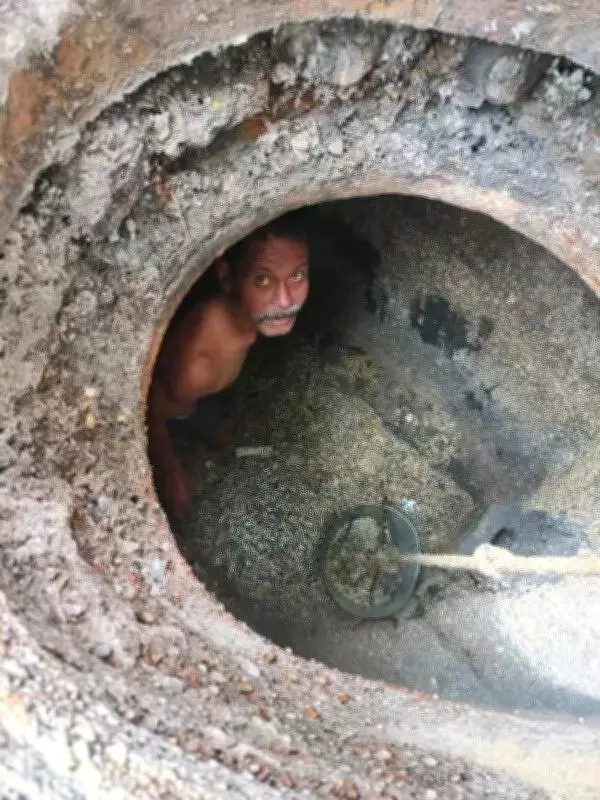
Nagpur Sanitation Worker Forced Into Sewer Without Safety Gear, Ignites Public Fury
In a shocking incident that has reignited concerns over the persistent practice of manual scavenging, a sanitation worker was allegedly compelled to enter a sewer manhole without any safety equipment at the Shivaji Nagar basketball ground in Prabhag 15 on Tuesday morning. This event starkly highlights the grim reality that continues to plague India despite the legal prohibition of such hazardous activities.
Incident Details and Immediate Outcry
The incident, which occurred around 8:16 AM on April 21, came to public attention after a photograph surfaced depicting the worker inside the manhole, completely devoid of protective gear, oxygen support, or gas detection mechanisms. The visuals have triggered widespread outrage, pointing to a blatant disregard for mandated safety protocols and labor laws designed to protect vulnerable workers.
In a formal written complaint addressed to Mayor Neeta Thakre, corporator and standing committee member Abhijeet Jha accused the Nagpur Municipal Corporation (NMC) of gross negligence that risks human lives. He explicitly labeled the act as a direct violation of the Prohibition of Employment as Manual Scavengers and Their Rehabilitation Act, 2013, alongside Supreme Court directives that strictly forbid manual entry into sewers without adequate safeguards.

Systemic Failures and Demands for Accountability
"This is not mere negligence — it is a conscious act of endangering lives," Jha asserted, emphasizing the complete absence of basic safety measures such as protective clothing and oxygen supply. What renders this lapse even more egregious is the fact that the civic body already possesses access to mechanized sewer-cleaning equipment. Despite this availability, officials reportedly opted for the hazardous manual approach, thereby exposing the worker to toxic gases and potential fatality.
Jha has urgently demanded an immediate investigation and stringent disciplinary action against the responsible officials. Additionally, he has called for enforceable orders to mandate mechanized cleaning operations across all municipal zones, aiming to prevent such incidents in the future.
Official Responses and Legal Context
Mayor Neeta Thakre has assured that she will personally look into the matter, while Deputy Municipal Commissioner Rajesh Bhagat stated that the issue would be thoroughly examined. "Appropriate action will be taken against those found responsible. Strict action will follow if any lapse is established," Bhagat affirmed.
This incident lays bare the persistent chasm between legal frameworks and their on-ground implementation. Although manual scavenging is officially banned, its shadow continues to loom large, with workers often bearing the brunt of systemic failures.
Legal Provisions Against Manual Scavenging
Manual scavenging is strictly prohibited under the Prohibition of Employment as Manual Scavengers and Their Rehabilitation Act, 2013. This legislation mandates:
- Rehabilitation of affected workers.
- A ban on the manual handling of human waste across all forms, including dry toilets, septic tanks, sewers, and railway tracks.
- Coverage of hazardous cleaning activities involving sewers and septic tanks without adequate safety measures.
Penal provisions under the Act include:
- Employing or engaging any person for manual scavenging is a cognizable and non-bailable offence.
- First-time offenders can face up to two years of imprisonment, a fine of up to Rs 2 lakh, or both.
- The Act also requires the identification, financial assistance, skill training, and alternative employment for affected workers.
The Nagpur incident serves as a stark reminder of the urgent need for robust enforcement and systemic reforms to eradicate manual scavenging and ensure the safety and dignity of sanitation workers nationwide.






