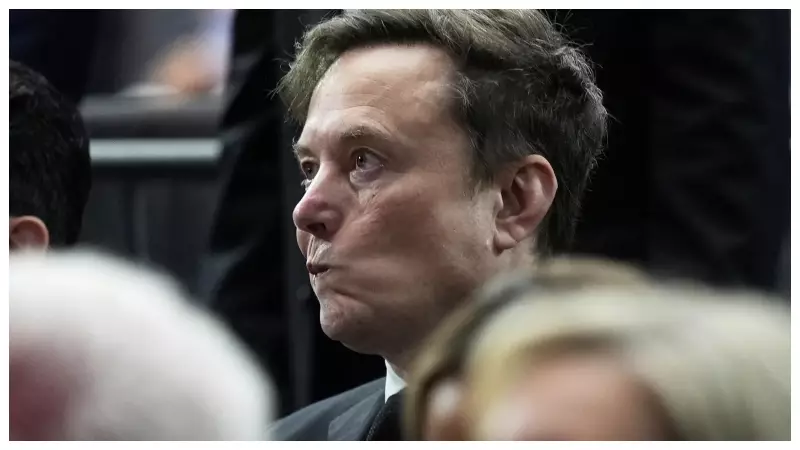
In a resurfaced interview that has reignited a fierce debate, tech billionaire Elon Musk launched a scathing attack on government-funded non-governmental organizations (NGOs), labelling them "the biggest fraud in history by far." Musk, who served as co-lead of the now-defunct Department of Government Efficiency (DOGE), made these explosive comments during a March 2025 Fox Business conversation with host Larry Kudlow.
The Core Allegations: A "Gigantic Fraud Loophole"
Musk's central argument is that a vast amount of taxpayer money is being funnelled into what he describes as essentially fraudulent schemes with almost no oversight. He specifically pointed to a "gigantic fraud loophole" where billions of dollars are granted to NGOs with minimal subsequent controls or accountability. "They've given billions of dollars, in fact we estimate tens of billions of dollars to NGOs that are essentially scams," Musk stated emphatically during the interview.
His criticisms were not limited to a single forum. At the Qatar Economic Forum in May of the same year, Musk publicly challenged NGOs to provide concrete evidence of their on-ground work. He argued that "enormous fraud and graft" within the system actively prevents aid from reaching its intended beneficiaries, whether in foreign aid or domestic programs.

Real Scandals vs. Musk's Grand Claims
While Musk's sweeping statements have been contested, recent high-profile indictments lend some credence to concerns about mismanagement. In one case, the USAID's Office of Inspector General charged an individual named Mahmoud Al Hafyan with diverting a staggering $9 million meant for Syrian humanitarian aid. Domestically, the Feeding Our Future scandal in Minnesota involved over $250 million in fraudulent claims for child nutrition programs.
Furthermore, hearings by the House Oversight Committee have described taxpayer-funded immigration NGOs as acting like "slush funds" that advance specific agendas with little transparency. However, federal audits present a dramatically different scale of the problem than Musk alleges. Official reviews typically place the fraud rate in major benefit programs at between 2 and 5 percent, a far cry from the 90 to 95 percent waste Musk claimed.
Independent fact-checkers have also noted that Musk and the DOGE dramatically overstated the issue. In one notable error, evidence presented by the department mislabelled an $8 million contract as $8 billion, inflating the figure by a thousandfold.
Legacy of the DOGE and Unproven Allegations
The Department of Government Efficiency, which Musk helped lead, concluded its operations in late 2025. While it reported achieving a 22.4% reduction in non-defense obligations, overall federal spending continued its upward trajectory, rising approximately 6%. The department's closure left Musk's most dramatic and large-scale fraud allegations against the NGO ecosystem largely unsubstantiated with concrete, widespread proof.
The debate, therefore, remains sharply polarized. On one side are Musk's allegations of systemic, multi-billion dollar fraud enabled by poor oversight. On the other are federal audits and fact-checkers who acknowledge isolated, significant frauds but argue the overall system's loss rate is a small fraction of what Musk claims. This clash highlights the ongoing tension between calls for radical transparency and the complex realities of administering large-scale public welfare and aid programs.