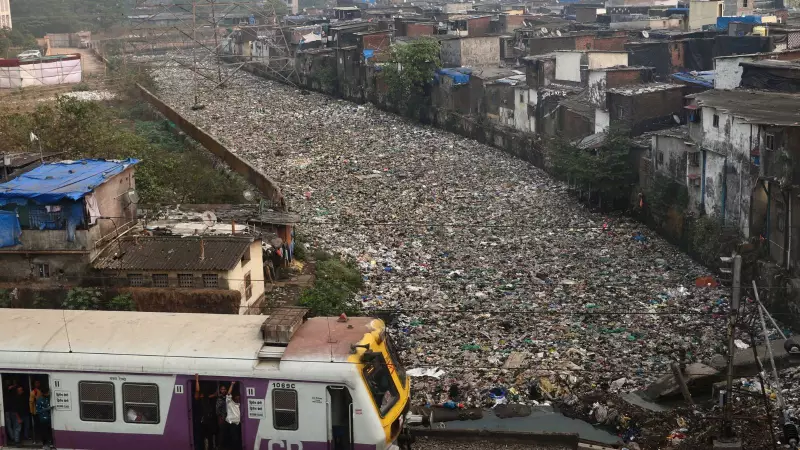
As Mumbai prepares for crucial civic elections on January 15, the city's chronic struggle with garbage and sanitation has erupted as a central poll issue. This comes despite the Brihanmumbai Municipal Corporation (BMC), the country's richest municipal body, allocating a staggering Rs 5,548 crore for waste management in its 2025-2026 fiscal books, marking a close to 14 percent annual increase.
A City Drowning in Garbage
The heavy financial investment has yielded poor results on the ground. According to the National Swachh Survekshan report released in 2025, Mumbai featured among the top 10 dirtiest cities in India, securing a dismal 33rd rank out of 40 cities surveyed. This stands in sharp contrast to its neighbour, Navi Mumbai, which was ranked the third cleanest city in the country.
The scale of the problem is monumental. On average, Mumbai generates 6,600 metric tonnes of municipal solid waste daily, with organic wet waste like food material constituting 72% of this. During peak periods like Diwali in October 2025, the city produced an extra 3,000 metric tonnes of waste in just three days. Adding to the burden is construction and demolition (C&D) waste, averaging 8,500 metric tonnes per day, fueled by the city's relentless redevelopment and infrastructure projects.
Systemic Failures and Citizen Anger
The civic machinery, comprising over 33,700 staff who sweep 1,750 km of roads daily, is visibly overwhelmed. The waste is collected and routed through four refuse transfer stations to two main endpoints: the Deonar dumping ground (established in 1927) and the Kanjurmarg processing facility. Currently, about 6,000 tonnes go to Kanjurmarg for processing, while 600 tonnes are dumped untreated at Deonar.
However, systemic gaps are glaring. In slum areas, which house nearly 50% of Mumbai's population, BMC vehicles often fail to enter narrow lanes. Sadashiv Shetty, a resident of Sangam Nagar slum, reported that garbage is routinely dumped into overflowing drains due to lack of collection. Civic officials admit that round-the-clock waste generation in slums makes timely collection nearly impossible.
Activist Rishi Agarwal highlighted new challenges like the surge in dry packaging waste from online delivery services and the unregulated dumping of C&D debris in open grounds and mangroves. A Comptroller and Auditor General report revealed that Maharashtra's C&D waste ballooned by over 200% between 2018-19 and 2021-22.
Health Hazards and Legal Tangles
The dumping grounds have become public health nightmares. Residents near the Kanjurmarg facility, like Sanjay Yelve of Kannamwar Nagar, complain of unbearable stench leading to respiratory and skin ailments, forcing them to keep windows shut. The BMC recently floated a tender for an odour audit to address the crisis.
The facility also faced a legal hurdle when the Bombay High Court, in May 2025, declared a major portion of the landfill a "protected forest" under the Forest Conservation Act. Although the Supreme Court later stayed this order, it underscored the environmental precariousness of the city's waste solutions.
Election Promises and Future Plans
With elections around the corner, citizen groups have made waste management a key demand. Manifestos from the Chandivali CHA, MNDCF, Mumbai March, and Lokhandwala Oshiwara Citizen’s Association (LOCA) uniformly call for eradication of chronic garbage dumps, enforcement of SWM rules, and better sanitation in slums.
In response, the BMC has rolled out ambitious plans. It floated a Rs 4,000-crore tender last year to overhaul the waste collection system, proposing to replace its vehicle fleet with closed-body eco-friendly trucks and outsource door-to-door collection. Ancillary projects include upgrading 10 out of 46 dry waste segregation centres and modernising the four refuse transfer stations.
However, experts stress that money alone isn't the solution. Activist Bilal Khan points out the BMC's failure to implement its own Solid Waste Management bylaws, including proper segregation. Rishi Agarwal advocates for a decentralised waste treatment model, where 80% of a ward's waste is processed within its jurisdiction using vacant civic plots, rather than transporting it across the city to centralised facilities like Kanjurmarg.
As Mumbai votes, the question remains whether the new civic administration can translate massive budgets and mega plans into tangible cleanliness, moving the city from the list of India's dirtiest to joining its cleaner neighbours.