As Mumbai prepares for the crucial Brihanmumbai Municipal Corporation (BMC) elections in January, the city's chronic neglect of its pedestrians has emerged as a defining civic issue. Despite over half of all trips in the metropolis being made on foot, walkers are forced to navigate a hazardous obstacle course of encroachments, uneven surfaces, and illegal parking, pushing them into the path of speeding traffic.
The Daily Struggle for Space on Mumbai's Footpaths
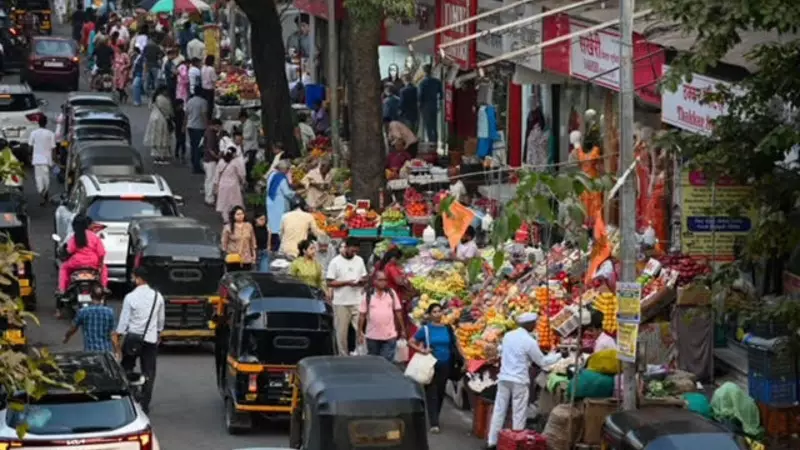
The chaotic scene outside Dadar railway station is a microcosm of the city's pedestrian crisis. On Chhabildas Road, footpaths are monopolized by vendors selling goods from bags to bangles, with garbage piles adding to the clutter. Commuters alighting from trains have no choice but to step directly onto the road, weaving through a heavy flow of vehicles. This dangerous reality is repeated across Mumbai, from the market area outside Vile Parle station to numerous other high-footfall locations.
According to the BMC's own Comprehensive Mobility Plan (CMP) for Greater Mumbai, a staggering 51 per cent of trips in the city are made on foot. Yet, the lack of safe, continuous, and unobstructed walking infrastructure remains the top grievance among citizens. The problem has been exacerbated in recent years as large-scale infrastructure projects consume existing public space.

A Legacy Eroded: From Colonial Planning to Modern Neglect
Mumbai's approximately 4,000 kilometres of footpaths have a history dating to the 1880s, when the first dedicated walking spaces were laid in the Fort area following European models. Urban planning expert Pankaj Joshi notes that in colonial times, 80-85% of trips were on foot, and planning reflected this. Planned neighbourhoods from Dadar and Matunga in the early 20th century to later suburbs like Bandra and Andheri initially featured wide footpaths.
However, this emphasis began to fade after the 1960s. "After the 1960s, the footpaths started becoming narrower. This worsened further in the 1980s and 1990s," Joshi explains, adding that suburbs now bear the brunt of this decades-long shift. A global study by Compare the Market this year ranked Mumbai among the world's ten least walkable cities, alongside Johannesburg and Manila.
Encroachments, Poor Design, and a Lack of Political Will
The core issues plaguing footpaths are multifaceted. Encroachments by hawkers and parked vehicles top the list. Vedant Mhatre of the Walking Project highlights the failure to implement solutions like the Street Vendors Act and Parking Authority proposals. Poor quality control is another crippling factor; even newly developed footpaths deteriorate within a year due to substandard construction and lack of holistic street design.
Architects point to a jarring lack of uniformity, with surfaces and levels changing every 50-100 metres. While the Indian Road Congress sets standards, on-ground implementation faces hurdles from local resistance to legacy structures. Crucially, walkability remains a low priority in budget allocations. Less than one per cent of the projected budget in Mumbai's Traffic and Transport Infrastructure Plan up to 2034 is earmarked for foot overbridges, subways, and cycle tracks combined.
Election Promises and the Demand for Action
Ahead of the polls, the BMC has announced a Rs 100 crore "Pedestrian First" plan in its 2025-26 budget, floating tenders to remodel 16.5 km of footpaths across 14 locations as a pilot. The upgrades promise paved areas around trees, benches, and encroachment removal. Localised projects, like the effort to pedestrianise streets in Kala Ghoda, are also underway.
However, citizens are wary, recalling the 2016 Pedestrian First policy that largely remained on paper. Mandeep Singh Makkar of the Chandivali Citizens Welfare Association states, "Day by day, the quality of walkability is only deteriorating... It is our number one demand as this does not even require massive funding, but mere implementation of law and order."
In South Mumbai's A ward, which handles a massive floating population through Churchgate and CSMT stations, association president Atul Kumar calls for special attention. He emphasizes implementing policies like the Town Vending Committee to balance walkability with hawkers' commercial needs.

As political parties draft their manifestos, experts and activists argue that pedestrian infrastructure is a low-hanging fruit. Pankaj Joshi asserts that designing engineered footpaths should be a manifesto promise for all parties, as they can be developed for a fraction of the cost of mega-projects and, if done right, can last for decades. The coming election will be a test of whether Mumbai's walkers can finally move from the periphery of civic planning to the forefront.