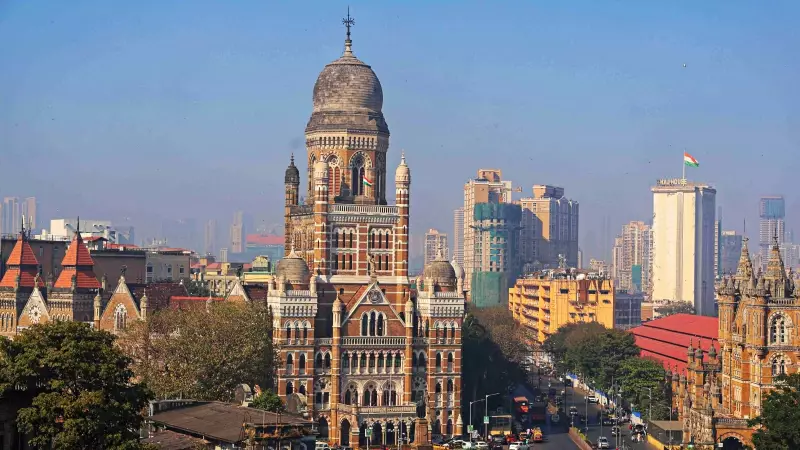
Mumbai residents will witness a significant shift in their city's governance as 227 municipal corporators return to the Brihanmumbai Municipal Corporation (BMC). This marks the end of a four-year period without any elected representatives, the longest such gap since the council's formation in 1873.
The Role of Corporators in Mumbai
Corporators serve as the crucial link between citizens and the BMC, which governs India's financial capital. Each of Mumbai's 227 electoral constituencies elects one corporator, representing approximately 50,000 to 60,000 people.
These elected officials tackle everyday problems that directly impact residents' lives. Their responsibilities range from ensuring proper water supply and sanitation to fixing potholes and managing public transport services.

How Corporators Operate
With corporators making their comeback, the BMC administration will adopt a more detailed approach to identifying and resolving civic issues. During the four years without elected representatives, the civic body operated under a commissioner's administration.
This bureaucratic rule often led to hyperlocal concerns being overlooked as the administration focused primarily on major projects. Issues related to sanitation, open spaces, pedestrian areas, and green spaces frequently received insufficient attention.
Each corporator receives an annual allocation of Rs 1.6 crore for carrying out various works in their constituencies. These funds support projects like setting up dustbins, repairing minor roads, and improving drainage networks.
Committee Responsibilities
Elected corporators join several statutory committees within the BMC, including the standing committee, law committee, health committee, education committee, improvement committee, works committee, and tree committee.
These committees play vital roles in shaping administrative decisions, framing new policies, and clearing proposals related to the city's development and infrastructure.
Dr Sanjay Patil, an academician and researcher in urban politics, explains the corporator's function. "In general, a corporator acts as the messenger between the people and the administration. Their job is to get things done that create issues for local citizens," he told the Indian Express.
Increased Accountability and Transparency
The return of corporators promises greater accountability within the civic body and establishes formal feedback mechanisms. For the past four years, the BMC commissioner operated without direct accountability to elected representatives.
Now, civic authorities must answer to the body of elected representatives headed by the mayor. All financial allocations for projects pass through the civic standing committee, which consists entirely of corporator members.
Dr Surendra Jondhale, a political analyst, emphasizes the standing committee's power. "The standing committee is the most powerful committee in the BMC. It has the power to approve or reject any project or proposal that the civic administration suggests," he explained to the Indian Express.
Ward-Level Governance
At the ward level, Prabhag Samitis or ward committees comprising corporators will provide inputs on civic issues. These committees ensure local concerns receive proper attention within the larger administrative framework.
The general body of corporators also handles BMC's recruitment processes. Currently, the BMC employs approximately 1.6 lakh workers, with many positions requiring committee clearance for recruitment.
Corporators' Promises and Priorities
As newly elected corporators prepare to enter the BMC after four years, they emphasize reviving stalled projects across Mumbai. BJP's Sandeep Patel, serving his second term, highlights specific infrastructure concerns.
"In my constituency, several key infrastructure projects like the extension of Mrunaltai Gore Flyover have been stuck for the past four years. My priority is to expedite this policy among all other issues that have remained unresolved," Patel told the Express.

Another BJP corporator, Harshita Narwekar, focuses on balancing development with sustainability. "With air pollution woes grappling Mumbai for a while, one key issue I want to address is amplifying the green cover in my area to ensure development and sustainability go hand-in-hand," she stated.
Historical Context and Local Terminology
In Mumbai and other Maharashtra corporations, corporators are locally known as Nagarsevak, meaning 'city servants.' This term gained prominence after 1968 when the undivided Shiv Sena contested municipal polls for the first time, winning 42 seats.
Dr Patil explains this terminology shift. "Earlier, corporators were known as Nagarpitas, but in 1968 Shiv Sena supremo Bal Thackeray clarified that a corporator's primary responsibility is serving local citizens. Therefore, they were henceforth called Nagarsevaks," he said.
The return of 227 corporators represents more than just filling vacant positions. It signifies the restoration of democratic representation in Mumbai's civic governance, promising more responsive administration and better attention to local needs after years of bureaucratic rule.