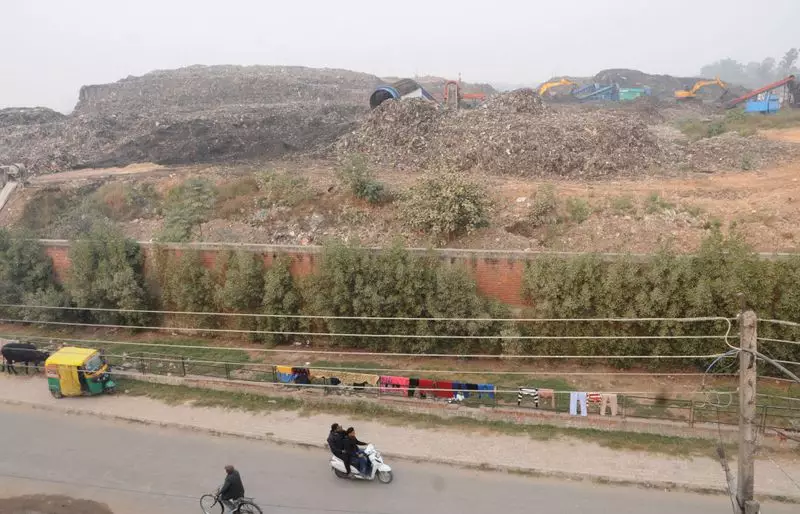
Chandigarh's Member of Parliament, Manish Tewari, brought a critical local environmental issue to the national stage by raising the protracted Dadumajra garbage dump crisis during a session of the Lok Sabha. The MP demanded immediate and final clearance from the Central Pollution Control Board (CPCB) to operationalize the city's solid waste processing plant, which remains stalled.
Parliamentary Intervention on a Local Menace
During the question hour, Tewari directly addressed the Union Minister of State for Environment, Forests, and Climate Change, Ashwini Kumar Choubey. He emphasized the severe public health and environmental hazard posed by the ever-growing mountain of waste at the Dadumajra landfill site. The core of the issue, as presented by the MP, is the pending statutory clearance from the CPCB, which is preventing the scientific processing of nearly 550 metric tonnes of municipal solid waste generated daily by Chandigarh.
The waste processing plant, a project costing approximately Rs 290 crore, has been constructed but cannot begin operations without this crucial nod from the central pollution watchdog. Tewari argued that the delay is exacerbating the crisis, turning the site into a source of nuisance and potential disease for residents in the vicinity.

Official Response and Assurances
In his reply, Minister of State Ashwini Choubey acknowledged the gravity of the situation. He informed the House that the Chandigarh Municipal Corporation has already submitted its application for the final authorization to the CPCB. The Minister assured that the application is being processed and that the CPCB would grant the necessary clearance very soon.
This exchange in Parliament underscores the critical intersection of local civic infrastructure and central regulatory frameworks. The Dadumajra crisis is not merely a municipal failure but a case study in the bureaucratic hurdles that can delay essential public health projects. The plant's activation is seen as the only viable solution to end the legacy waste problem and manage the current daily waste output scientifically.
Broader Implications and Public Demand
The raising of this issue in the Lok Sabha has amplified the long-standing demands of Chandigarh's citizens. For years, residents, particularly those living near Dadumajra, have protested against the foul smell, pollution, and visual blight caused by the dump. The parliamentary discussion adds significant political pressure on both the local administration and central agencies to expedite the process.
The situation highlights a common challenge across Indian cities: the transition from outdated waste dumping practices to modern, scientific processing. The delay in CPCB clearance, despite the substantial investment in infrastructure, points to potential inefficiencies in the approval pipeline for critical urban utility projects. The city's hope now rests on the Minister's assurance translating into immediate action, finally allowing the processing plant to start its much-needed operation and begin the arduous task of reclaiming the Dadumajra site.