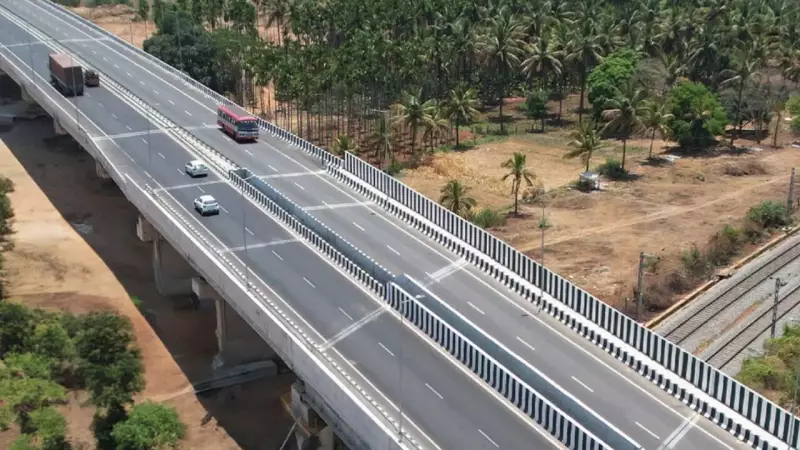
In a landmark decision for India's infrastructure development, the Union Cabinet on Wednesday gave its green signal for the construction of a major new highway in Maharashtra. The project, a 374-kilometer greenfield, access-controlled expressway connecting Nashik, Solapur, and Akkalkot, is set to be built with an estimated investment of Rs 19,142 crore.
A Record-Breaking Project on BOT Mode
Announcing the decision, Information and Broadcasting Minister Ashwini Vaishnaw highlighted the project's scale. This highway will be the largest value project in the history of National Highway development to be undertaken on the Build, Operate, and Transfer (BOT) model. It forms a crucial segment of the ambitious Surat-Chennai high-speed corridor, aimed at enhancing connectivity across western and southern India.
Prime Minister Narendra Modi hailed the cabinet's move, calling it a step towards "building next-generation infrastructure development." In a post on social media platform X, the Prime Minister stated, "This transformative project, aligned with PM Gati Shakti, will significantly reduce travel time, strengthen west-east connectivity, boost logistics cost, and create large-scale employment."

Key Details and Strategic Impact
The new corridor is designed to offer a faster alternative to the existing Mumbai-Chennai route. Officials explained that the reduction in distance and the capacity for higher speeds will drastically cut travel time between Nashik and Solapur. The most dramatic impact will be on the Surat to Chennai journey, with travel time expected to plummet by 45% from the current 31 hours to just 17 hours.
This improvement is poised to facilitate the movement of heavy traffic from industrial hubs like Surat, Vadodara, and Mumbai towards key southern destinations including Kurnool, Bengaluru, and Chennai. The project will be executed in two distinct packages for efficient implementation:
- A 152 km stretch from Nashik to Ahilyanagar.
- A 222 km stretch from Ahilyanagar to Akkalkot.
The government has set an ambitious timeline, aiming to complete the entire highway within two years from the commencement of work.
Additional Approval for Odisha Highway
In the same meeting, the Cabinet also cleared another significant highway project. It approved the widening and strengthening of a 206-kilometer stretch of NH-326 in Odisha, from Mohana to Koraput. This project, with an estimated cost of Rs 1,526 crore, is designed to improve connectivity to major economic and logistics corridors in the region. A key benefit will be better last-mile access to the Gopalpur port and the Jeypore airport, boosting trade and accessibility in the state.
Together, these approvals signal a strong push by the central government to accelerate high-quality road infrastructure, focusing on reducing logistics costs, improving connectivity, and generating employment through massive capital expenditure.