

Maharashtra Government Introduces Comprehensive Heat Wave SOPs for Vulnerable Populations
The Maharashtra government has officially rolled out three detailed standard operating procedures (SOPs) designed to shield vulnerable groups from the escalating threat of heat waves. These guidelines specifically address outdoor workers, heat stress management in coal mines, and the promotion of heat-resilient housing, forming a critical part of the state's strategy to combat rising temperatures.
Alignment with State Heat Action Plan and IMD Alerts
The newly introduced SOPs are meticulously aligned with the State Heat Action Plan and the colour-coded alerts issued by the India Meteorological Department (IMD). This integration ensures a coordinated response to heat wave warnings, enhancing preparedness across various sectors. The primary objective is to mitigate heat-related illnesses and fatalities, with a particular focus on informal workers, mining labourers, and low-income households.
Targeting 15 High-Risk Districts Across Maharashtra
The implementation of these SOPs will concentrate on 15 districts identified as high heat-risk areas. These include:

- Nagpur
- Chandrapur
- Wardha
- Yavatmal
- Amravati
- Akola
- Buldhana
- Washim
- Gondia
- Bhandara
- Jalgaon
- Nandurbar
- Dhule
- Nanded
- Latur
Disaster Management Minister Girish Mahajan emphasized that these measures are crucial for reducing health risks, especially following recent incidents such as the death of a woman labourer in Kamptee due to suspected heatstroke in March, when temperatures exceeded 40°C.
Detailed Breakdown of the Three Standard Operating Procedures
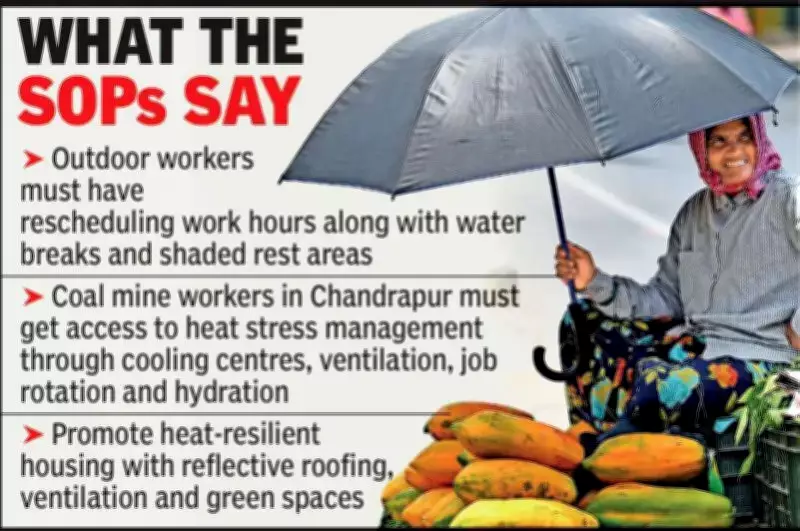
First SOP: Safety for Outdoor Workers
This SOP outlines comprehensive safety protocols for outdoor workers, including street vendors, construction workers, traffic police, sanitation staff, delivery personnel, and auto drivers. Key mandates include:
- Rescheduling work hours based on IMD's colour-coded warnings to avoid peak heat periods.
- Provision of regular water breaks and distribution of Oral Rehydration Salts (ORS).
- Establishment of shaded rest areas to offer relief from direct sunlight.
- Enhanced health support systems to monitor and address heat-related symptoms promptly.
Second SOP: Heat Stress Management in Coal Mines
Focused on coal mine workers in Chandrapur, this SOP stresses the importance of heat stress management through several proactive measures:
- Setting up cooling centres within mining areas to provide temporary respite.
- Ensuring proper ventilation in underground and surface operations.
- Implementing job rotation to reduce continuous exposure to high temperatures.
- Promoting hydration practices and training workers to identify early signs of heat-related illnesses.
- Including special provisions tailored for women workers to address their specific needs.
Third SOP: Promotion of Heat-Resilient Housing
This SOP highlights strategies for developing heat-resilient housing, detailing immediate, medium-term, and long-term approaches:
- Immediate measures: Installation of reflective roofing materials to minimize heat absorption.
- Medium-term strategies: Improving ventilation systems and incorporating green spaces around residential areas.
- Long-term planning: Integrating climate-sensitive urban planning to create sustainable, cooler living environments.
Extensive Study and Implementation Framework
Principal Secretary Vinita Singal revealed that the SOPs were developed after an extensive study of rising temperatures in Maharashtra, which have recently reached alarming levels of 43-45°C in some regions. The guidelines also emphasize:

- Interdepartmental coordination to ensure seamless execution across various government bodies.
- Launching widespread awareness campaigns to educate the public and workers about heat wave risks and preventive measures.
- Conducting annual reviews to assess effectiveness and make necessary adjustments.
- Empowering district authorities and local bodies to oversee implementation at the grassroots level.
This multi-faceted approach aims to build a robust defense against heat waves, safeguarding the health and well-being of Maharashtra's most vulnerable citizens amidst increasingly severe climatic conditions.





