The Indian government has taken a decisive step towards implementing its landmark labour reforms, releasing draft rules for the four consolidated labour codes and outlining a conditional path to social security for the nation's vast gig workforce. The Ministry of Labour and Employment pre-published these rules on Thursday, January 2, 2026, inviting feedback from stakeholders with the aim of fully operationalising the codes across the country from April 1, 2026.
Eligibility Criteria: The 90-Day Threshold for Gig Workers
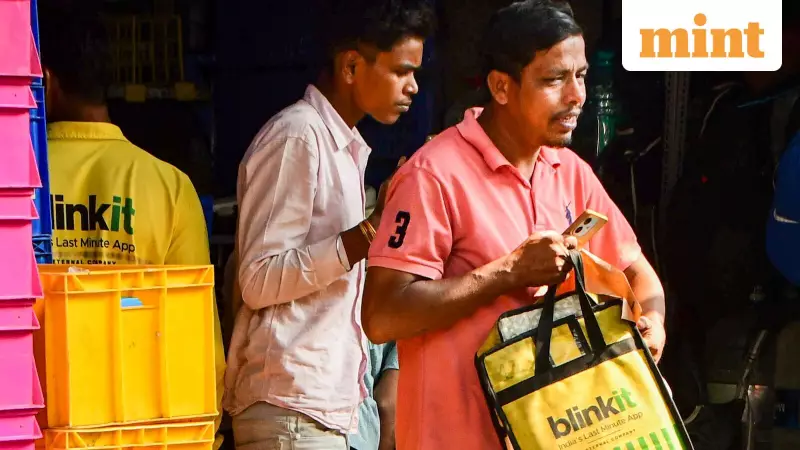
At the heart of the new draft rules is a proposal to extend social security benefits to gig and platform workers, a growing segment of India's labour force. However, access to these benefits comes with specific conditions. According to the draft, to be eligible, a gig worker must have been engaged with an aggregator for not less than 90 days in the last financial year.
For those working with multiple platforms, the threshold is higher, set at 120 days of cumulative engagement. The rules provide crucial clarity on how these engagement days will be calculated, a point of frequent confusion in the platform economy.

How Engagement Days Are Counted
The Centre's elaboration offers a detailed framework:
- A gig worker is considered engaged for a day if they earn any income, irrespective of the amount, from an aggregator on that calendar day.
- When working with multiple aggregators, the days of engagement are calculated cumulatively across all platforms.
- Significantly, if a worker is engaged with three different aggregators on a single day, it will be counted as three separate days of engagement, accelerating the path to eligibility.
Stakeholder Feedback and Nationwide Rollout Plan
The ministry has opened a window for public consultation, granting 30 days for feedback on the Industrial Relations Code, 2020, and 45 days for comments on the remaining three codes: the Code on Wages, 2019, the Code on Social Security, 2020, and the Occupational Safety, Health and Working Conditions Code, 2020.
Since labour is a concurrent subject, both the Centre and state governments must notify their rules to enforce the codes uniformly. Union Labour & Employment Minister Mansukh Mandaviya has emphasised the government's ambitious target to expand social security coverage to 100 crore workers by March 2026, a significant jump from the current 94 crore. He noted that coverage has already surged from 19% in 2015 to over 64% in 2025.
Industry Response and Broader Reforms
Industry leaders have welcomed the clarity provided by the draft rules. Chandrajit Banerjee, Director General of CII, stated that the release marks a key step in operationalising India's labour reforms. He added that the rules offer clear implementation pathways, helping industry prepare with confidence, simplify compliance, and support sustainable growth while strengthening worker protections.
Minister Mandaviya also highlighted other progressive provisions within the labour codes, including mandatory appointment letters, free health check-ups for workers aged 40 and above, the principle of equal work equal pay, and ensuring equal opportunity for women to work in different shifts.
The finalisation and enforcement of these four codes are poised to be a transformative step for India's labour landscape, aiming to broaden worker protection, ease business operations, and foster a more pro-worker ecosystem in a rapidly evolving economy.