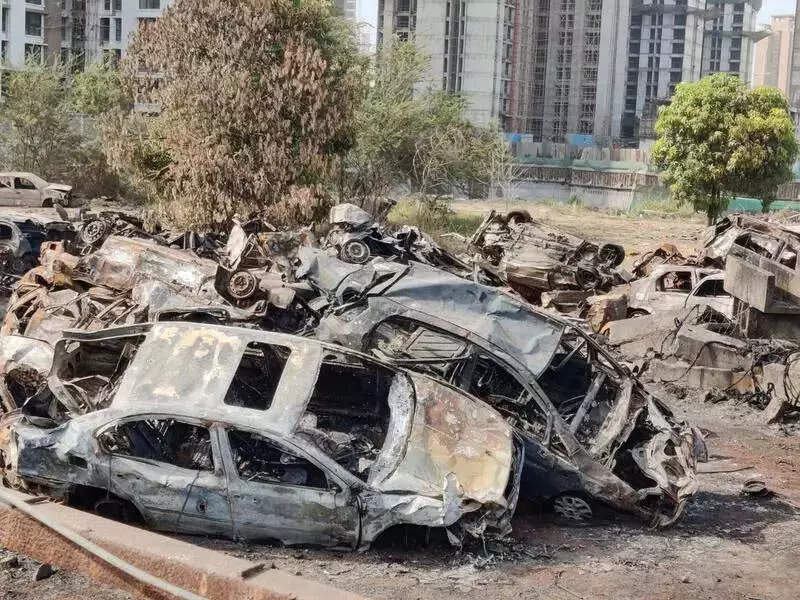
In a significant move to tackle mounting piles of discarded materials, the Kerala government has introduced a new policy allowing its departments and public institutions to directly sell scrap items, including old vehicles, to approved government agencies. This step comes into effect when such materials fail to find buyers even after being listed once on mandated e-auction platforms.
Addressing the Mounting Scrap Crisis
The state Finance Department issued the crucial order on December 17, highlighting a persistent problem. The directive notes that repeatedly auctioning unusable and scrap materials through designated online portals has led to large volumes of items remaining unsold. These unsold goods continue to accumulate across various government offices, local self-government institutions, and public sector establishments, causing storage issues and loss of value.
The order applies to a wide range of items classified as usable, unusable, serviceable, or unserviceable. This includes all categories of stores, materials, and vehicles. Normally, these items must be auctioned through government-run digital platforms like MSTC, GeM, or NIC to ensure transparent sales. However, the existing system has proven ineffective for timely disposal, as many articles remain unsold despite multiple auction attempts.

The New Direct Sale Mechanism
To break this logjam, the government has permitted the Kerala State Labour Co-operatives Federation (Labourfed) to acquire such unsold materials at a price fixed by the competent authority following a failed e-auction. Labourfed will function as an empanelled agency until the state's registered vehicle scrapping facility becomes operational.
Under the revised procedure, departments holding unsold scrap after a completed e-auction must inform all empanelled institutions about the availability on the same day. The sale will then be conducted on a first-come, first-served basis among eligible institutions willing to purchase at the approved rate. The government has also opened the process to other interested government institutions, which can apply to the Finance Department for empanelment and gain authorization through a separate order.
A Broader Problem of Accumulation
This decision is set against the backdrop of a larger and persistent scrap-management challenge faced by state institutions. A substantial portion of this scrap is generated through seizures, impoundments, and routine administrative processes. Illustrating the scale of the issue, home department data reveals that over 26,000 vehicles seized in various cases are currently lying idle across police stations statewide, effectively turning them into makeshift junkyards.
Discussions at the district collector level have also flagged acute storage constraints faced by the transport department, which holds thousands of vehicles seized for reasons like tax defaults, lack of insurance, and fitness violations. While these specific categories operate under separate legal frameworks and are not covered by the current finance department order, officials acknowledge that the government is increasingly struggling with the accumulation of vehicles and materials generated through enforcement actions, lacking adequate disposal or storage mechanisms.
The new directive aims to prevent further accumulation and ensure quicker clearance of materials that have already undergone an unsuccessful public auction, thereby unlocking value and freeing up crucial space.