

Jammu & Kashmir Government Accelerates Power Projects, Revives Historic Mohra Hydroelectric Plant
In a significant move to enhance energy infrastructure, the Jammu and Kashmir government is fast-tracking work on power projects following the Government of India's decision to put the Indus Water Treaty in abeyance after the Pahalgam terror attack in April 2025. As part of this initiative, authorities have announced plans to revive the historic Mohra Power Project—a 120-year-old hydroelectric facility that has remained non-operational since the 1990s.
Official Announcement and Process Initiation
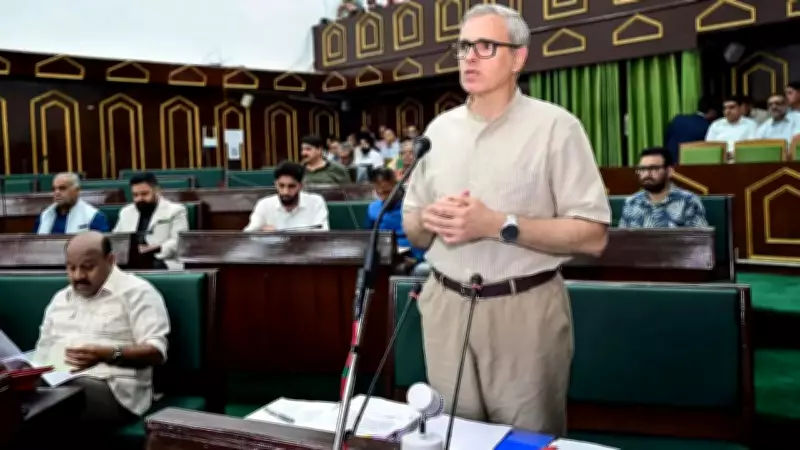
Chief Minister Omar Abdullah, who also oversees the power department, informed the J&K Assembly on Wednesday that the Board of Directors of the J&K State Power Development Corporation has started the process for the project's revival. During a meeting held on February 9, the board approved issuing a limited tender enquiry to engage a transaction adviser from firms empanelled with the Department of Economic Affairs. This adviser will manage the renovation, modernisation, upgrade, operation, and maintenance of the 10.5MW plant.
Historical Significance and Engineering Feat
Located on the banks of the Jhelum River in Boniyar, within the Uri sector of north Kashmir's Baramulla district, the Mohra Power Project was commissioned in 1905 and stands as one of India's oldest hydroelectric stations. Originally built as a run-of-the-river project with an initial capacity of approximately 5 MW, it was constructed after the major floods of 1903 to support dredging operations in the Jhelum. Former engineer Iftikhar A Drabu, who has over three decades of experience on major hydropower projects in J&K such as Kishanganga and Dulhasti, noted that the project's turbines were imported from Czechoslovakia.

The most remarkable feature of the Mohra project is its wooden water channel, which stretches more than 10 kilometers along the mountains. Water was transported from Rampur to Mohra through this wooden flume to drive the turbines, representing a low-impact engineering achievement for its era.
Damage and Decline
The project suffered severe damage during floods in September 1992, which affected its tailrace system and caused power generation to drop to around 3 MW before operations eventually ceased. Despite its modest proposed capacity of 10.5MW, which is unlikely to significantly reduce the region's power deficit, the revival holds historical and symbolic importance.
Broader Context and Future Plans
This announcement comes shortly after CM Omar Abdullah stated in the Assembly on March 27 that the pace of construction for ongoing hydel power projects across J&K is being accelerated "in the backdrop of the Indus Water Treaty being kept in abeyance." The revival of the Mohra project appears to be a component of a larger strategy to increase energy generation from the current 3540 MW to approximately 11000 MW by 2035.
Heritage Value and Previous Proposals
Hashmat A Qazi, former chief engineer with the Power Development Department, highlighted that about nine years ago, there was a proposal to develop the Mohra Power Project as a heritage structure, but it did not progress. He emphasised that the project carries great heritage value, underscoring its cultural and historical significance beyond its energy output.
The revival of the Mohra Power Project not only aims to contribute to J&K's energy goals but also preserves a piece of engineering history, reflecting the region's commitment to sustainable development and heritage conservation.






