Jaipur's Comprehensive Mobility Plan Unveils Major Traffic Reforms for Walled City
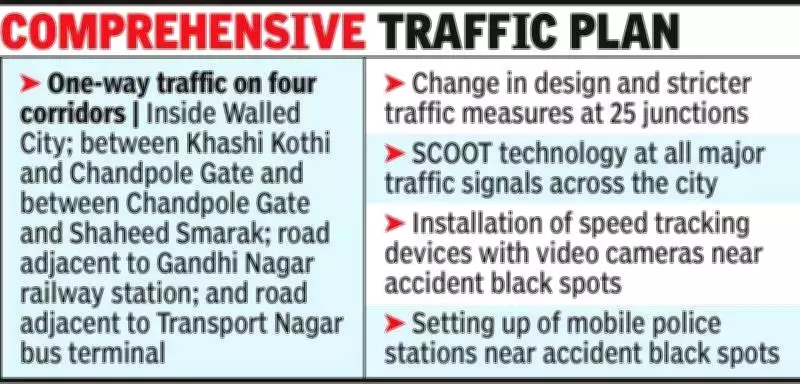
In a significant move to address urban congestion, the Comprehensive Mobility Plan (CMP) for Jaipur, meticulously prepared by the Jaipur Development Authority (JDA) and RITES, proposes a transformative shift in traffic management. The plan advocates for converting all major roads within the historic Walled City into one-way traffic routes, aiming to revolutionize vehicular flow and enhance urban mobility.
Streamlining Traffic and Enhancing Safety
An official involved in the project elaborated on the rationale behind this proposal. "This initiative is designed to streamline vehicular movement by significantly reducing conflict points at intersections, thereby improving junction capacity and enabling a more efficient allocation of road space for pedestrians and non-motorized vehicles," the official stated. This strategic reconfiguration is expected to alleviate the chronic traffic snarls that plague the city's core, making daily commutes smoother and safer for all road users.
Circular Traffic and Congestion Hotspots
Beyond the one-way conversions, the CMP includes detailed recommendations for implementing circular traffic movement on specific congested stretches. Key areas identified for this approach include the road adjacent to the Gandhi Nagar railway station and the critical stretch between Khasha Kothi Circle and Chandpole Gate on Station Road. These measures are tailored to optimize traffic flow in high-density zones, reducing bottlenecks and improving overall connectivity.

Furthermore, the plan has meticulously demarcated 25 junctions that are notorious for traffic congestion. To address these persistent issues, the CMP proposes the adoption of a SCOOT-based traffic management system, a cutting-edge technological solution for real-time traffic control.
Advanced SCOOT Technology for Smart Traffic Management
Another official provided insights into the SCOOT system, explaining its operational mechanics. "SCOOT is a real-time traffic-responsive computer model that receives live vehicle presence measurements from detectors installed on-street. Utilizing this continuous data stream, the technology automatically adjusts traffic signal timings to match current traffic conditions, thereby minimizing delays and enhancing efficiency," the official added. This integration of smart technology underscores Jaipur's commitment to modernizing its urban infrastructure and adopting sustainable mobility solutions.
The Comprehensive Mobility Plan represents a holistic effort to tackle Jaipur's growing traffic challenges, combining structural changes like one-way routes with innovative technological interventions. If implemented effectively, these proposals could set a new standard for urban traffic management in India, promoting safer, more efficient, and pedestrian-friendly cityscapes.