India is poised to enter a new era of rail travel with its inaugural bullet train service scheduled for a historic launch on August 15, 2027. The ambitious project, which will connect the financial capital Mumbai with the business hub of Ahmedabad, marks a significant leap in the country's transportation infrastructure.
Route, Speed, and Travel Time of the Mumbai-Ahmedabad Corridor
The flagship bullet train will operate on a dedicated 508-kilometre corridor, drastically reducing travel time between the two major cities. While conventional trains take approximately seven hours for the journey, the high-speed rail will complete the trip in just about 2 hours with limited stops and 3 hours with all stops. The train is designed to cruise at an operational speed of 320 kilometres per hour, placing India among the nations with advanced rapid rail networks.
The route will feature 12 stations strategically located across Maharashtra and Gujarat. Key stations include Mumbai's Bandra Kurla Complex (BKC), Thane, Virar, and Boisar in Maharashtra. In Gujarat, the train will halt at Vapi, Bilimora, Surat, Bharuch, Vadodara, Anand, Ahmedabad, and the terminal station at Sabarmati.

Key Features and Advanced Technology
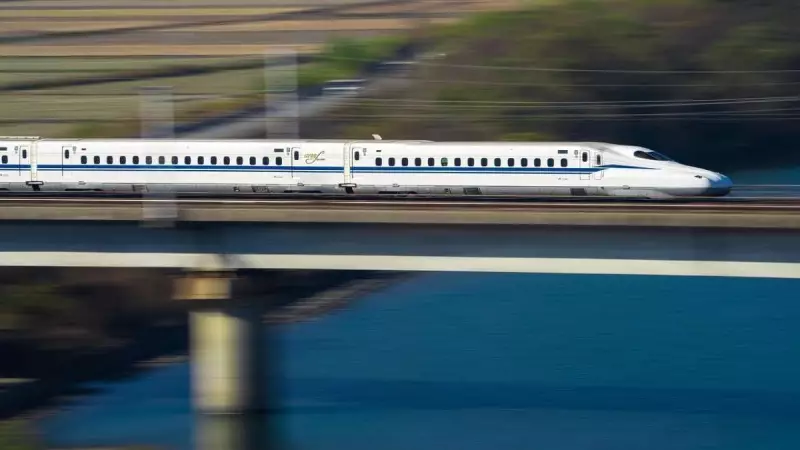
Passengers can expect a travel experience defined by comfort, safety, and efficiency. The trainsets, based on the renowned Japanese Shinkansen technology (E5 Series), will offer modern amenities. A standout feature is the aerodynamic design that minimizes noise and air resistance, especially when entering tunnels.
Safety is paramount, with the corridor being built on an elevated track for most of its length to avoid crossings and ensure obstruction-free movement. The project will also incorporate an Early Earthquake Detection System, a critical safety technology that can automatically trigger brakes if seismic activity is detected, potentially preventing derailments.
Project Progress and Broader Impact
The project is being executed by the National High Speed Rail Corporation Limited (NHSRCL). As of the latest updates, significant progress has been made, particularly in Gujarat, where substantial portions of civil work, including pier construction and bridge building, are complete. The work in Maharashtra has also gained momentum following necessary clearances.
The introduction of the bullet train is more than just a new service; it is expected to be a catalyst for economic growth. It will enhance connectivity, boost tourism, generate employment, and promote the development of satellite towns along the route. The successful implementation of this project is also seen as a blueprint for future high-speed rail corridors in India, potentially linking other major city pairs across the country.
The targeted launch date of August 15, 2027, aligns with India's Independence Day, symbolizing a milestone in the nation's journey toward modern and sustainable infrastructure. While challenges remain, the project continues to move forward, bringing India closer to its high-speed rail dream.