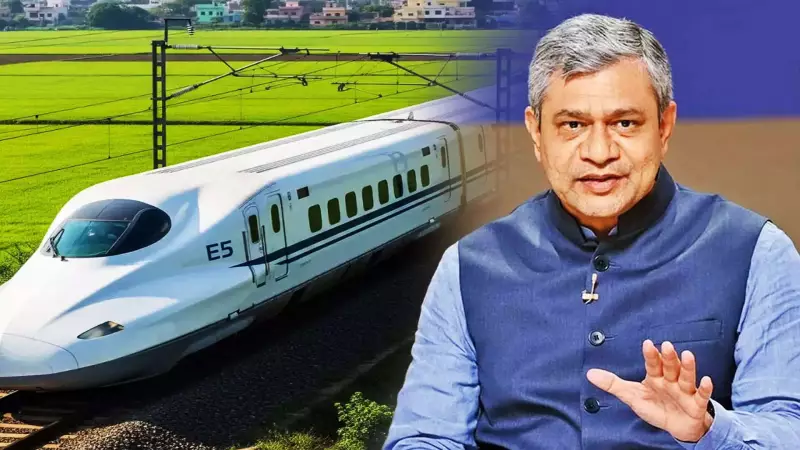
India's ambitious dream of a bullet train is rapidly transforming into reality, with a firm launch date now on the national calendar. Railway Minister Ashwini Vaishnaw has announced that the country's first high-speed rail service, connecting Mumbai and Ahmedabad, is targeted to commence operations on August 15, 2027.
Major Milestone: Palghar Tunnel Breakthrough
The significant announcement follows a crucial engineering achievement. Construction teams have successfully completed the breakthrough of a critical 1.5-kilometre mountain tunnel in Palghar, Maharashtra. This marks a pivotal step forward in the complex project, overcoming one of the many geographical challenges along the route.
The entire corridor is designed for operations at a blistering speed of 320 kilometres per hour. Once complete, the 508-kilometre high-speed link will seamlessly connect key economic hubs across Gujarat and Maharashtra, drastically reducing travel time between the two western states.

Phased Rollout Plan: Surat First, Mumbai Last
Officials have outlined a phased approach to inaugurating services. According to the plan, the bullet train will begin operations in stages as different sections are completed. The first phase of commercial services is expected to commence from Surat, with the full run including Mumbai to be integrated last, following the completion of all remaining construction milestones, particularly in the densely populated Mumbai region.
This strategic, segment-by-segment launch allows for revenue generation to start earlier and enables systematic testing and commissioning of the advanced rail system.
A Transformative Project For Modern India
The Mumbai-Ahmedabad High-Speed Rail (MAHSR) project represents a monumental leap in India's transportation infrastructure. Setting a launch date for Independence Day 2027 provides a clear and symbolic target for all stakeholders. The project is not just about speed; it signifies a shift towards cutting-edge technology, enhanced connectivity, and a new era of sustainable inter-city travel. It promises to boost economic activity, create numerous jobs, and set a benchmark for future infrastructure projects in the country.
With the tunnel breakthrough achieved and a definitive deadline set, the focus now intensifies on the remaining construction, system integration, and safety certifications to turn this high-speed vision into a journey experienced by millions.