

Hyderabad's Massive Streetlight Replacement Initiative
In a significant move to enhance urban infrastructure, the municipal corporations under Greater Hyderabad's Core Urban Region (CURE) are gearing up for a comprehensive overhaul of the city's street lighting network. With more than 70% of existing streetlights nearing the end of their operational lifespan, this ambitious project aims to address long-standing issues and improve public safety and energy efficiency.
Project Scope and Financial Details
According to a Government Order accessed by sources, approximately 7.6 lakh streetlights across three civic bodies will be systematically replaced, operated, and maintained over a phased period. The unified tender for this extensive initiative is estimated at a staggering Rs 1,340 crore, spanning a contract duration of 10 years. This investment underscores the city's commitment to modernizing its public lighting systems and ensuring reliable illumination for residents.
Implementation and Monitoring Framework
Under the proposed plan, the selected concessionaire will be required to replace all existing streetlights and Centralised Control and Monitoring System (CCMS) boxes within a strict timeline of six months. Following this initial phase, the agency will assume full responsibility for the operation and maintenance of the entire lighting network throughout the contract period. To ensure transparency and accountability, the contractor must maintain detailed records of the replacement process, including photographs and unique identification numbers for both old and newly installed lights and CCMS boxes.

The project will leverage advanced technology through real-time monitoring via CCMS boxes, enabling authorities to track streetlight status, monitor electricity consumption data from TGSPDCL, and promptly detect issues such as power leakage, theft, or malfunctioning units. Any discrepancies identified through this system must be investigated and rectified by the contractor without delay.
Performance-Based Penalties and Accountability Measures
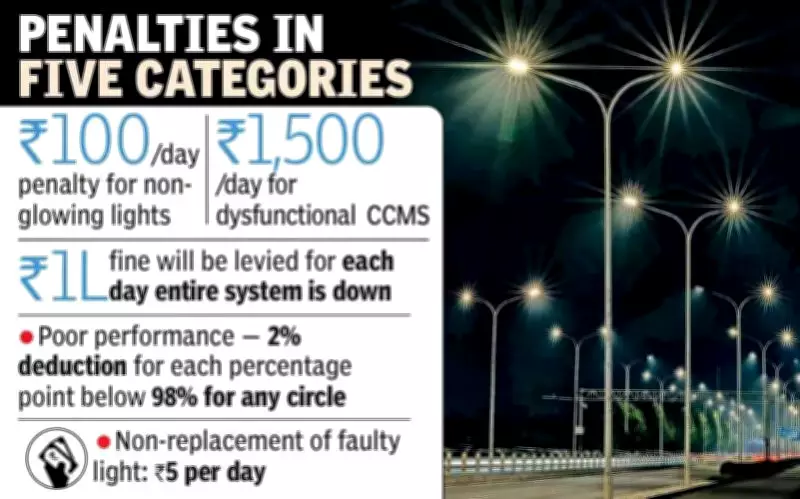
To guarantee high standards of service, the new system introduces stringent performance-based penalties. If a streetlight remains non-functional for a single day, the contractor will face a penalty of Rs 100 per light per day. Similarly, faults in CCMS boxes will attract a more substantial penalty of Rs 1,500 per day. These measures are designed to incentivize timely maintenance and reduce downtime, ensuring that the city's streets remain well-lit and safe for pedestrians and motorists alike.
Addressing Past Shortcomings
GHMC officials have highlighted that this new model aims to rectify several deficiencies experienced during the previous arrangement with Energy Efficiency Services Limited (EESL). An official from GHMC explained, "The earlier system suffered from limited manpower for maintenance, absence of dedicated CCMS support teams, an inadequate number of warehouses and vehicles, and a non-functional IT monitoring system without real-time dashboards." Additionally, officials noted that EESL had proposed a contract extension at Rs 211 per light per month, whereas a comparable tender in Delhi for 3.9 lakh lights over 12 years was awarded at Rs 186 per light per month, prompting the need for a more cost-effective and efficient solution.
Comprehensive Maintenance and Future Benefits
The selected agency under the new tender will be tasked with ensuring uninterrupted street lighting, minimizing downtime for failed lights, implementing lifecycle-based asset management, and developing systematic maintenance plans. The scope of work encompasses pole-to-pole cabling, maintenance of LED luminaires, upkeep of pole boxes and accessories, and replacement of damaged poles. The system will also feature a centralised monitoring platform, phased replacement of lights that fail or reach end of life, and a complaint redressal mechanism requiring faults to be addressed within 48 hours.

This initiative is expected to significantly improve illumination levels across Hyderabad, leading to enhanced public safety, reduced energy consumption, and better accountability in municipal services. By adopting a holistic approach to streetlight management, the city aims to set a benchmark for urban infrastructure projects and foster a more sustainable and well-maintained urban environment for all residents.





