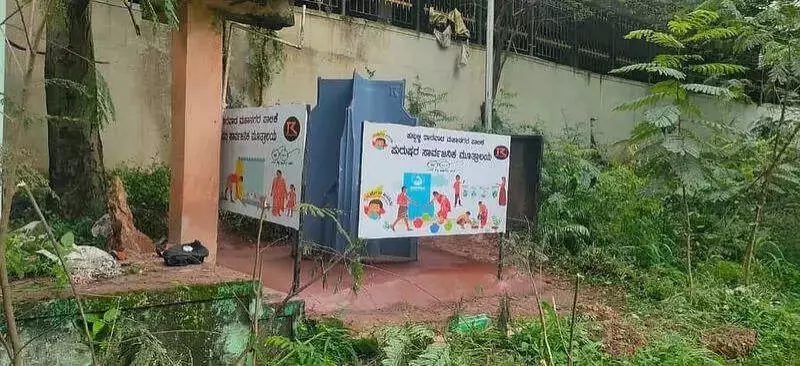
The Hubballi-Dharwad Municipal Corporation (HDMC) has launched an innovative solution to tackle both water conservation and public sanitation issues by installing waterless urinals across the twin cities. This pioneering initiative currently features five operational units in strategic locations, marking a significant step toward sustainable urban development.
Pilot Phase Locations and Implementation
In the initial phase, HDMC has established five waterless urinals at key public spaces: the HDMC Hubballi premises, Smart City office, Chitaguppi Hospital, Indira Glass House Garden premises, and HDMC Dharwad premises. This strategic placement ensures maximum public accessibility while testing the technology's effectiveness in diverse settings.
The project represents a substantial upgrade from previous failed attempts to introduce e-toilets in Hubballi, which struggled with maintenance challenges and water supply issues. HDMC Commissioner Rudresh Ghali emphasized the urgency of addressing public sanitation concerns, noting that "the problem of public urinals has increased in the twin cities", making this intervention particularly timely.

Technology Behind Water-Free Sanitation
These innovative facilities operate without any connection to water supply pipelines and eliminate the need for flushing. The technology utilizes a special sealant liquid added to the oil tap connected to the pit, which effectively prevents the spread of odor-causing gases. This chemical solution requires replacement only every 3 to 6 months, depending on usage density, making it both efficient and low-maintenance.
Each urinal conversion involves installing a retrofit valued at Rs 6,900 along with other necessary materials. The project has been made possible through CSR funding from Bank of Baroda and is being implemented by a private company based in Bangalore, demonstrating successful public-private partnership in urban infrastructure development.
Future Expansion and Water Savings
The municipal corporation has ambitious plans to scale this initiative significantly. According to official statements, 46 additional waterless urinals are planned for public access, while 15 existing e-toilets will be converted to the waterless system. This expansion could dramatically improve public sanitation while conserving precious water resources.
Santosh Yarangalli, executive engineer of HDMC's solid waste management department, highlighted the potential water conservation impact, stating that "if the existing urinals are used 400 times a day, 15,000 to 18,000 litres of water will be wasted per month". The waterless alternative eliminates this wastage entirely, contributing to sustainable water management in the region.
The initiative has already attracted attention from non-governmental organizations, with one organization approaching the corporation with a proposal. If this collaboration proves positive, HDMC intends to implement the waterless urinal project on a full scale, potentially seeking additional CSR funding from other companies or organizations to support this expansion.