Senior Congress leader and former Haryana Chief Minister Bhupinder Singh Hooda has issued a strong critique of the newly passed legislation that replaces the Mahatma Gandhi National Rural Employment Guarantee Act (MGNREGA). He calls for the immediate withdrawal of the new scheme and the restoration of MGNREGA in its original, rights-based form.
In a statement dated December 29, 2025, Hooda described the passage of the VB–G RAM G Act as a "fundamental retreat" from India's commitment to a legally enforceable right to work. He asserted that this move represents a clear shift away from the principles of decentralisation, federalism, and economic dignity that supported rural livelihoods for nearly two decades.
The Core Flaw: Funding Shift and Federal Burden
Hooda identified the most damaging change as the reclassification of rural employment from a rights-based guarantee to a centrally sponsored programme with a 60:40 funding pattern between the Centre and states. Under the original MGNREGA, the central government bore the full cost of unskilled wages, acknowledging the limited fiscal capacity of poorer states to guarantee work during distress.

He warned that forcing states to shoulder a significantly higher financial burden is ill-timed. States are already dealing with shrinking fiscal space, uncertainties related to the Goods and Services Tax (GST), and growing welfare obligations. This new cost-sharing model, Hooda argued, will inevitably lead to reduced work approvals and suppressed demand for employment, as states seek to limit their financial liability.
Misleading Claims and a Reversed Framework
The government's claim that the new framework enhances welfare by raising the annual employment ceiling to 125 days is misleading, according to Hooda. He pointed to MGNREGA data showing that the core issue has never been the statutory limit on workdays, but chronic underfunding and delayed wage payments.
Even at the peak of distress during COVID-19 in 2020-21, only about 9.5% of rural households completed 100 days of work. Over the past three years, this figure has averaged close to 7%. Raising the ceiling without guaranteeing adequate financial allocations does not expand livelihood security, he stated.
Equally troubling is the shift in governance. MGNREGA operated on a bottom-up, demand-driven framework, empowering rural households to demand work as a legal right. The new law reverses this logic to a centrally capped, supply-driven system. It allows the Centre to pre-determine allocations and makes states liable for any expenditure beyond these caps, which will compel state governments to actively discourage work demand.
Politicisation of Welfare and the Call for Restoration
Hooda highlighted the growing politicisation of funding decisions as a major threat to the proposed framework's credibility. He cited the suspension of MGNREGA funds to West Bengal for the past three years as a stark warning of how discretionary powers can be misused. Institutionalising such discretion under a new law, he cautioned, will render the employment guarantee meaningless.
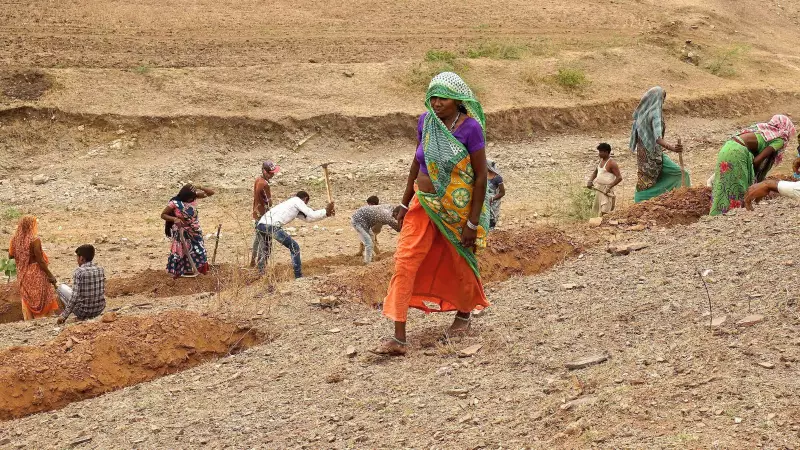
He underscored MGNREGA's legacy as one of the world's most inclusive economic interventions. The scheme routinely generates over two billion person-days of employment annually, supporting nearly 50 million rural households. More than half its workforce are women, and around 40% belong to Scheduled Castes and Scheduled Tribes. Its early years coincided with unprecedented growth in rural wages, and it created durable assets that support agriculture and climate resilience.
Concluding his argument, Bhupinder Singh Hooda, the Leader of Opposition in Haryana, demanded that the new scheme be withdrawn. He insisted that MGNREGA must be retained in its original, rights-based form to uphold the constitutional promise of work and dignity for India's rural population.