

Hebbal Flyover Resurfacing Brings Relief to Bengaluru Airport Commuters
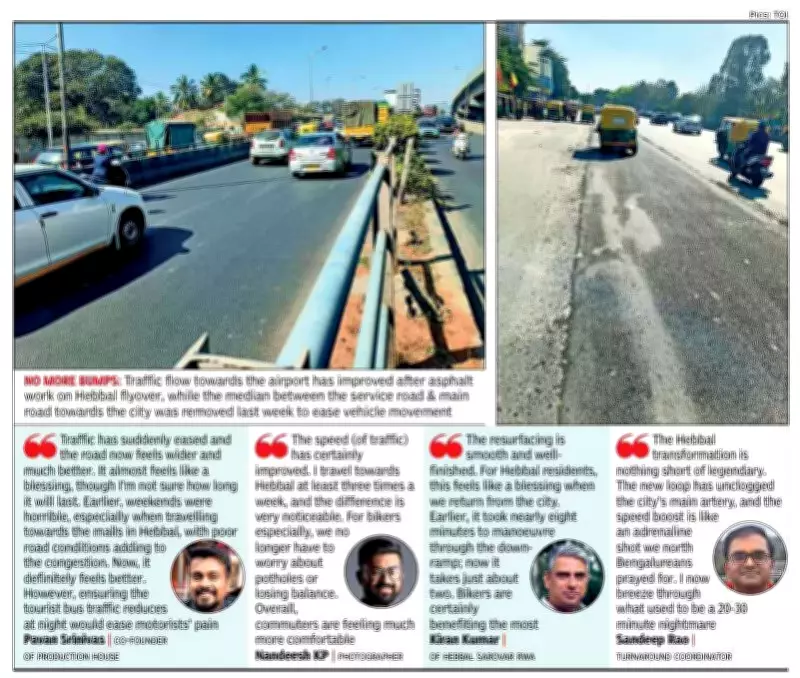
In a significant development for Bengaluru residents, vehicular movement on the Hebbal flyover main carriageway towards Kempegowda International Airport (KIA) has become markedly faster following the completion of asphalt resurfing work, as confirmed by traffic police officials. This improvement addresses a long-standing bottleneck that had plagued the city's traffic flow.
Traffic Speed Doubles After Road Repairs
Officials reported a sharp enhancement in traffic conditions over the past week on this critical stretch. Prior to the resurfacing, average vehicle speeds on the flyover languished between 20kmph and 25kmph due to poor road surfaces and persistent congestion. Post-repairs, speeds have surged to a range of 40-50kmph, effectively cutting travel times for airport-bound commuters.
An officer from the Hebbal traffic police station highlighted the positive impact, noting reduced stress for travelers during peak hours when delays at the Hebbal junction often threatened flight schedules. Remarkably, not a single ambulance has been reported stuck in slow-moving traffic or jams since the repairs, a fact hailed as highly encouraging by authorities.

Addressing Long-Standing Road Issues
The carriageway had been marred by multiple defects, including small potholes, severe asphalt damage, alligator cracks, and sudden bumps near bridge expansion joints. Previous asphalt work had proven inadequate, with the road deteriorating quickly, prompting traffic police to formally request the Greater Bengaluru Authority (GBA) for fresh resurfacing in both directions.
Another contributing factor to the slow traffic was a lane mismatch: five lanes from the main road and service road merged into just three lanes on the flyover, exacerbating congestion. Poor road conditions forced vehicles to move cautiously, worsening the bottleneck.
Safety and Health Concerns Mitigated
Two-wheeler riders were particularly vulnerable, facing accident risks when four-wheelers or heavy vehicles braked suddenly due to potholes or bumps. Additionally, many motorists complained of back pain or spinal discomfort from navigating the rough stretch, as noted by an officer from the Hebbal traffic police station.
Technical Details of the Resurfacing Project
Pommala Sunil Kumar, commissioner of the Bengaluru North city corporation (BNCC), explained that the project involved milling and laying stone matrix asphalt to repair the road and ensure a smooth riding surface. The flyover had suffered from multiple alligator cracks, which caused waterlogging during monsoons and worsened traffic congestion. The existing damaged tar layer was removed, and expansion joints were properly filled to enhance durability and traffic flow. Work commenced on January 24 and was completed by January 28.
Ongoing Traffic Management Efforts
Frequent vehicle breakdowns had been another major cause of congestion on the flyover. To combat this, traffic police personnel and home guards remain deployed on the stretch to respond to incidents, clear stalled vehicles, and maintain smooth movement for other motorists.
Persistent Challenges Beyond the Flyover
Despite the improvements, traffic slows down shortly after the flyover, particularly near the Dairy Farm bus stop—known as the Kempapura bus stop—opposite Esteem Mall during evening peak hours. While most BMTC buses use the designated bus bay, private buses often halt on the main road instead, disrupting traffic flow.
In January, a two-lane loop was inaugurated for vehicles from KR Pura towards the city, but vehicles from the down-ramp had to criss-cross lanes near Baptist Hospital, slowing traffic. To resolve this, the median separating the main road and service road was removed over a stretch of more than 100 meters from the down-ramp to the Baptist Hospital BMTC bus stop. This change has eliminated the need for lane criss-crossing, resulting in significantly faster vehicular movement.






