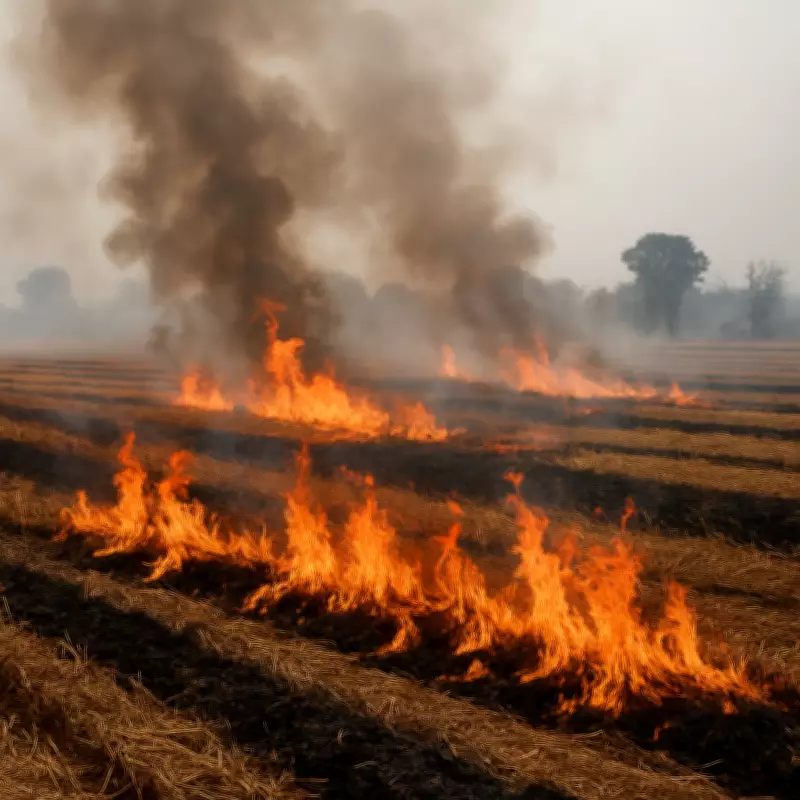
The Gurgaon district administration has imposed an immediate ban on the burning of crop residue, citing significant risks to public health, the environment, and air quality. The order was issued under Section 163 of the Bharatiya Nagarik Suraksha Sanhita (BNSS), 2023, following inputs from the agriculture and farmers' welfare department regarding the likelihood of stubble and crop residue burning by farmers.
Legal Framework and Enforcement
Officials stated that any individual found burning stubble or crop residue will face legal action under Section 223 of the BNSS. District Magistrate Uttam Singh has directed all sub-divisional magistrates (SDMs), the agriculture department, the Haryana State Pollution Control Board, the district development and panchayat officer (DDPO), block-level officers, and station house officers to ensure strict enforcement of the ban. The order imposes a complete prohibition on burning stubble, crop residue, or husk in agricultural areas across the district with immediate effect.
Decline in Stubble Burning Incidents
Officials highlighted that stubble burning, once a major contributor to seasonal air pollution in Haryana, has declined significantly in recent years. Statewide farm-fire incidents peaked at 6,987 in 2021 and dropped to 662 in 2025, reflecting a reduction of nearly 90%. This decline has been attributed to stricter enforcement, wider availability of crop-residue management machinery, and increased farmer outreach programs.

During the ongoing 2026 season, around 175 cases have been recorded in Haryana as of April 23, with seasonal figures crossing 700 during the wheat harvest period. While this remains considerably lower than previous years, authorities continue to monitor the situation closely. Gurgaon has largely remained unaffected due to its limited agricultural area and has consistently reported negligible cases. In 2025, the district recorded no incidents during midseason monitoring, officials confirmed.
Background and Context
The ban comes as part of broader efforts to combat air pollution in the National Capital Region. Stubble burning in neighboring states has historically contributed to hazardous air quality levels in Delhi and surrounding areas. The use of Section 163 of BNSS allows for immediate preventive action to protect public health and the environment.
Authorities have urged farmers to adopt alternative methods for managing crop residue, such as using machinery for in-situ management or selling residue for industrial use. The agriculture department continues to provide subsidies and support for such equipment to encourage compliance and reduce environmental harm.