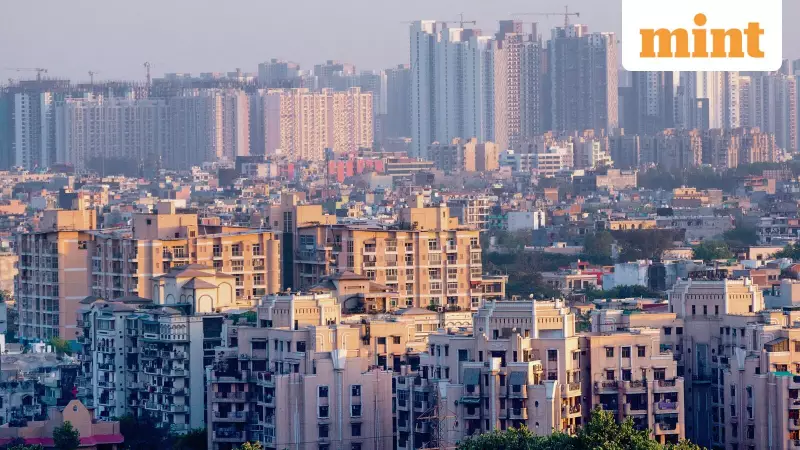
The Indian government is crafting a significant plan to empower the country's urban administrators. With cities straining under the weight of rapid population growth and aging infrastructure, the Centre aims to grant municipal bodies greater financial independence and reduce their reliance on state and central grants.
Blueprint for Financial Self-Reliance
According to two senior government officials involved in the process, the new strategy is expected to be announced in the forthcoming Union Budget. The blueprint will focus on bolstering the own-revenue sources of Urban Local Bodies (ULBs), which include municipal corporations, municipalities, and nagar panchayats. Key revenue streams like property tax and user charges will be strengthened.
The plan also encourages ULBs to explore market-based instruments such as municipal and green bonds to fund long-term urban projects. Cities like Surat, Ghaziabad, Indore, Vadodara, Ahmedabad, and Pimpri-Chinchwad have already pioneered this approach by issuing municipal green bonds.

To further build financial independence, the budget will outline a roadmap allowing municipalities to offer paid services like project consultancy and implementation training. A key component will be peer-to-peer mentoring, where better-performing municipal corporations will guide weaker ones to adopt proven financial and governance practices.
"The budget speech may also highlight case studies from such cities to showcase how civic bodies can expand their financial base through better governance, innovation and market-linked instruments," one official stated. A December meeting at the finance ministry with commissioners of top-performing municipal corporations helped gather best practices for wider adoption.
The Challenge of Weak Municipal Revenues
Currently, India's municipalities remain heavily dependent on government transfers. A Reserve Bank of India (RBI) report noted that municipal revenues and expenditure have stagnated at around 1% of India's GDP, which is far below levels in OECD countries and other emerging economies.
Data reveals India has 4,500 ULBs, most of which are small with limited financial powers. Only 550 are municipal corporations, and of these, a mere 25 can be considered largely self-reliant, generating significant revenue from their own sources.
An analysis by the National Institute of Urban Affairs (NIUA) of 25 municipal corporations showed that own revenues constituted only about 48% of total revenues on average. Rating agency ICRA reported that grants accounted for roughly 38% of municipal revenues in FY24. Property tax remains the single largest source of municipal income, contributing around 42% of own revenues on average.
Building a Robust Municipal Bond Market
Experts emphasize the need for urgent reforms. Kuljit Singh of EY India pointed out inefficiencies, low charges, and the need for capacity building. Abhash Kumar of Delhi University stressed that improving property tax efficiency and rationalizing user charges are critical for financial sustainability.
The government has been actively promoting a municipal bond market. The SEBI regulations of 2015 provided a formal framework for issuances. In 2018, a financial incentive scheme was introduced, followed by the National Municipal Finance Portal to enhance transparency.
Suprio Banerjee of ICRA Ltd. noted that municipal bonds have emerged as a viable funding alternative, aided by government incentives that lower costs. "For smaller ULBs, the Centre is encouraging pooled municipal bond issuances through state support," he said.
Since FY18, 17 municipal bond issuances worth nearly ₹2,600 crore have taken place, with an average issue size of ₹150 crore. These have been enabled by structured payment mechanisms and fiscal incentives from the Centre.
This upcoming budget initiative builds on decades of efforts to strengthen municipalities, starting with the constitutional status granted by the 74th Constitutional Amendment Act of 1992 and the pioneering municipal bond issued by the Bangalore Municipal Corporation in 1997.