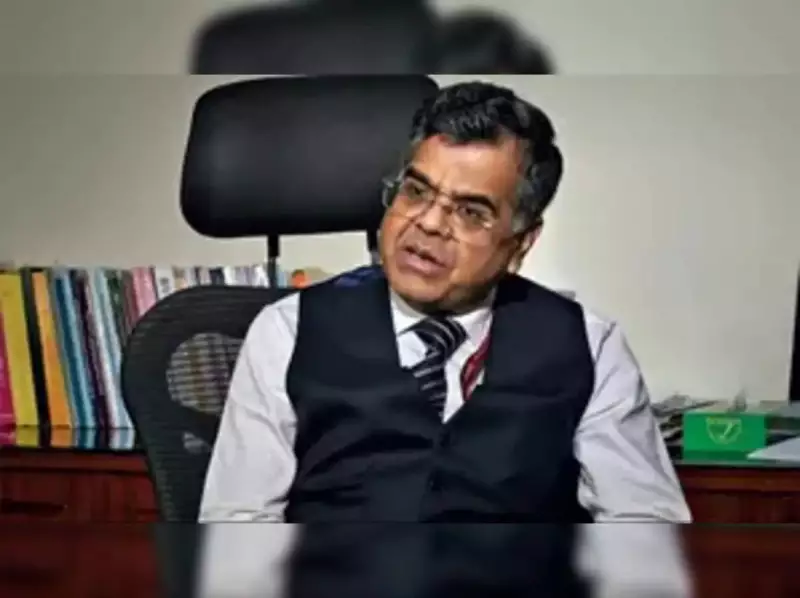
In a firm stance on balancing rapid infrastructure development with democratic principles, Cabinet Secretary TV Somanathan on Friday clarified that the government has no plans to amend the existing land acquisition policy. He emphasized that while removing project bottlenecks is a priority, it will not come at the cost of public consent and consultation.
Democracy and Development: Striking the Crucial Balance
The statement comes against the backdrop of persistent demands from certain sections of the business community to review the land acquisition framework to speed up projects, often citing the Chinese model. Addressing this, Somanathan stated, "In a democracy we need to strike a balance... We want to implement projects with the consent of people and after public consultation." He made it clear that the current policy stands, reiterating the government's commitment to a participatory approach.
While the BJP government had attempted to amend the land acquisition law during its first term, it ultimately left it to states to adopt simpler regimes. Somanathan's comments put to rest any speculation about a central policy shift at this juncture.

Pragati's Role in Unblocking Major Hurdles
The Cabinet Secretary highlighted the pivotal role played by the PRAGATI (Pro-Active Governance and Timely Implementation) platform, led by Prime Minister Narendra Modi, in resolving long-pending issues. Data presented revealed the scale of challenges:
- Out of 7,735 issues raised under the multi-layer platform, a significant 35% were related to land acquisition.
- Another 20% pertained to wildlife and forest clearances.
- Of the 382 projects reviewed by the PM in 50 meetings, nearly two-thirds involved land and forest-related matters.
Sectors like roads (114 projects) and railways (109 projects) were most affected, with at least half of their issues stemming from land acquisition delays.
Tangible Results and Accelerated Timelines
The proactive monitoring has yielded concrete results. Manoj Govil, Secretary Coordination in the Cabinet Secretariat, noted that the average time for forest and wildlife clearances has plummeted from over 600 days to approximately 75 days, as learnings from PRAGATI have been integrated into administrative processes.
Somanathan cited the transformative impact on projects worth a colossal ₹85 lakh crore that have been cleared through the panel. He gave the example of the Jammu-Udhampur-Srinagar-Baramulla rail link, approved in 1994. By 2015, when it was taken up under PRAGATI, only 40% work was complete. After high-level monitoring, it was finally commissioned in June 2023. He estimated that without PRAGATI's intervention, completion would have been delayed until January 2038.
"On average, one issue was resolved every working day after review under Pragati," Somanathan said, underscoring the platform's efficiency. He praised all states and chief secretaries for their responsive collaboration, irrespective of political differences, in resolving issues to complete projects.
Beyond Infrastructure: Reviewing Flagship Schemes
The PRAGATI platform's scope extends beyond infrastructure. It has been instrumental in reviewing the progress of 61 government schemes, including major initiatives like:
- One Nation, One Ration Card
- PM Jan Aarogya Yojana (Ayushman Bharat)
- PM Awas Yojana
- Swachh Bharat Mission
- Real Estate (Regulation and Development) Act (RERA)
Grievances across 36 different sectors have also been taken up for review through this mechanism. By systematically removing bottlenecks, Somanathan concluded, PRAGATI has created a robust platform enabling higher and more effective capital expenditure by the government, all while upholding the core tenets of democratic governance.