Greater Noida Authority Expands Waste Collection to Badalpur Village for Zero-Waste Initiative
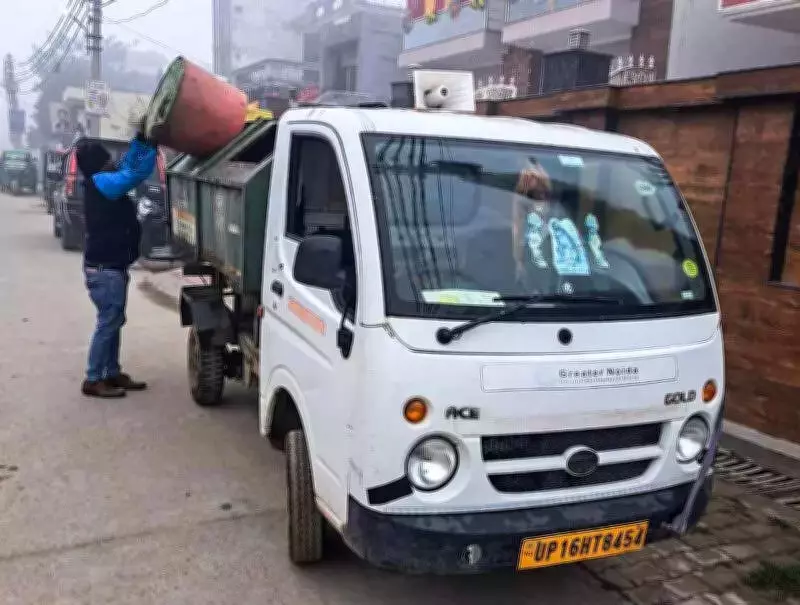
The Greater Noida Industrial Development Authority (GNIDA) has significantly expanded its environmental efforts by launching a door-to-door garbage collection programme in Badalpur village. This strategic move aims to transform Badalpur into a zero-waste and self-reliant community, marking a crucial step in the region's waste management overhaul.
Partnership with NGO Drives Sustainable Waste Management
GNIDA is executing this ambitious project in collaboration with the NGO Feedback Foundation, which specializes in sustainable solutions across both rural and urban landscapes. The Foundation employs a community engagement methodology, providing comprehensive support in capacity building, planning, and implementation to various public and private entities. It has a proven track record of undertaking numerous field activities focused on sanitation and waste management within Greater Noida.
From Open Dumping to Systematic Collection
Prior to this initiative, residents of Badalpur village managed their own waste, often resorting to dumping it in open pits and along roadsides. This practice not only created unsanitary conditions but also posed environmental hazards. With the new programme, officials confirm that waste will now be collected regularly from every household, effectively putting an end to open dumping and substantially improving overall cleanliness and sanitation in the area.

Segregation and Recycling at Material Recovery Facility
At a pivotal meeting between the health department and Feedback Foundation, a detailed plan was formulated. The dry waste collected from Badalpur will be meticulously segregated at the village's own Material Recovery Facility (MRF) and then recycled. This process is designed to drastically reduce the volume of waste while enabling the production of useful items from recycled materials.
Authority ACEO Srilakshmi VS emphasized, "This segregation and recycling approach will not only minimize waste but also foster resource recovery, contributing to a circular economy model within the village."
Public Participation: The Key to Success
ACEO Srilakshmi VS highlighted that public participation is absolutely essential to achieving the zero-waste vision for Badalpur. To galvanize community involvement, a dedicated team from Feedback Foundation has been conducting extensive door-to-door visits. These efforts focus on educating and encouraging residents to segregate their waste at the source, ensuring the programme's long-term sustainability and effectiveness.
Greater Noida's Broader Waste Management Challenges
This expansion comes against the backdrop of significant waste management challenges in Greater Noida. With an estimated population ranging from 10 to 12 lakh, the city generates approximately 500 tonnes of solid waste daily. This waste is currently directed to a dumpsite in Lakhnawali village, where lakhs of tonnes of legacy waste have accumulated untreated for years, underscoring the urgent need for systematic solutions.
GNIDA's existing waste collection services already cover several key areas, including Alpha I and II, Beta I and II, Gamma I and II, as well as Rampur Jagir and Nawada villages. The inclusion of Badalpur represents a strategic extension of these services, aiming to create a cleaner, healthier environment through community-driven, sustainable waste management practices.