Ghaziabad Municipal Corporation Cracks Down on Waste Segregation Violators
The Ghaziabad Municipal Corporation (GMC) has taken a proactive step by issuing formal notices to 86 residential societies and 35 institutions for their failure to segregate dry and wet waste. This enforcement action comes just weeks before the nationwide Solid Waste Management (SWM) Rules, 2026, notified by the Union Environment Ministry, are set to come into effect on April 1, 2026.
New Rules to Replace Decade-Old Waste Management System
The SWM Rules 2026 will completely overhaul the existing system of waste collection, transportation, and recycling that has been in place for over ten years. In a significant shift, the rules introduce stricter criteria for defining bulk waste generators (BWGs). Under the new regulations, any entity with a floor area exceeding 20,000 square metres, a daily water consumption of 40,000 litres, or solid waste generation of 100 kg per day will be classified as a BWG. This includes central and state government departments, local bodies, public sector undertakings, institutions, commercial establishments, and residential societies.
This marks a broadening from the 2016 rules, which did not specify such precise limits for floor area or water consumption, potentially bringing more entities under the BWG category and increasing accountability.
Ghaziabad's Performance and Compliance Challenges
In 2025, Ghaziabad demonstrated notable improvement in the Swachh Survekshan rankings, climbing to 11th place from 38th the previous year in the million-plus city category. The city scored an impressive 11,151 out of 12,500 points, excelling in seven out of eight parameters with scores over 90%. However, it fell short under the source segregation head, highlighting the ongoing challenge in waste separation at the point of generation.
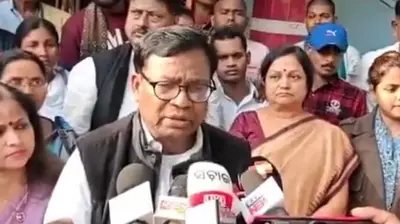
Municipal Health Officer Mithilesh Kumar emphasized the urgency of compliance, stating, "We have issued notices to 86 societies and 35 institutions for failing to segregate wet and dry waste. We want to give them two months to set up a system within the premises for segregation of waste." This grace period aims to facilitate a smooth transition to the new requirements.
Legal and Environmental Implications of Non-Compliance
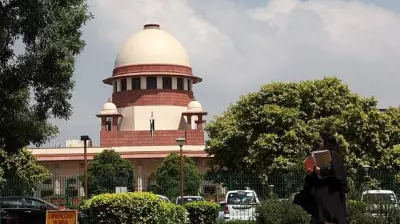
The enforcement action gains critical importance following a recent Supreme Court order that directed effective implementation of the SWM Rules 2026. Municipal Commissioner Vikaramaditya Singh Malik elaborated on the consequences, noting, "As per SWM Rules 2026, the rules provide for the levy of environmental compensation, based on the ‘Polluter Pays' principle, for non-compliance, including cases of operating without registration. This will give municipalities, including GMC, enough teeth to crack down on violators."
The court also stressed the need for synchronized efforts between appointed officers of local bodies and elected representatives, such as mayors, chairpersons, and ward members, to ensure successful rule implementation.
Key Provisions and Benefits of the New SWM Rules
Under the SWM Rules 2026, BWGs are mandated to process wet waste on-site. If unable to do so, they must obtain an Extended Bulk Waste Generator Responsibility (EBWGR) certificate from the municipality. Additionally, BWGs must ensure that all waste generated is collected, transported, and processed in an environmentally sound manner. This provision is expected to significantly reduce the burden on urban local bodies and promote decentralized waste management.
The rules also authorize the levy of user fees on waste generators as per the bye-laws of local bodies, further incentivizing compliance and sustainable practices.
This comprehensive approach aims to enhance India's waste management infrastructure, aligning with global environmental standards and fostering a cleaner, healthier urban environment.