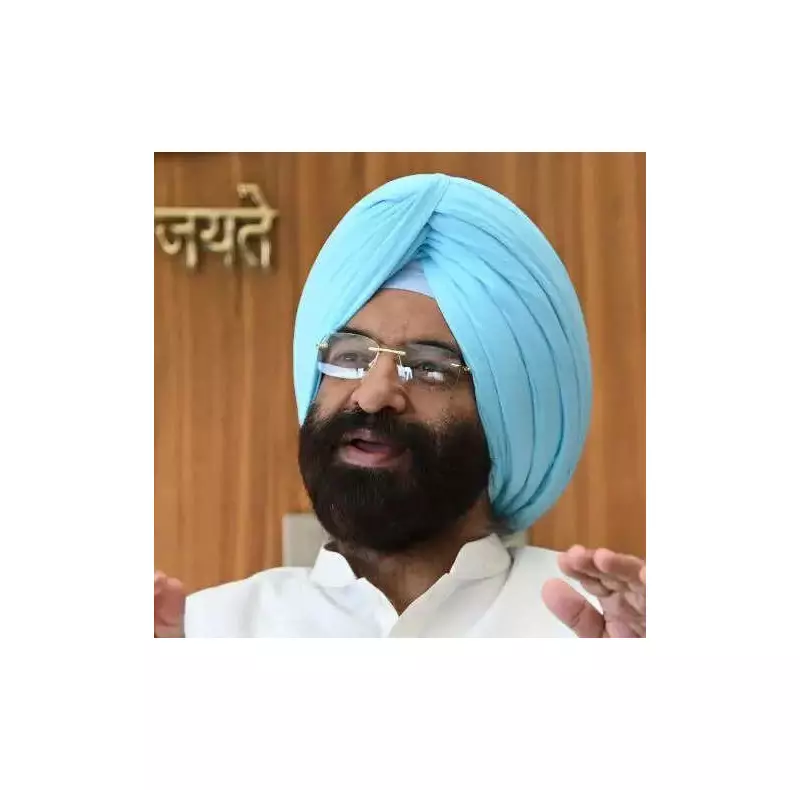
In a significant move aimed at tackling the capital's severe air pollution and traffic congestion, the Delhi government has directed app-based cab aggregators to restart ride-sharing services within the next month. The directive was issued during a high-level meeting chaired by Environment Minister Manjinder Singh Sirsa.
Government's Four-Pronged Strategy Against Pollution
The meeting, attended by officials from major mobility platforms and the transport department, is part of the government's broader push to improve air quality. Environment Minister Manjinder Singh Sirsa outlined that the administration is working on four critical fronts: vehicular emissions, industrial pollution, dust, and waste management. "The goal is to ensure citizens can breathe cleaner air," Sirsa stated, highlighting that vehicular exhaust is a primary contributor to the city's dangerous Air Quality Index (AQI).
Immediate Rollout of Ride-Sharing and Carpooling
Officials at the meeting instructed aggregators to swiftly deploy their ride-sharing features. While some companies expressed the need for preparation time, the government emphasized that shared mobility must be treated as a priority. A major focus was also placed on developing a structured, citywide carpooling system.

Minister Sirsa advocated for carpooling to function as a non-commercial, shared mobility option, particularly for peak-hour office commutes. Aggregators have been asked to begin work on either integrating in-app carpooling modules or creating independent platforms to facilitate this.
Boost for Electric Vehicles and Bus Services
In a bid to encourage greener transport, the government proposed a notable incentive. Privately registered electric vehicles (EVs) may be allowed to join aggregator platforms without requiring commercial permits or paying associated fees. The transport department has been tasked with studying the legal and safety aspects of onboarding private electric cars and two-wheelers.
Furthermore, aggregators were urged to expand their shuttle and bus aggregation services. The government believes that scaling up organized bus services can significantly reduce reliance on private vehicles. "The sooner we move towards large-scale ride-sharing and carpooling, the fewer vehicles we will have on roads," Sirsa asserted, underscoring the long-term vision for decongesting Delhi's roads.
The directive sets a clear one-month timeline for aggregators to reactivate ride-sharing in the National Capital Region (NCR), marking a concrete step in Delhi's fight against pollution and traffic gridlock.