Delhi's Waste Management Revolution: Four New Processing Facilities Set to Launch
The Municipal Corporation of Delhi (MCD) is poised to initiate construction on four state-of-the-art municipal solid waste treatment facilities as early as next month, marking a significant advancement in the city's sanitation infrastructure. This ambitious project has received substantial financial backing, with the Centre providing approximately 25% of the required viability gap funding—amounting to roughly Rs 90 crore—under the Swachh Bharat Mission (SBM) 2.0 initiative.
Addressing Delhi's Waste Processing Gap
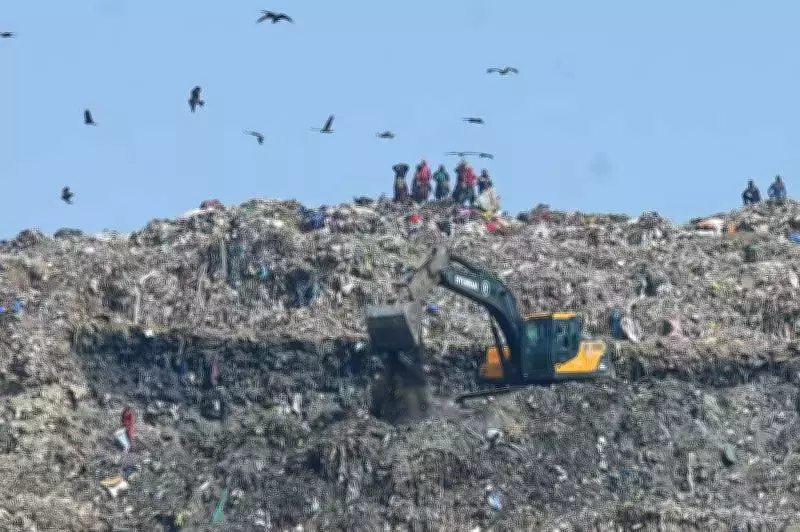
The primary objective of this initiative is to completely halt the dumping of fresh municipal waste at existing landfill sites. Once operational, these four facilities will collectively process an impressive 5,100 metric tonnes of waste per day, representing a major step toward comprehensive waste management. The MCD has established an aggressive timeline, planning to award the project contracts by March 31 and targeting June 15 for full operational status across all units.
Strategic Location Planning for Maximum Impact
The facilities will be strategically positioned at four key locations, including reclaimed sections of two existing landfills. This thoughtful placement maximizes available space while addressing specific regional waste management needs.

- Bhalswa Landfill: A 12-acre reclaimed plot will host a facility capable of processing 1,800 tonnes of fresh waste daily.
- Singhola: MCD will utilize its 6.6-acre silt disposal site to establish a unit with a 700-tonne-per-day capacity.
- Okhla Landfill: Ten acres of reclaimed land will accommodate a facility processing 1,400 tonnes daily.
- Bawana: Ten acres have been allocated from a 35-acre parcel originally designated for a waste-to-energy plant, where a 1,200-tonne-per-day facility will operate.
Transforming Delhi's Waste Processing Infrastructure
An MCD official emphasized the transformative potential of this project, stating, "The project is expected to significantly boost Delhi's waste-processing capacity and ensure scientific, end-to-end treatment of fresh municipal waste. It will also support the time-bound flattening of landfills as fresh dumping can be stopped."
This initiative addresses a critical gap in Delhi's current waste management system. While the city has made progress in biomining legacy waste—which is predominantly dry and contains approximately 60% inert material suitable for existing trommel machines—the daily household waste presents different challenges.
"However, the daily waste coming from households is mostly wet and mixed. It cannot be processed through the current trommels used for legacy waste and is also unsuitable for direct feeding into waste-to-energy plants," the official explained.
Innovative Technology for Wet Waste Processing
To overcome this technological limitation, MCD plans to install specialized high-capacity trommel machines specifically engineered to handle wet waste. The processing methodology at these new facilities will involve initial manual segregation of incoming waste, followed by mechanical processing.
- Recyclable materials such as plastics and textiles will be systematically separated.
- The organic components will undergo a drying process.
- This organic matter will then be converted into nutrient-rich manure within 30–40 days.
The official further clarified the technological advancement, noting, "Unlike the existing trommels used for legacy waste—with pore sizes of around 6 mm—the new units will have larger-sieve trommels to allow more efficient handling of wet waste."
Current Waste Management Landscape and Future Prospects
Delhi generates approximately 11,500 tonnes of municipal solid waste daily. Presently, about 6,650 tonnes are processed at the city's four waste-to-energy plants located in Narela–Bawana, Okhla, Tehkhand, and Ghazipur. Despite numerous decentralized waste facilities operating across the city, a substantial processing gap of roughly 4,700 tonnes per day persists, leading to continued dumping at Bhalswa and Ghazipur landfills.

The implementation of these four new facilities represents a comprehensive solution to this persistent challenge, promising to enhance Delhi's environmental sustainability while advancing the objectives of Swachh Bharat Mission 2.0 through innovative waste processing technology and strategic infrastructure development.