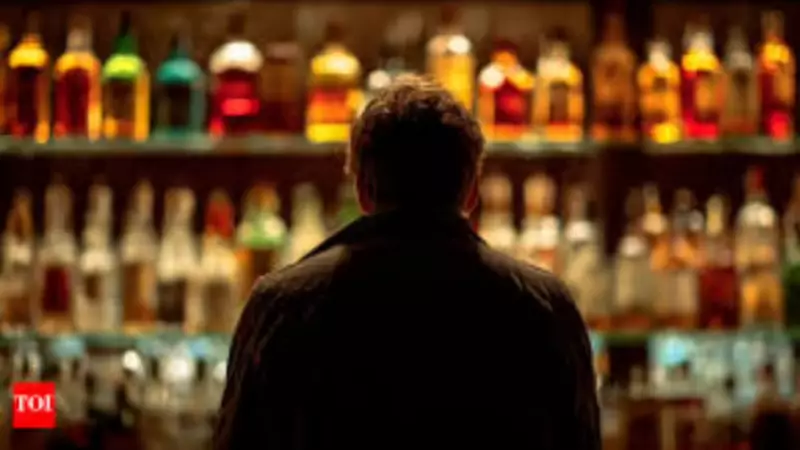
NEW DELHI: Delhi's liquor market continues to experience significant turbulence. Years of waiting for a fresh excise policy have created an unstable environment for alcohol consumption in the capital city.
Erratic Sales Patterns Reveal Market Uncertainty
Recent data from the Delhi excise department paints a clear picture of volatility. Overall liquor sales in the city jumped from 2.3 crore cases in 2021-22 to 2.7 crore cases the following year. However, they then dropped sharply to 2.2 crore cases in 2023-24 before showing a slight recovery to 2.3 crore cases in 2024-25.
This rollercoaster pattern indicates a market struggling with consistent direction. Consumers and businesses alike face confusion as policy decisions remain pending.

Beer Sales Show Dramatic Decline
The situation appears even more pronounced for Indian beer. Sales increased from 92.5 lakh cases in 2021-22 to a high of 1.2 crore cases in 2022-23. Then came a steep fall to 77 lakh cases in 2023-24, followed by another drop to 70.2 lakh cases in 2024-25.
Experts point to multiple factors behind this 43% decline in beer sales between 2022-23 and 2024-25. Some vends have reportedly pushed lesser-known brands to customers, potentially affecting consumer choices and trust.
Infrastructure Grows Despite Policy Stalemate
Interestingly, the number of IMFL (Indian made foreign liquor) vends in Delhi actually increased during this period. They rose from 673 in 2021-22 to 714 in 2024-25. Similarly, registered liquor brands grew from 1,470 to 1,579.
This expansion occurred even as the city's liquor business remained regulated by the old excise policy of 2020-21. This policy has been extended five times since 2022 because a replacement has not been finalized.
Policy Extensions Create Business Challenges
In June 2025, the government extended the old policy until March 2026. This marks one of the longest such extensions since the 'new regime' of 2021-22 was scrapped in September 2022 following allegations of irregularities.
Vinod Giri, director general of the Brewers Association of India, expressed concern about the situation. "The shortened version of the old excise policy was meant to be an interim measure until a proper one was announced," he said. "But it has repeatedly been extended, creating uncertainty in the market, which directly affects the business environment."
Revenue Loss and Market Diversion
This uncertainty has put related decisions and fresh investments in the sector on hold. Giri noted that a significant portion of Delhi's alcohol sales is now moving to NCR cities like Gurgaon and Noida. These areas offer more brand options and a premium buying experience.
"Delhi government needs to come out with a stable excise policy," Giri emphasized. Such a policy would ensure the availability of quality products, restore industry confidence, retain business, and protect government revenues.
Revenue Figures Show Some Growth
Delhi earned excise revenue of Rs 7,431 crore in 2023-24. This grew to Rs 8,255 crore the next financial year. Revenue figures for previous years were not available in the latest data.
New Policy Remains in Development
The government has stated that a high-level committee has finalized a draft policy following consultations. It will be formally released once a meeting is held before moving forward for approval.
The new policy is likely to continue with only government-run liquor outlets. However, these outlets may be larger and better-stocked than current ones.
Industry observers continue to watch for developments. They hope for clarity that could stabilize Delhi's liquor market after years of uncertainty.