

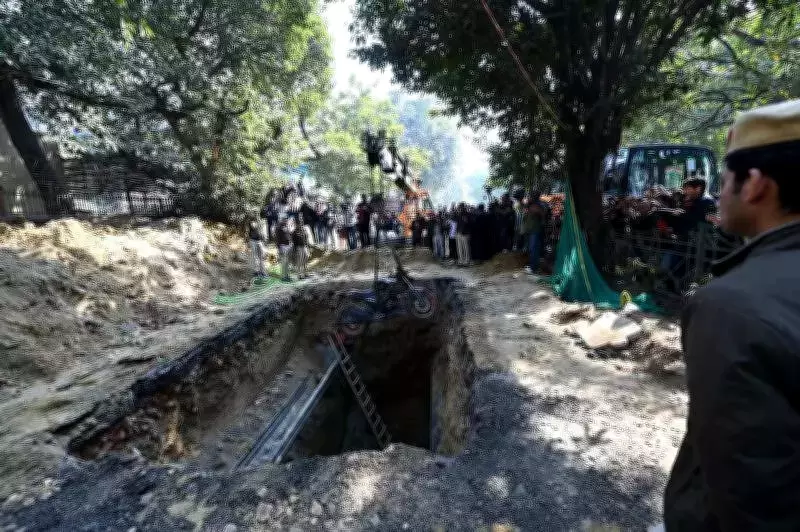
Delhi Jal Board Faces Intense Scrutiny After Fatal Construction Pit Accident
In a tragic incident that has exposed serious safety lapses, the Delhi Jal Board (DJB) finds itself under intense scrutiny following a fatal accident in Janakpuri. The incident occurred just weeks after the water utility issued explicit safety directives following a similar drowning case in Noida, revealing a disturbing pattern of non-compliance with established safety protocols.
Safety Directives Ignored Despite Clear Warnings
The DJB had issued a comprehensive instructional order on January 24, specifically citing the Noida accident where 27-year-old Yuvraj Mehta drowned in a construction pit. The order, issued by the chief executive officer, mandated strict adherence to safety norms across all construction sites, regardless of size. It explicitly required proper barricading, clear signage, reflectors, and complete compliance with safety standards.
The order warned that any lapse would result in disciplinary action against engineers and contractors, and mandated surprise inspections, photographic compliance reports, and personal accountability for site engineers. Despite these clear directives, the Janakpuri incident demonstrates that these instructions were not properly implemented or monitored.

Janakpuri Accident Reveals Critical Safety Failures
According to a press statement issued by the Delhi government, preliminary inspections at the Janakpuri site revealed an excavation pit measuring approximately 6 meters in length, 4 meters in width, and 4.25 meters deep. This pit was part of an ongoing sewer project where pipeline renewal was being conducted after nearly 50 years.
Officials acknowledged that while partial barricading was present, safety arrangements were not fully compliant with prescribed norms. Most alarmingly, two-wheeler traffic continued to move dangerously close to the excavation site, creating an extremely hazardous environment that ultimately led to tragedy.
Immediate Suspensions and Investigations Ordered
Delhi Cabinet minister Parvesh Sahib Singh responded swiftly to the incident, ordering the immediate suspension of the executive engineer, assistant engineer, and junior engineer responsible for the area and project. The minister cited serious supervisory and enforcement lapses as the basis for these disciplinary actions.
The contractor executing the work has been placed under investigation, with the government stating that strict action, including potential blacklisting, would follow if violations are established. This represents a significant escalation in accountability measures for construction safety violations within Delhi's infrastructure projects.
Systemic Safety Failures Across Departments
Minister Singh noted that safety advisories had been circulated not only by the DJB but also by the Public Works Department and the Irrigation and Flood Control Department following the Noida incident. This multi-departmental warning system underscores the comprehensive nature of the safety directives that were ultimately ignored.
The minister emphasized that the tragedy has caused deep pain to the victim's family and asserted that public safety would not be compromised under any circumstances. "Any failure in adhering to established safety standards will be dealt with strictly, both administratively and contractually," Verma stated in his response to the incident.
Comprehensive Safety Audit Ordered Across Delhi
In response to the incident, the minister has ordered a comprehensive safety audit of all ongoing sewer, road, and flood control projects across Delhi. This represents a significant expansion of safety oversight beyond the immediate incident site.
A high-level inquiry committee has been constituted by the DJB with three primary objectives:

- Fix responsibility for the safety lapses
- Identify procedural shortcomings in current safety protocols
- Recommend corrective measures to prevent recurrence of similar incidents
Political Response and Technical Context
Area MLA and Delhi minister Ashish Sood, who visited the accident site, called the incident regrettable and promised strict action once accountability is determined. "There are reports suggesting negligence at the site, but accountability will be determined only after a proper investigation. If anyone is found guilty, the government will not spare them and strict action will be taken," Sood stated.
Sood provided important technical context about the project, noting that most of the pipeline renewal work was being carried out using trenchless technology. "Digging a road 30 feet deep would otherwise require enormous time and money, which is why this method was chosen," he explained, highlighting the technical considerations behind the project approach.
Broader Implications for Infrastructure Safety
This incident raises serious questions about safety compliance across Delhi's infrastructure projects. The fact that explicit safety directives issued after a previous fatal accident were not implemented suggests systemic issues in monitoring and enforcement mechanisms.
The DJB's January 24 order had made executive engineers, assistant engineers, and junior engineers personally accountable for any safety lapses, warning that missing safety norms would attract immediate disciplinary action and contractor liability. The Janakpuri incident represents the first major test of these accountability measures, with the immediate suspensions demonstrating the government's commitment to enforcing these standards.
As investigations continue and the safety audit progresses, all eyes will be on how effectively the Delhi Jal Board and other infrastructure agencies implement and monitor safety protocols to prevent future tragedies on construction sites across the national capital.





