Defence Ministry Stresses Indigenous R&D at Vibrant Gujarat Conference
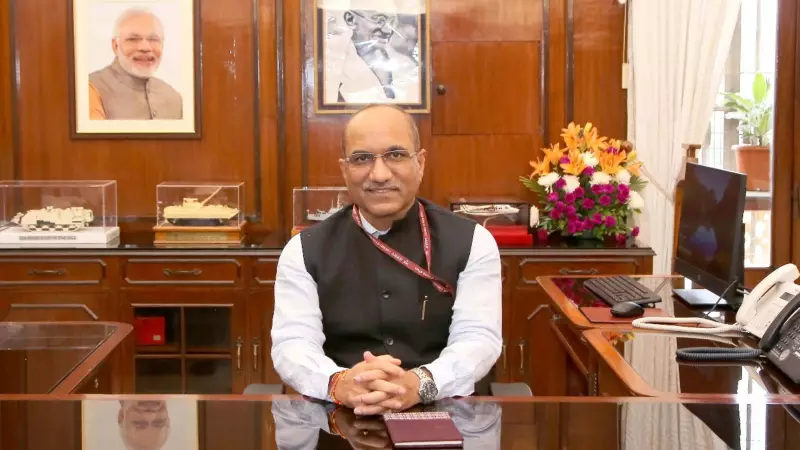
Defence Production Secretary Sanjeev Kumar delivered a strong message at the Vibrant Gujarat Regional Conference in Rajkot. He urged the industry to invest in research and development for complete self-reliance in defence manufacturing.
Beyond Manufacturing: The Design Imperative
Sanjeev Kumar highlighted a crucial shift in India's defence strategy. The focus now extends beyond manufacturing components within the country. The government prioritizes products that are designed, developed, and manufactured entirely in India.
"Even in defence acquisition from indigenous companies, first priority is given to those products which are designed, developed and manufactured all in India," Kumar told industrialists from Saurashtra.

He acknowledged the progress made. Prime Minister Narendra Modi allocated 75 percent of the defence acquisition budget for indigenous sources. However, Kumar clarified this does not mean all those products were designed in India. Many are simply supplied by companies based in India.
The Path to True Aatmanirbharta
Kumar argued that manufacturing alone is insufficient for true self-reliance, or Aatmanirbharta. Control over design is fundamental.
"Full control means that whatever we want to do in future with that design, we can integrate indigenous arms or other payloads without depending on foreign manufacturers," he explained. This independence allows integration between platforms without foreign assistance.
The Union Secretary emphasized owning the intellectual property rights through actual R&D. He meant IPR for products designed by Indian scientists and engineers, not just legal documents purchased from abroad.
"This would be complete self-reliance with complete control over the supply chain," Kumar stated. "That means whenever we want we can scale it up, we can diversify, and the supply chain should be resilient."
Quality and Long-Term Commitment
Kumar addressed quality concerns directly. He stated the armed forces will never compromise on accuracy and quality. Equipment must perform consistently for years without deterioration.
"It is 100% achievable and many of us have already done so," he asserted. Achieving this requires a long-term mindset. Companies must vouch for product quality for decades, not just at the time of supply.
Remarkable Growth in Defence Sector
The Defence Production Secretary shared impressive growth figures. When Modi first became Prime Minister, India's domestic defence industry was worth around Rs 46,000 crore. It has now grown to Rs 1.53 lakh crore.
Defence exports show even more dramatic growth. From about Rs 686 crore in 2013-14, exports have reached approximately Rs 24,000 crore.
Private Sector and MSMEs Rise
Kumar noted a significant shift in the defence production landscape. Public sector units once contributed 80-85 percent of defence production. The private sector's share has now risen to 30-35 percent.
He highlighted the importance of micro, small, and medium enterprises. The government has identified over 20,000 MSMEs supplying components to the armed forces, Defence PSUs, and major private companies.
"The barometer of success is when a large number of MSMEs start contributing to the sector," Kumar remarked.
Geopolitical Necessity
The senior bureaucrat connected self-reliance to changing global dynamics. "One who was yesterday a friend we do not know if he is going to be a friend tomorrow," he observed, making Aatmanirbharta essential.
Beyond strategic independence, indigenous defence manufacturing creates jobs, multiplies GDP, and develops technology with civilian applications.
Sanjeev Kumar concluded with a realistic assessment. "The journey has started but we still have a long way to go," he said. India must start designing its own platform-level machines, especially those needed during adverse border situations.