Chennai's Smart Parking System: 20 Locations to Get Tech-Driven Management by 2026
The Greater Chennai Corporation (GCC) is set to revolutionize urban mobility with a comprehensive smart parking management system that will be deployed across 20 strategic locations throughout the city. This ambitious initiative, operating under the public-private partnership (PPP) model, is scheduled for completion by the end of 2026 and represents a significant technological advancement in addressing Chennai's persistent parking challenges.
Addressing Parking Chaos After Contract Termination
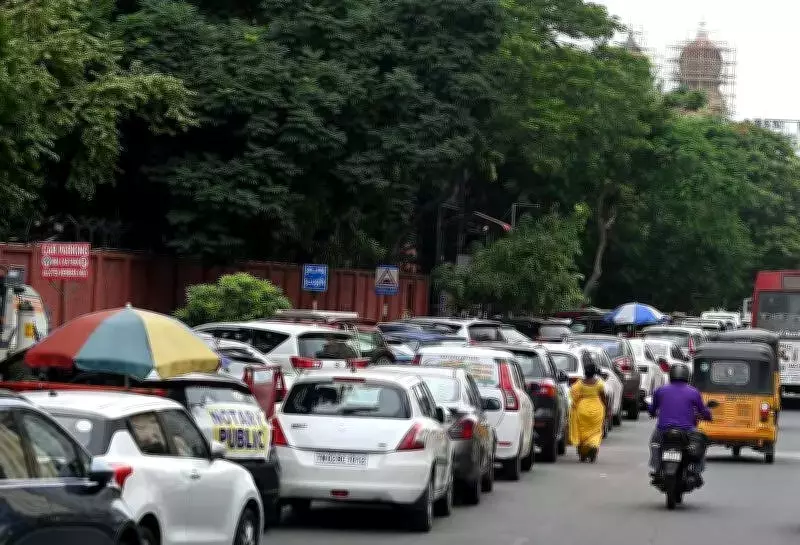
This development comes as a crucial response to the parking vacuum created when GCC terminated its contract with TEXCO in July 2025. Since that termination, Chennai has operated without a unified parking management framework, resulting in widespread complaints about disorganized parking arrangements, frequent fee disputes, and substantial revenue losses in key commercial districts. The absence of systematic oversight has particularly affected high-traffic areas where parking demand consistently exceeds available space.
Phase One Implementation in High-Demand Zones
For the initial implementation phase, GCC has identified several critical zones that experience intense parking pressure. These include Marina Beach, Besant Nagar, Washermenpet, Nungambakkam, and Anna Nagar—all areas where parking congestion significantly impacts daily commuters and local businesses. The selection of these locations reflects a strategic approach to targeting the city's most problematic parking hotspots first.

Technological Features and Operational Benefits
According to GCC chief engineer B Shankaravelu, the new system will introduce organized on-street parking bays supported by multiple technological innovations. Digital and QR code-based payment options will enable cashless transactions, while camera-enabled monitoring systems will provide comprehensive surveillance capabilities. The platform will also incorporate advanced analytics for real-time enforcement, allowing authorities to promptly detect violations and optimize space utilization.
"Motorists will benefit from streamlined payment processes through cashless options," explained Shankaravelu. "Automated surveillance mechanisms will empower authorities to efficiently identify violations while maximizing parking space efficiency. This integrated approach will fundamentally transform parking management and substantially reduce congestion in areas with high pedestrian and vehicular traffic."
Public-Private Partnership Model and Digital Transformation
Officials emphasize that the PPP framework will combine private-sector operational efficiency with continued civic oversight and accountability. The smart parking platform will facilitate end-to-end digital monitoring of the entire parking ecosystem, significantly reducing manual intervention while enhancing transparency in fee collection processes. This digital transformation represents a fundamental shift in how Chennai manages its parking infrastructure.
Expert Perspectives and Implementation Considerations
A V Venugopal, programme manager at the Institute for Transportation and Development Policy, described the initiative as "a progressive step to scale parking management across Chennai's neighbourhoods" that builds upon previous proposals outlined in the 2025 budget and the CMA Parking Policy. However, he emphasized that successful implementation requires a neighbourhood-based approach that actively involves local stakeholders and addresses area-specific challenges unique to each location.
Community Concerns and Historical Context
Local residents have expressed cautious optimism while highlighting practical concerns that must be addressed. V Sandhya, secretary of the Federation of Anna Nagar Residents Association, pointed out that "the mega parking plan was initially designed by CUMTA for Anna Nagar and later handed over to GCC. But no steps were taken to implement it." This historical context underscores the importance of timely execution for the current initiative.

Residents also stress that longstanding encroachments in potential parking areas must be cleared before the new system can function effectively. These community perspectives highlight the complex urban challenges that extend beyond technological implementation alone.
The smart parking initiative represents Chennai's most comprehensive effort to date in applying technology-driven solutions to urban mobility challenges. By combining digital payment systems, automated surveillance, and data analytics within a public-private partnership framework, GCC aims to create a parking management model that could serve as a blueprint for other Indian cities facing similar congestion and parking management issues.