

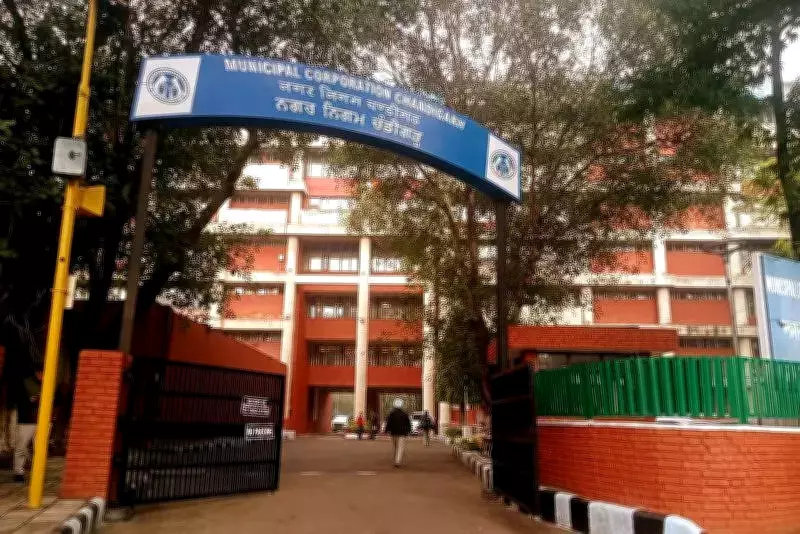
Chandigarh Municipal Corporation Slapped with Massive ₹7.2 Crore Environmental Fine
In a significant exposure of administrative negligence, the Chandigarh Pollution Control Committee (CPCC) has levied an environmental compensation (EC) of ₹7.2 crore on the Chandigarh Municipal Corporation (MC). This penalty was imposed for the civic body's failure to uphold mandated environmental standards during the period from April 2021 to April 2023. Shockingly, despite this substantial financial penalty being issued, the municipal corporation has yet to deposit the amount, raising serious questions about accountability and enforcement.
RTI Revelation Uncovers Systemic Failure
The critical data regarding this environmental compensation was obtained under the Right to Information (RTI) Act, 2005, by Sangrur-based advocate Kamal Anand. This revelation underscores a profound systemic failure within the municipal body to fulfill its statutory obligations under environmental protection laws. In its official RTI response, the CPCC explicitly stated, "An environmental compensation of Rs 7.2 crore was imposed on Municipal Corporation, Chandigarh from April 2021 to April 2023 and same is not recovered till date."
Environmental compensation is a monetary penalty grounded in the "Polluter Pays Principle". It targets individuals, industries, or authorities responsible for environmental damage, serving as a multifaceted tool designed to restore ecological harm, punish violators, and deter future infractions. The collected funds are intended to be managed and utilized specifically for repairing environmental damage caused by the polluter.

Advocate Calls for Personal Accountability of Officials
Advocate Kamal Anand, who filed the RTI application, expressed strong concerns about the current penalty system. He argued, "The environmental compensation is imposed on the civic body but it should be imposed on officials in person. So that they are serious in not only improving the working of the civic body but also paying up the penalty. The civic bodies generally don't pay the environmental compensation and also do not improve on their environment-impacting practices. Another important question is what happens to the environmental compensation deposited with the pollution control authority."
His statement highlights a critical gap in enforcement, suggesting that imposing penalties on individual officials rather than the institution as a whole could foster greater responsibility and prompt corrective action. The non-payment by the Chandigarh MC exemplifies a broader pattern where civic bodies often evade such fines without improving their environmentally detrimental practices.
Broader Crackdown on Pollution Violators Under Polluter Pays Principle
Beyond the hefty fine on the Chandigarh Municipal Corporation, the CPCC has actively enforced the Polluter Pays principle across various sectors from 2017 to 2026. The committee has taken stringent action against multiple violators to uphold environmental standards.
- Industrial Penalties: The CPCC imposed penalties totaling ₹63.46 lakh on various industrial units for causing pollution and violating environmental norms.
- Plastic Ban Violations: For contraventions of the plastic ban and contributing to plastic pollution, the CPCC has levied penalties exceeding ₹1.80 crore.
Additionally, the CPCC reported earning ₹2.95 lakh in interest from fixed deposits of ₹52.86 lakh that were collected as environmental compensation, indicating some financial management of these funds.
Detailed Breakdown of Environmental Compensation Collections
The CPCC provided a comprehensive year-wise breakdown of environmental compensation collected from industries and for plastic-related challans, illustrating enforcement trends over nearly a decade.

- 2017-18: EC collected (plastic): ₹7 lakh; EC collected (industries): Nil
- 2018-19: EC collected (plastic): ₹18.7 lakh; EC collected (industries): Nil
- 2019-20: EC collected (plastic): ₹33.4 lakh; EC collected (industries): ₹10.4 lakh
- 2020-21: EC collected (plastic): ₹15.5 lakh; EC collected (industries): ₹8 lakh
- 2021-22: EC collected (plastic): ₹17.6 lakh; EC collected (industries): ₹1.7 lakh
- 2022-23: EC collected (plastic): ₹49.6 lakh; EC collected (industries): ₹17.9 lakh
- 2023-24: EC collected (plastic): ₹19.3 lakh; EC collected (industries): ₹15 lakh
- 2024-25: EC collected (plastic): ₹9 lakh; EC collected (industries): ₹15 lakh
- 2025-26: EC collected (plastic): ₹9.8 lakh; EC collected (industries): ₹2.2 lakh
This data reveals fluctuating but persistent enforcement efforts, with significant collections in certain years, particularly for plastic violations. The case of the Chandigarh Municipal Corporation's unpaid ₹7.2 crore fine stands out as a major instance of non-compliance, casting a shadow over the effectiveness of environmental governance and the practical application of the Polluter Pays Principle in holding public authorities accountable.





