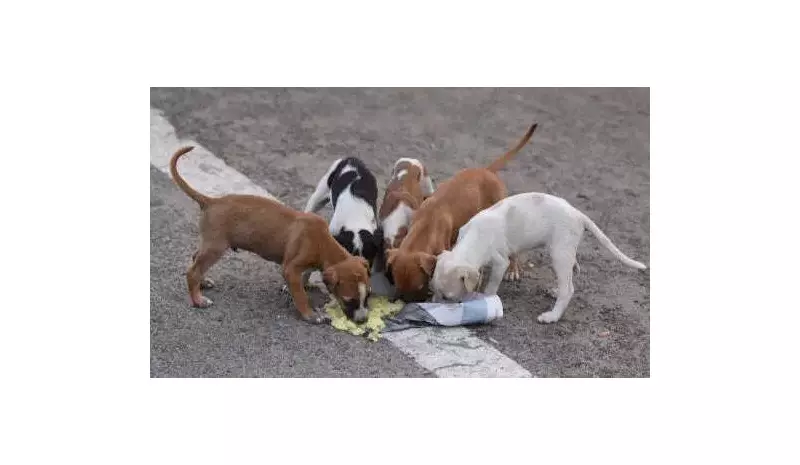
The Municipal Corporation of Chandigarh has taken a significant step in managing the city's stray dog population. Officials have officially notified 198 designated dog feeding points across various sectors. This marks the completion of Phase 1 in a larger plan to establish approximately 1,500 such feeding stations throughout Chandigarh.
Phased Implementation Underway
Residents can now feed stray dogs at these dedicated sites without conflict. The MC installed feeding-point boards at these 198 locations after careful consideration. They evaluated factors like feasibility, local population density, and the number of dog groups present in each area.
All 1,500 planned feeding points will be identified and established in a phased manner. The second phase of this comprehensive drive will commence shortly. The authority set this ambitious target based on data from the latest dog census conducted in the city.

Public Input Shapes Locations
The corporation received substantial public feedback during the initial phase. Residents submitted around 75 suggestions and 40 objections regarding the proposed 198 locations. The concerned department thoroughly reviewed all this input.
After incorporating changes based on practical considerations and feasibility, officials issued the final notification. They have placed all details in the public domain to ensure transparency and encourage maximum citizen participation in future phases.
Following Supreme Court Directives
This entire initiative stems from compliance with Supreme Court directions. The civic body submitted detailed information about the identified feeding points to the Chandigarh administration. The administration then apprised the Supreme Court of these developments.
An MC representative commented on public involvement. "In the initial stage, when we decided to establish dog feeding points, not many residents came forward with advice or suggestions, despite our attempts to involve maximum people," the official stated.
"Now, in the second and subsequent phases, we will again try to involve residents, dog lovers and the general public to propose suitable locations. We want these decisions made with full consensus," the MC statement emphasized.
Strategic Placement Considerations
Sources familiar with the planning process explained the multiple factors considered when identifying feeding points. "It is necessary that the feeding point be at a place where the dog group of that area can come to feed," they noted.
"A dog belonging to a particular area cannot go to another area for feeding. Moreover, each sector has multiple dog groups, so we identified the number of feeding points accordingly," officials clarified.
The strategic placement ensures dogs can access food within their established territories without crossing into other areas. This territorial consideration directly influences both the number and specific locations of feeding points within each sector.
Key Locations Notified
The MC has notified feeding points at numerous strategic locations across Chandigarh:
- Sector 1 — Near High Court Parking
- Sector 1 — Near Chandigarh Club
- Sector 3 — Near Police Station
- Sector 4 — Near SSK (Sehaj Safai Kendra)
- Sector 6 — Near Sukhna Lake backside parking
- Sector 7 — Near Verka Booth
- Sector 7 — Parking Sector 7-C
- Sector 9 — Near HP Petrol Pump
- Sector 9 — Parking Sector 9-D
- Sector 10 — Near Art College
- Sector 10 — Backside Govt Home Science College
- Sector 11 — Near Community Centre
- Sector 11 — Near Govt ITI for Women
- Sector 12 — Near PGI Health Club
- Sector 15 — Near Ramkrishna Hostel
- Sector 16 — Near Rose Club
- Sector 16 — Near Rose Garden Parking
- Sector 17 — Near SSK (Sehaj Safai Kendra)
- Sector 17 — Parking behind RBI Building
- Sector 22 — Near Kiran Theatre
This systematic approach aims to reduce conflicts over stray dog feeding. The MC wants to bring order to the practice while ensuring legal compliance with court guidelines. The establishment of designated feeding points creates a structured system that benefits both residents and the city's canine population.